You Cannot Negotiate With a Missile: Europe’s Wake-Up Call Is Screaming Over Ukraine

There are nights when diplomacy sounds less like statecraft and more like denial.
Over Ukraine, Russia supplied the soundtrack: more than 110 missiles and more than 400 drones launched in a single night. Ballistic missiles, cruise missiles and waves of unmanned aircraft turned the sky into a battlefield.
It was one of the largest aerial attacks since the beginning of Russia’s full-scale invasion.
But the numbers alone do not tell the story.
Three bridges across the Dnipro in Kyiv were hit. A railway station in Lviv was struck. A hospital in Kharkiv came under attack. Energy and transport infrastructure were targeted across the country.
Eight people were killed. Twenty-eight were injured.
This is what Russia’s supposed “readiness for peace” looks like when translated from diplomatic language into reality.
And Europe should pay attention.
For years, the European debate has repeatedly returned to negotiations: when talks might begin, what compromises could make them possible, what guarantees might secure a ceasefire and how relations with Moscow could eventually be stabilised.
Diplomacy matters. Eventually, wars end at negotiating tables.
But there is one brutal lesson Europe cannot afford to forget:
Negotiating power is not created at the table. It arrives at the table with you.
A country that cannot defend its cities has less leverage.
A continent that cannot manufacture enough interceptors has less leverage.
An alliance that fears escalation more than its adversary fears consequences has less leverage.
That is why Europe's real peace policy cannot consist only of diplomatic initiatives. It must also be written in production contracts, factories, ammunition stockpiles and air-defence batteries.
Air defence. Interceptors. Long-range capabilities. Resilient infrastructure. Industrial-scale production.
Not in five years. Not after the next crisis.
Now.
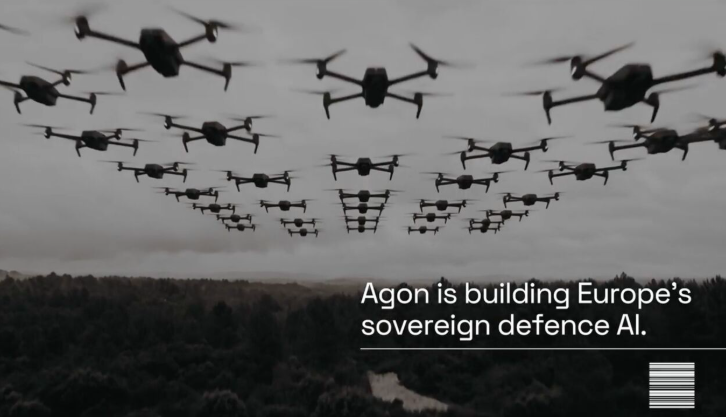
Ukraine has become the laboratory in which the realities of modern industrial warfare are being demonstrated in real time. Hundreds of relatively cheap drones can accompany sophisticated missiles, overwhelm defensive systems, exhaust interceptor inventories and force defenders to make brutal decisions about what must be protected first.
That lesson extends far beyond Ukraine.
Wars no longer begin only at borders. Their targets are electricity substations, railway junctions, communications networks, factories, ports, bridges, hospitals and the infrastructure on which modern society depends.
Air defence is therefore no longer a specialist procurement issue buried somewhere inside a defence ministry.
It is infrastructure.
Europe must consequently stop treating defence production as an emergency shopping list and start treating it as a permanent industrial ecosystem.
That means multi-year procurement contracts. More factories. Larger stockpiles. Faster development cycles. European production of missiles, drones and interceptors at a scale capable of sustaining a prolonged confrontation rather than surviving several dramatic weeks.
And it means accepting an uncomfortable truth:
Deterrence is expensive. Vulnerability is more expensive.
None of this means abandoning diplomacy.
It means finally understanding what makes diplomacy credible.
Europe should negotiate whenever negotiation can save lives and produce a sustainable peace. But diplomacy conducted from military weakness is not strategy. It is hope.
And hope is not an air-defence system.
Russia can issue statements about peace. European capitals can produce carefully calibrated communiqués. International summits can speak about dialogue, restraint and de-escalation.
But when more than 500 missiles and drones are launched toward another European country in a single night, words must compete with something much louder.
A negotiating table backed by empty warehouses is just furniture.
Europe should negotiate.
Europe should seek peace.
But Europe should also make absolutely certain that it can defend peace when negotiations fail.
Because sometimes the clearest argument for deterrence arrives at three in the morning.
And it arrives through the sky.