#FrontlineStoriesUkraine / The Ukrainian Kill Zone. Where Drones Decide Who Lives and Who Dies
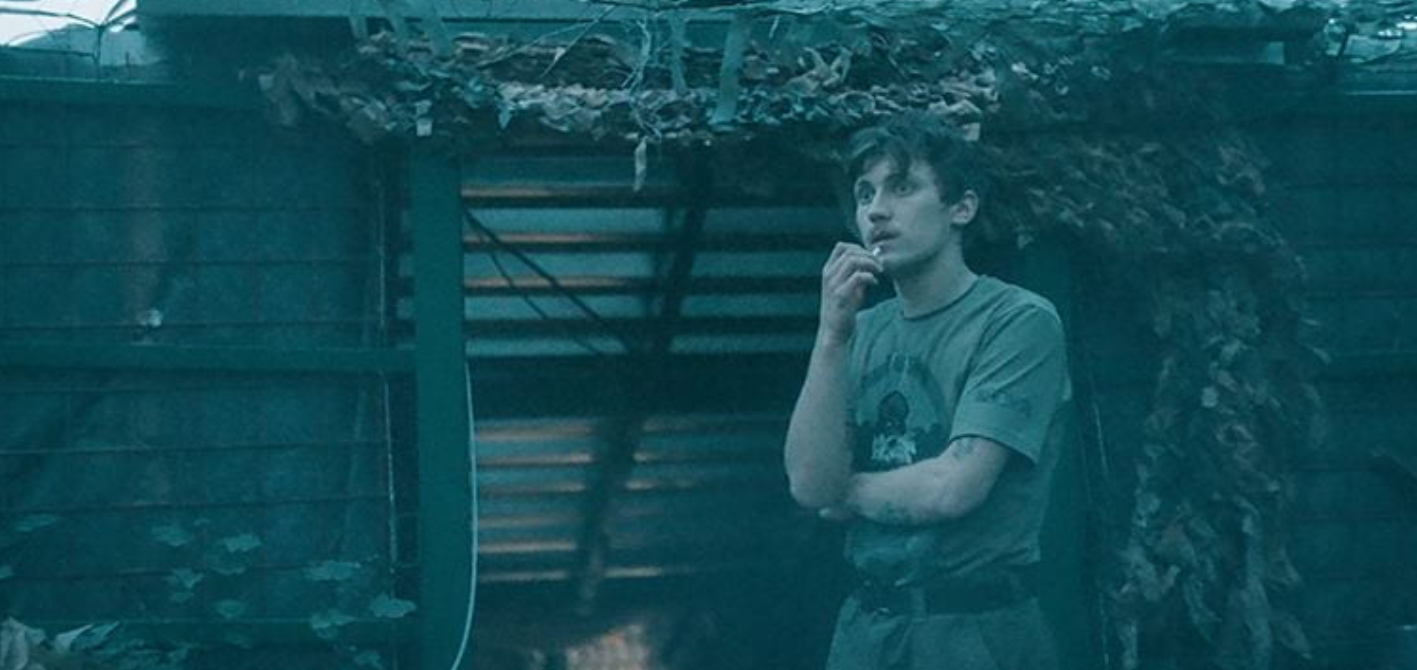
There are places in war where death has a sound.
In Ukraine's east, it is not the whistle of artillery or the roar of fighter jets. It is the faint mechanical buzz of a drone somewhere overhead, invisible against the sky, searching for movement.
Soldiers call it the kill zone.
This is the stretch of land behind the frontline where roads have become death traps, vehicles last only weeks, and every journey could be your last. Here, traditional warfare is disappearing. The battlefield no longer belongs to infantry, tanks, or even artillery. It belongs to machines.
The age of drone warfare has arrived.
A year ago, driving toward the front meant avoiding shellfire. Today, it means avoiding an enemy that never sleeps. Fiber-optic drones wait in silence beside roads. Reconnaissance drones watch from above. FPV attack drones hunt anything that moves. The result is a battlefield where visibility is measured not in kilometers, but in seconds before detection.
What struck me most was not the technology itself. It was how quickly humans adapt to living under it.
I watched Ukrainian soldiers casually load explosive-equipped drones into pickup trucks before dawn. They joked, smoked cigarettes, and drank coffee while discussing routes through territory where a single wrong turn could mean death. The extraordinary had become ordinary.
In previous wars, survival depended on courage and experience.
Today, survival depends on signal strength, battery life, electronic warfare systems, and whether an operator sitting kilometers away notices you first.
Inside underground bunkers hidden beneath tree lines, young Ukrainians spend their days staring into screens. They do not see battlefields directly. They see pixels. Coordinates. Thermal signatures. Tiny figures crossing fields.
Then they guide drones toward them.
The psychological distance is staggering. Killing no longer happens face to face. It happens through goggles, joysticks, and video feeds. A soldier can watch an enemy's final moments from six kilometers away without hearing a sound.
This is warfare transformed into remote control.
Yet what appears technologically advanced also reveals something deeply unsettling about modern conflict. Human life is increasingly reduced to data. Targets become dots on screens. Success is measured in strike footage and statistics. Somewhere between launch and detonation, war becomes an algorithm.
The battlefield resembles science fiction, but the consequences remain painfully human.
During one Russian assault, drone operators tracked motorcycles racing across burning fields. Artillery erupted around them. Video signals cut in and out. Operators shouted coordinates while trying to lock targets amid dust and smoke.
It was chaos.
Not cinematic heroism. Not glorious combat.
Just exhaustion, fear, pressure, and the relentless mathematics of survival.
What surprises many outsiders is how normal life continues around all of this.
Moments after leaving some of the most dangerous terrain in Europe, soldiers stopped for coffee. They laughed. Smoked. Shared stories. The contrast felt surreal. Hours earlier, drones were hunting them. Now they stood beneath a peaceful sunrise discussing everyday life.
War creates strange rhythms.
Terror at night. Coffee in the morning.
Death on a screen. Sunflowers in a field.
Perhaps that is the greatest lesson of the kill zone. Technology may be changing warfare faster than at any point in history, but it has not changed the people trapped inside it.
The machines are new.
Fear is not.
The drones hovering over Ukraine are more than weapons. They are a preview of the future battlefield, where artificial intelligence, autonomy, and cheap technology will challenge every military doctrine developed over the past century.
What is happening in Ukraine today will be studied in military academies for decades.
Because the world's first true drone war is no longer coming.
It is already here.
And in the kill zone, every movement, every decision, and every life now unfolds beneath the eyes of machines.