#FrontlineStoriesUkraine / Magyar’s Five-Step Drone Doctrine. The Blueprint NATO Can No Longer Ignore
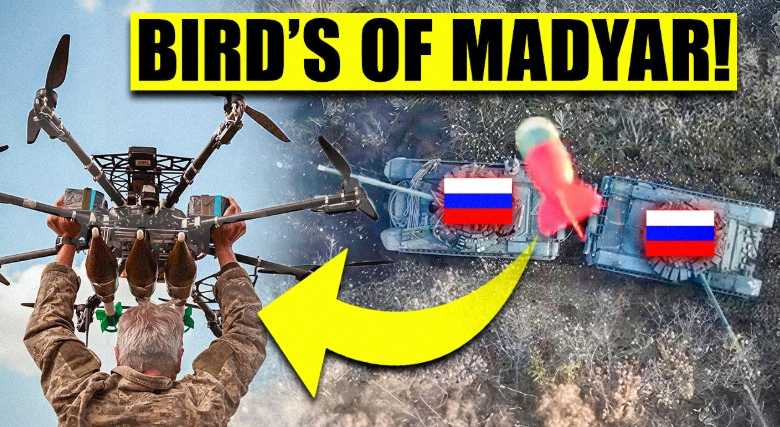
NATO built its security architecture around tanks, fighter jets, warships, and missile defenses.
Ukraine is proposing something radically different.
Not a replacement.
An upgrade.
Robert Brovdi, better known by his battlefield callsign "Magyar," the commander who helped transform Ukraine into the world's most advanced drone warfare laboratory, recently outlined what he calls a simple recipe for defense.
He jokingly referred to it as a borscht recipe.
In reality, it may be one of the most important military blueprints emerging from the war.
Because after more than four years of continuous combat, Ukraine has learned something many Western militaries are only beginning to understand:
The drone is no longer a support tool. It is a battlespace of its own.
https://youtube.com/shorts/gzbfwt8TzDo?si=AeOfZkIdKTrsb2ms
Step One: Build a Drone Engagement Zone
Magyar's first recommendation is straightforward.
Create a dedicated 5-7 kilometer drone defense belt running along vulnerable borders.
The idea reflects a lesson repeatedly demonstrated in Ukraine: threats are no longer measured solely by aircraft, artillery, or armored formations.
Increasingly, danger arrives through swarms of inexpensive drones capable of reconnaissance, electronic warfare, logistics disruption, and direct attack.
Traditional border defenses were designed to detect soldiers and vehicles.
The drone age requires an entirely new layer of protection.
Step Two: Own the Network
Weapons matter.
Networks matter more.
Ukraine's battlefield experience has shown that autonomous systems become exponentially more effective when connected through resilient communication infrastructure.
Magyar argues that future defense requires advanced fiber-optic communication grids capable of coordinating large numbers of drones simultaneously.
The lesson is simple:
A drone is powerful.
A network of drones is transformative.
The future battlefield belongs not to isolated platforms but to connected ecosystems.
Step Three: Mobile Air Defense Meets Drone Warfare
The third pillar combines traditional and emerging defense technologies.
Mobile air-defense systems remain essential.
But increasingly they must work alongside interceptor drones and real-time situational awareness networks.
Ukraine's battlefield has demonstrated that missile systems alone cannot economically counter every aerial threat.
Launching expensive interceptors against cheap drones creates a dangerous economic imbalance.
The answer is a layered defense architecture where radar, intelligence, electronic warfare, mobile air defense, and interceptor drones operate as a single integrated system.
Step Four: Every Nation Needs Its Own Unmanned Systems Brigade
This may be Magyar's most controversial proposal.
His argument is that every European military should establish dedicated Unmanned Systems Forces or specialized drone brigades.
Not experimental units.
Not pilot programs.
Operational formations.
Ukraine's experience suggests that drones are no longer a niche capability managed by isolated specialists. They are becoming core military assets influencing reconnaissance, strike operations, logistics, border security, air defense, and intelligence gathering.
The countries that adapt early will gain a significant advantage.
Those that delay may find themselves trying to catch up during a crisis.
Step Five: Deep-Strike Readiness
The final step focuses on preparedness.
Deep-strike capabilities, according to Magyar, cannot be improvised once a conflict begins.
They require trained crews, established procedures, logistics chains, intelligence infrastructure, and operational experience.
The message is blunt:
You cannot build strategic deterrence after the attack starts.
You must build it beforehand.
The Bigger Message Behind the Doctrine
What makes the "borscht recipe" remarkable is not the individual recommendations.
Most defense experts already understand the importance of drones, communications, and air defense.
What makes it significant is the source.
These recommendations come from a military force that has been fighting one of the most technology-intensive wars in modern history.
Ukraine has become the world's largest testing ground for autonomous warfare, drone integration, and distributed military networks.
Lessons learned there are no longer theoretical.
They are written in combat experience.
The Plague of the Third Millennium
Perhaps Magyar's most memorable statement is his warning that:
"The drone is the plague of the third millennium."
It sounds dramatic.
Yet recent conflicts increasingly support the observation.
Low-cost drones are forcing militaries to rethink air superiority, battlefield logistics, force protection, intelligence collection, and infrastructure security.
For centuries, military planners worried about armies crossing borders.
Today they must also worry about autonomous systems flying over them.
A Warning NATO Should Hear
At its core, Magyar's doctrine is not about aggression.
It is about deterrence.
The ancient Roman principle he invokes remains relevant:
Si vis pacem, para bellum.
If you want peace, prepare for war.
Ukraine's commanders understand how quickly modern conflict evolves because they have lived through it.
Their warning to Europe is simple:
There will not be enough time to build these capabilities once war begins.
The future battlefield is already visible above Ukrainian skies.
The question is no longer whether NATO will adapt.
The question is whether it will adapt before necessity forces it to.