Peace at What Price? Trump Says Europe Could Save Billions, but Europe Fears the Cost of Getting Peace Wrong

Donald Trump has reduced Europe's most dangerous geopolitical problem to a brutally simple proposition:
End the war, save lives, save money.
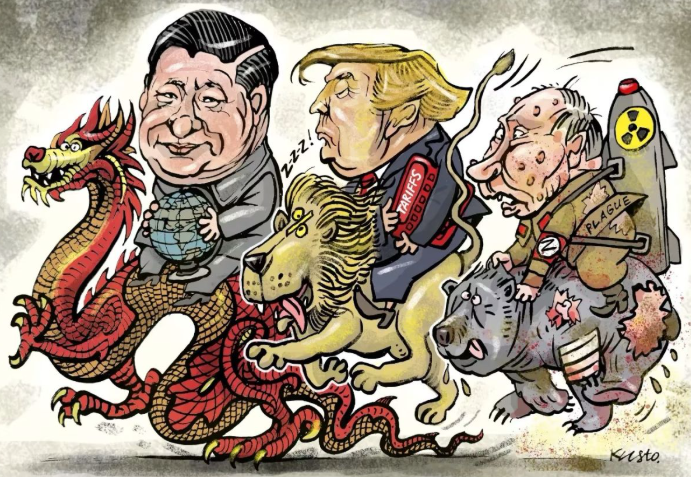
After meeting Vladimir Putin and Xi Jinping in China, the U.S. president called European leaders gathered in Berlin with an optimistic message. Putin, Trump believes, is serious about negotiating peace.
And if the war ends, Europe can stop pouring billions into Ukraine and start spending that money elsewhere.
It is an argument with enormous emotional and political power.
People are dying. Ukraine is being destroyed. European governments are spending heavily on military assistance while simultaneously facing sluggish economies, strained budgets and enormous rearmament bills.
Who could possibly argue against ending that?
The problem is that Europe isn't debating whether peace is desirable.
It is debating what kind of peace survives the morning after it is signed.
That difference now sits at the heart of the widening transatlantic conversation over Ukraine.
Trump approaches the war with the instincts of a dealmaker. Stop the killing. Find the compromise. Get Putin and Ukraine to agree. Move on to reconstruction, prosperity and America's other strategic priorities.
European leaders, particularly those geographically closest to Russia, confront another calculation.
What happens if peace becomes simply an intermission?
Germany's Friedrich Merz articulated the European argument clearly: Europe is not arming Ukraine to prolong the war. It is arming Ukraine so negotiations can happen from a position of strength.
That distinction is everything.
Because there are two competing economic calculations.
Trump is asking:
How much does continuing this war cost?
Europe must also ask:
How much would a bad peace cost?
If an agreement produces a secure, sovereign Ukraine and ends nearly five years of killing, Trump will have achieved something historically consequential.
But if peace freezes the battlefield without creating credible deterrence against another invasion, today's savings could become tomorrow's staggering bill.
That is why the debate over security guarantees matters more than the diplomatic choreography surrounding another summit.
According to the emerging discussion, Putin may be prepared to accept security guarantees for Ukraine resembling NATO's Article 5.
That sounds dramatic.
It also immediately creates the question Volodymyr Zelenskyy raised: what does "Article 5-like" actually mean?
Would American forces participate?
Would European troops be stationed in Ukraine?
Would an attack trigger an automatic military response?
Or would Ukraine receive another beautifully written guarantee whose real meaning becomes negotiable the moment Russian missiles start flying?
Deterrence lives in the details.
Putin's supposed readiness for peace is consequently being received in Europe with something considerably less enthusiastic than Trump's optimism.
Poland's Donald Tusk captured the unease particularly well. Trump's belief in Putin's goodwill, he observed, appears remarkably resilient, despite the lack of evidence so far that Moscow genuinely intends to abandon its objectives.
That skepticism is not necessarily opposition to peace.
It is the scar tissue of European history.
Trump is nevertheless right about something important.
This war is catastrophically expensive. It has consumed lives, cities, weapons, energy and hundreds of billions in resources that could have built infrastructure, strengthened Europe's militaries or financed Ukraine's reconstruction.
Peace would release enormous economic potential.
But peace is not valuable merely because the shooting stops.
Peace is valuable when the shooting does not start again.
Europe therefore faces a defining moment.
It must resist two equally dangerous temptations: believing that every negotiation is capitulation, and believing that every signed agreement is peace.
Trump may succeed where countless diplomatic efforts have failed.
If he does, Europe should embrace that success.
But the objective cannot simply be to make the Ukraine war cheaper.
It must be to make another Ukraine war impossible.
That is the difference between ending a war and merely pausing one.
And history has a nasty habit of sending the invoice for cheap peace later.