Ukraine Is Buying Time. The West Is Spending It Like It’s Infinite.
Wars are rarely confined to the borders where they begin.
History teaches us that conflicts often arrive first as warnings, then as crises, and finally as realities no one can avoid. The troubling question facing Europe and the United States today is whether they are listening to the warning unfolding in Ukraine, or merely watching it.
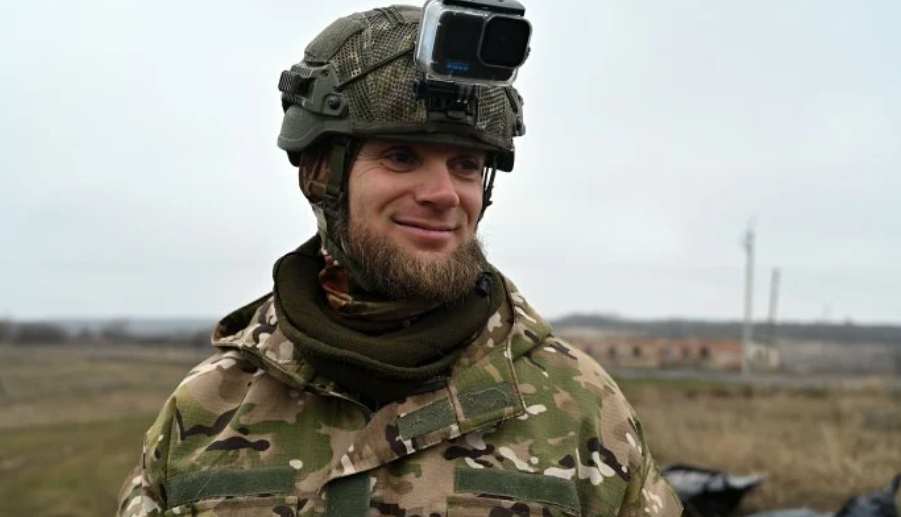
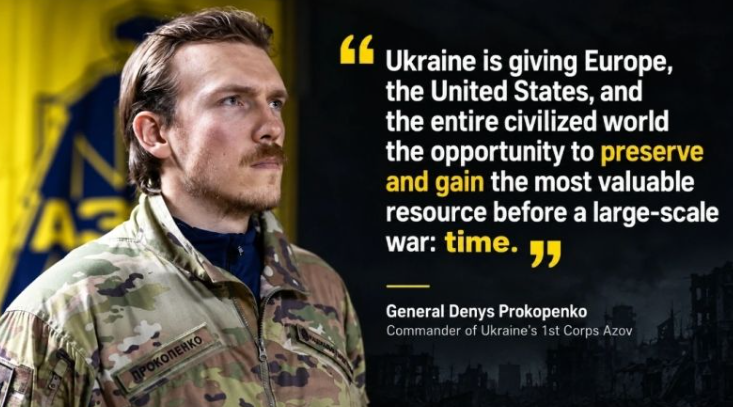
According to General Denys Prokopenko, commander of Ukraine's 1st Corps Azov, Ukraine is offering the democratic world something more valuable than weapons, sanctions, or political declarations.
It is offering time.
Time to rearm.
Time to innovate.
Time to prepare.
Time to understand that modern war has already changed.
That statement should resonate far beyond military headquarters. It should echo through parliaments, boardrooms, universities, technology labs, and every institution responsible for safeguarding Western security.
For nearly five years, Ukraine has been living in the future of warfare.
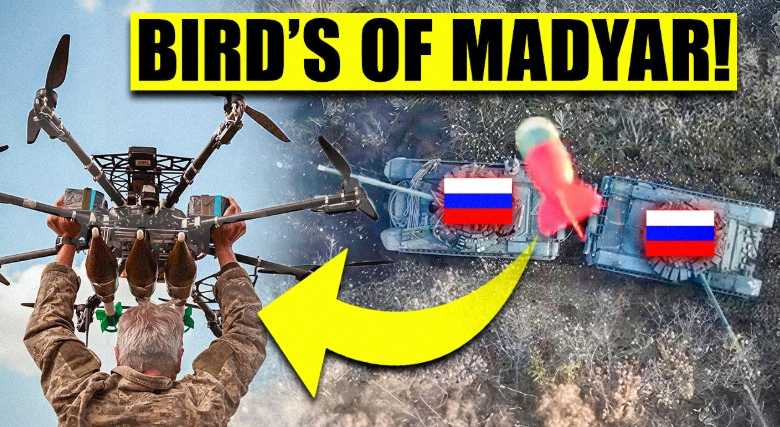
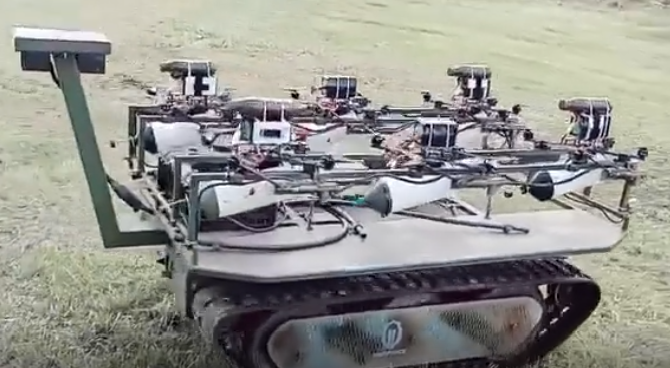
Drones costing hundreds of dollars destroy equipment worth millions. Artificial intelligence analyzes battlefields in real time. Electronic warfare blinds precision systems once considered untouchable. Energy grids, communication networks, hospitals, and civilian infrastructure become targets as frequently as military positions.
This is not simply a war between armies.
It is a test case for how nations survive in the twenty-first century.
And Ukraine is conducting that test under relentless fire.
Many Western leaders continue to frame support for Ukraine primarily as an act of solidarity. While solidarity matters, this view misses a crucial reality.
Helping Ukraine is not charity.
It is strategic self-interest.
Every Russian tank stopped in Ukraine is a lesson learned without NATO soldiers paying the price. Every battlefield innovation developed by Ukrainian forces reveals vulnerabilities Western militaries must address. Every month Ukraine resists provides governments additional opportunities to modernize forces that were largely designed for a different era.
Yet the response across much of Europe remains painfully slow.
Defense budgets are increasing, but often at bureaucratic speed rather than wartime urgency. Procurement processes take years. Critical industrial capacity remains insufficient. Political debates continue as though there is an unlimited reserve of time available.
There is not.
The assumption that geography alone will shield Western societies from the consequences of Russian aggression is becoming increasingly difficult to defend. Modern conflicts do not stop at trenches. They travel through cyber networks, energy systems, disinformation campaigns, supply chains, and critical infrastructure.
The battlefield has no clear front line anymore.
That is precisely why Prokopenko's warning matters.
He is not speaking as a politician seeking headlines. He is speaking as a commander observing the realities of war every day. His message is brutally simple: Ukraine's resistance is creating a window of opportunity for others.
Windows close.
History is full of examples where democracies recognized threats only after the price of preparation became exponentially higher than the cost of prevention.
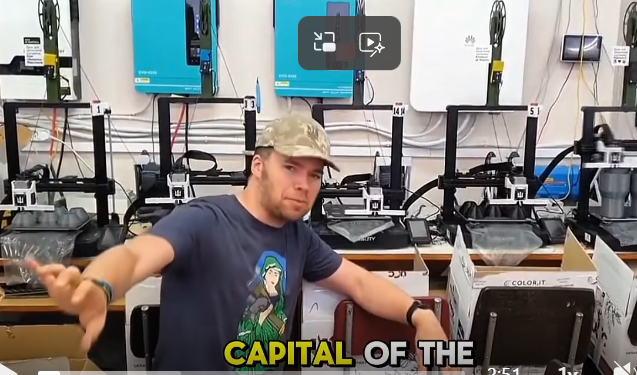
The uncomfortable truth is that Ukraine is carrying responsibilities far larger than its own national defense. Ukrainian soldiers are identifying future military doctrines. Ukrainian engineers are accelerating innovation cycles that would take years in peacetime. Ukrainian civilians are demonstrating how societies withstand sustained attacks on infrastructure and public morale.
The West is receiving these lessons in real time.
The question is whether it is learning from them.
If Ukraine prevails, the democratic world gains more than a strategic victory. It gains proof that aggression can be resisted, that free societies can adapt, and that alliances retain meaning.
If Ukraine falls, the consequences will extend far beyond a single nation.
Adversaries everywhere will draw conclusions.
Allies everywhere will draw conclusions.
And the cost of rebuilding lost deterrence could dwarf the cost of maintaining it today.
Ukraine is buying time with blood, sacrifice, and endurance.
The most dangerous mistake Europe and America can make is believing that time is unlimited.
Because time, unlike military equipment, cannot be manufactured once it runs out.