Germany Takes Its Laser Ambitions Into the Air: MBDA to Build Airborne Weapon Demonstrator
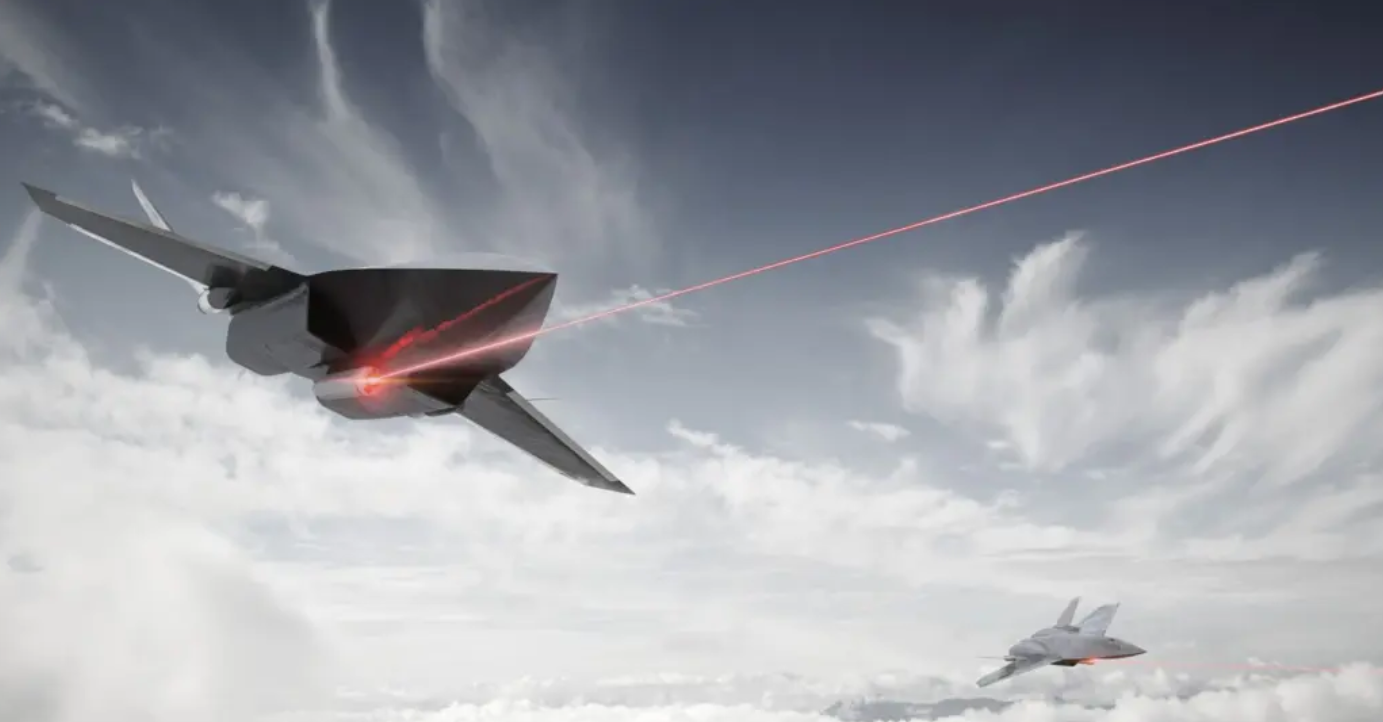
Germany’s race to turn directed-energy technology into an operational weapon is moving into a far more demanding arena: the sky.
MBDA Deutschland has received a contract from Germany’s Federal Office of Bundeswehr Equipment, Information Technology and In-Service Support, BAAINBw, to develop an airborne laser demonstrator. The project is intended to establish the technological foundations for future laser weapons carried by military aircraft.
It may sound like another experimental defence programme. It is potentially much more than that.
The goal is not simply to prove that a laser can hit a target. According to MBDA, key elements of the planned laser pod are already to be designed with future flight operations in mind. The demonstrator will therefore address one of the biggest questions surrounding directed-energy weapons: can a powerful laser system become compact, light and rugged enough to operate effectively from an aircraft?
That is where the challenge becomes serious.
The “king’s discipline” of laser weapons
High-energy lasers have been investigated for ships, vehicles and ground installations for years. Moving the technology onto an aircraft introduces an unforgiving combination of restrictions.
Weight matters. Space matters. Power generation matters. Cooling matters. And equipment must continue operating under vibration, acceleration and changing environmental conditions.
For those reasons, MBDA describes airborne laser development as something of a “king’s discipline” in laser weapon technology.
The potential payoff, however, is substantial.
MBDA sees airborne high-energy lasers as a future means of engaging threats including drones and cruise missiles. Instead of relying exclusively on conventional interceptor missiles, an aircraft equipped with a sufficiently capable directed-energy system could attack certain targets using concentrated laser energy.
That possibility is particularly interesting as inexpensive drones increasingly challenge the economics of traditional air defence. Firing a sophisticated interceptor at a relatively cheap unmanned aircraft can impose an uncomfortable cost equation on the defender.
Lasers promise to change part of that equation.
Once the system is deployed, individual engagements could potentially be conducted at comparatively low marginal cost. Lasers also offer extremely fast engagement and very precise effects, according to MBDA.
But “cheap shot” does not mean cheap weapon.
Developing the aircraft integration, optics, beam control, power supply, thermal management and targeting technology necessary to make an airborne high-energy laser operational represents an enormous engineering challenge.
A technological project and an industrial one
There is another important dimension to Germany’s programme: sovereignty.
MBDA says it intends to place particular emphasis on German supply chains and domestic systems expertise. That makes the project more than a technology demonstrator. It also becomes part of the broader effort to retain critical defence know-how inside Germany.
Laser technology has been considered a strategic research and development priority in Germany since 2019 and a national key technology under the federal government’s security and defence industrial strategy.
MBDA has consequently spent years developing laser effectors, investing its own funds and building and testing demonstrators for different military applications.
The latest contract takes that work into arguably its toughest environment yet.
No operational airborne laser weapon has emerged from the programme so far, and a demonstrator should not be confused with a field-ready system. Considerable development, integration and testing would still stand between a successful prototype and operational deployment by the Luftwaffe.
Yet the direction is unmistakable.
The next generation of air combat may not be defined only by faster missiles, stealthier aircraft and more sophisticated radar.
Some of its most important weapons may travel to their target at the speed of light.
And Germany now wants to find out whether it can put one of them in the air.