#FrontlineStoriesUkraine / Ukrainian saver "Platsdarm" Oleksiy Yukov worked until his heart stopped beating
Wars create heroes in many forms. Some carry rifles. Others carry stretchers. A rare few dedicate their lives to the silent duty that begins after the shooting stops: bringing the dead home.
Oleksiy Yukov was one of those people.
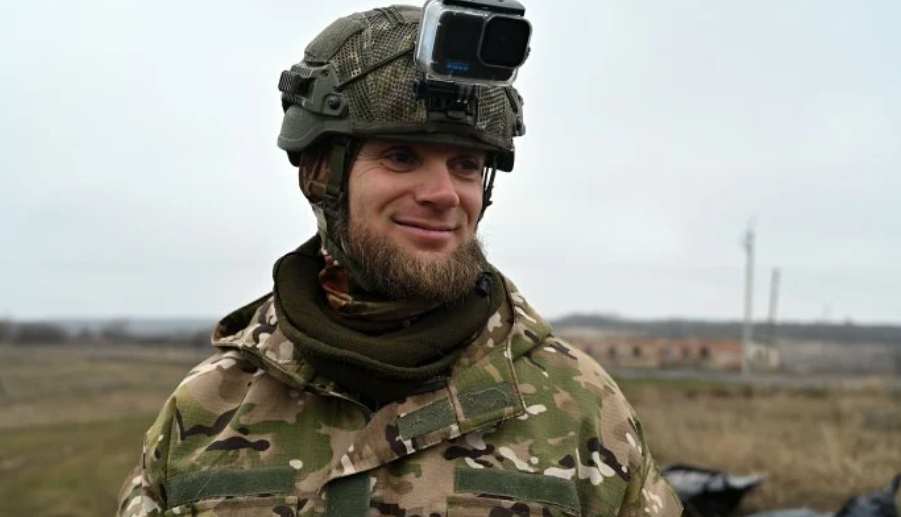
Ukrainian saver "Platsdarm" Alexey Yukov worked until his heart stopped beating
For 27 years, Yukov searched for the lost. Long before Russia's full-scale invasion of Ukraine, before missile strikes and drone attacks dominated headlines, he was walking battlefields, digging through forgotten soil, and recovering the remains of soldiers who had vanished into history.
Now, at the age of 40, he has become one of those he spent his life searching for.
According to reports from Ukrainian serviceman Serhiy Hnezdylov, Yukov was killed while carrying out an exhumation operation near the front line. The man who had spent decades recovering the dead received a mortal wound while trying to ensure that others would not remain missing.
The symbolism is almost unbearable.
Born in Sloviansk, a city that would become one of the defining battlegrounds of modern Ukraine, Yukov's mission began when he was still a teenager. Fascinated by history and driven by a sense of responsibility, he joined search teams investigating World War II battlefields. While many of his peers were planning careers or pursuing ordinary lives, Yukov was already confronting the consequences of war.
Over time, that mission became his life's work.
In 2014, as conflict erupted in eastern Ukraine, he became head of the search unit of the military-historical association "Platsdarm." The transition from studying past wars to dealing with a living one was swift and brutal. During the occupation of his hometown, Yukov helped recover the bodies of Ukrainian soldiers, ensuring families could receive the answers that war so often steals.
His work was never about politics.
It was about dignity.
Every recovered body represented a family no longer condemned to uncertainty. Every identified soldier closed a chapter of grief. In a conflict measured in territorial gains and battlefield statistics, Yukov focused on something different: human beings.
Perhaps that is why his words resonate so powerfully today.
"Although I understood the war was not over, I could not imagine everything would be like this," he said in an interview. "I will not have enough life to bring back the last soldier from this war."
Those words now read less like an observation and more like a prophecy.
The volunteer project "Platsdarm" has recovered more than 3,500 bodies during four years of full-scale war. The number is staggering, yet it reveals an uncomfortable truth. Behind every daily casualty report lies a battlefield still waiting to be searched, a family still waiting for certainty, and volunteers willing to risk everything to provide it.
The public often remembers generals, politicians, and decorated combat units. Search teams rarely appear on magazine covers. Their victories are quiet. Their work happens far from cameras and celebrations.
Yet without them, war's final cruelty remains unchallenged.
A missing soldier is more than a military statistic. He is a son without a grave, a husband without farewell, a name suspended between hope and despair.
Oleksiy Yukov understood that better than most.
His death reminds us that even the act of recovering the fallen can demand the ultimate sacrifice. In Ukraine's war, the front line is not only where soldiers fight. It is also where volunteers search, identify, document, and return the dead.
For nearly three decades, Yukov refused to look away from war's consequences.
In the end, he died performing the same duty that defined his life.
Not seeking glory.
Not seeking recognition.
Simply making sure that someone, somewhere, could finally come home.