#FrontlineStoriesUkraine / From Donbas to NATO’s War Rooms. The Ukrainian Soldier Teaching the West How to Fight the Future

In a conference hall in London, something extraordinary happened.
A Ukrainian soldier Dimko Zhluktenko —until recently flying ISR missions over the battlefields of Donbas—stood before some of the most influential military leaders in the Western world. Around him sat British generals, NATO planners, defense strategists and military thinkers shaping the future of European security.
And they were taking notes.
The moment symbolized a dramatic shift in modern warfare. For decades, NATO nations taught military doctrine to partners and allies. Today, increasingly, Ukraine has become the teacher.
Dimko Zhluktenko, a soldier serving in Ukraine's Armed Forces and representing the country's Unmanned Systems Forces, delivered a message that resonated throughout the room: the future of war is being written in Ukraine, and Western armies cannot afford to ignore it.
Speaking on the panel “New Concepts for New Capabilities” alongside international defense experts and military leaders, Zhluktenko presented what may be one of the most important lessons of the war in Ukraine—the transition from traditional, industrial-age warfare to a battlefield dominated by drones, data and rapid adaptation.
His argument was simple but provocative.
Most Western militaries are not going to magically recruit hundreds of thousands of additional soldiers. Instead, they must transform the personnel they already have. Snipers, mortar teams and grenadiers can be retrained into drone operators. Existing military structures must evolve rather than expand.
The lesson comes directly from Ukrainian experience.
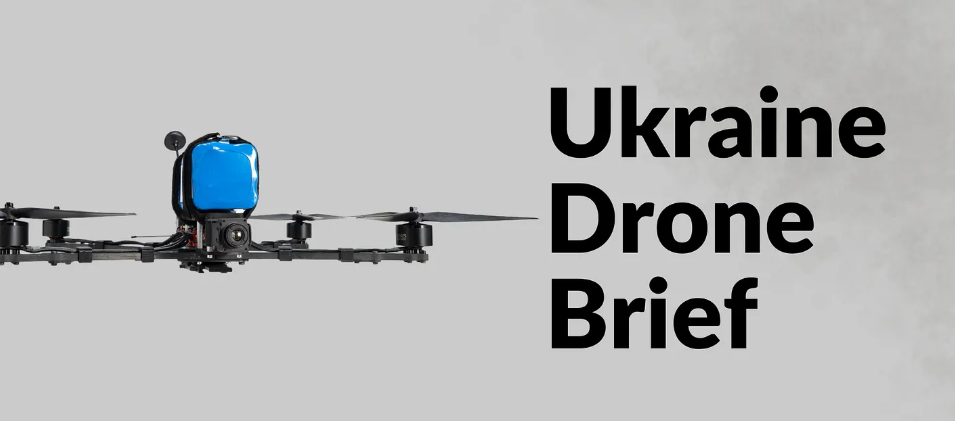
After more than four years of full-scale war, Ukraine has created a military ecosystem unlike anything seen before. Drone units now exist both inside conventional brigades and within the specialized Unmanned Systems Forces. This dual structure allows drones to support operations at every level of combat.
The results are staggering.
According to Zhluktenko, approximately 90 percent of enemy combat losses are now achieved using drone systems. What was once viewed as a supporting technology has become the centerpiece of battlefield effectiveness.
Yet the real story is bigger than drones.
Ukraine's success emerged from building an entire ecosystem around them. Repair workshops keep damaged systems in the fight. Rapid research-and-development teams constantly adapt technology based on frontline feedback. Electronic warfare specialists battle enemy signals. Intelligence teams fuse information from multiple sources. Command-and-control platforms such as Delta transform data into operational advantage.
In other words, drones are only the visible tip of the spear.
The real revolution is organizational.
Ukraine has achieved something most peacetime militaries struggle to accomplish: it has compressed years of innovation into months. The battlefield became an unforgiving laboratory where outdated ideas were discarded immediately and successful ones scaled rapidly.
For NATO countries, this creates both an opportunity and a warning.
The opportunity is obvious. Western militaries can learn directly from a nation fighting one of the most technologically dynamic wars in modern history. They can absorb lessons without paying the price in blood.
The warning is equally clear.
Military institutions tend to move slowly. Bureaucracies are often more comfortable discussing future concepts than implementing them. Ukraine does not have that luxury. Every lesson is learned under fire.
That is why Zhluktenko's proposal deserves attention: expand joint exercises with Ukraine and place Ukrainian expertise at the center of military modernization efforts. Use Ukraine as the “red team.” Challenge assumptions. Test doctrine against real-world experience.
The message resonated because it came not from a think tank report or policy paper, but from someone who has lived the transformation himself.
The symbolism was powerful.
A soldier from Donbas speaking directly to the people who plan NATO's future land forces. Not as a student asking for guidance, but as a partner sharing hard-earned expertise.
This is perhaps one of the most significant consequences of Russia's invasion—Ukraine is no longer seen merely as a recipient of Western security assistance. It has become a generator of military knowledge, innovation and strategic thinking.
As Europe debates defense spending, force structure and military readiness, the answer may be sitting on the front lines of eastern Ukraine.
The future battlefield is already here.
Ukraine has built it.
And the rest of the world is beginning to listen.