The Shadow General: Why Ukraine Chose a Special Operations Strategist to Run the War Machine

Wars often create heroes.
Rarely do they create system builders.
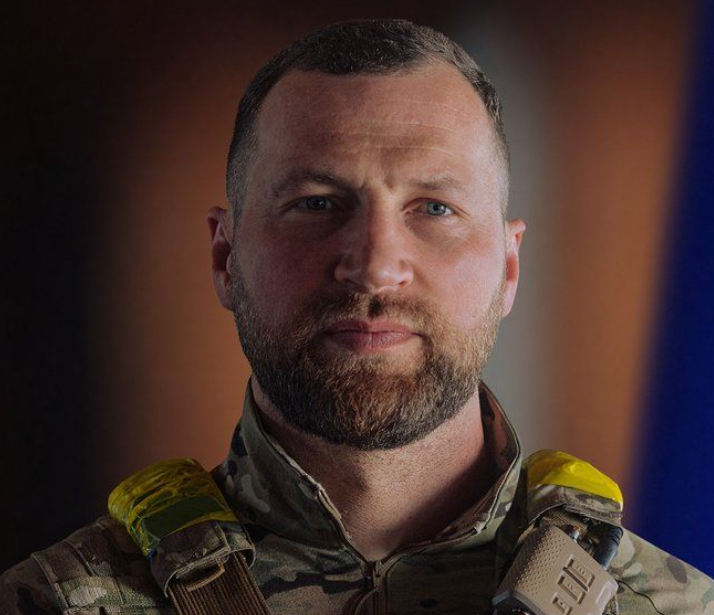
Ukraine's appointment of Evgeniy Khmara as defense minister may prove to be one of the most consequential leadership decisions since the full-scale invasion began. Not because he is a politician. Not because he is a public figure. But because he represents something increasingly valuable in modern warfare: the ability to transform limited resources into strategic effects.
At first glance, Khmara does not fit the traditional image of a defense minister.
His career was forged far away from parliamentary debates and television studios. He built his reputation in Ukraine's elite special operations and intelligence community, commanding some of the country's most sensitive and ambitious missions. While many military leaders focus on battlefield victories measured in kilometers, Khmara became associated with operations measured in strategic consequences.
His resume tells the story of a man who thinks differently.
As a commander within Ukraine's Security Service (SBU) and later its leader, he operated in an environment where success depended on precision, innovation, secrecy, and speed. These are precisely the qualities reshaping modern warfare.
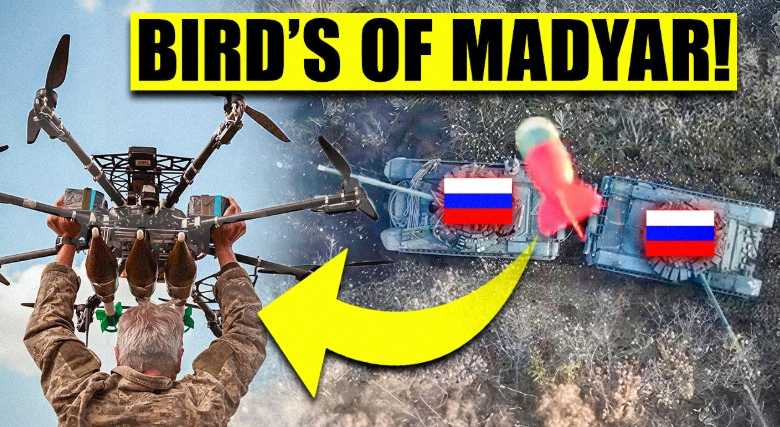
The most famous example remains Operation Spiderweb, the audacious campaign that demonstrated Ukraine's growing ability to strike Russian strategic assets far from the front lines. Using relatively inexpensive drones, Ukrainian operators reportedly inflicted billions of dollars in damage on assets that Russia cannot easily replace.
The significance of that operation extends beyond military headlines.
It exposed a new reality.
The age of mass and scale is being challenged by the age of precision and intelligence.
A million-dollar capability can now threaten a billion-dollar asset.
A small team can influence outcomes previously reserved for entire military formations.
And a drone manufactured in months can disrupt systems that took decades to build.
Khmara understands this reality better than most.
That may explain why Kyiv selected him at this particular moment.
Ukraine today faces a fundamentally different war than it did in 2022. The challenge is no longer simply survival. It is sustaining a long-term military ecosystem capable of outinnovating a larger opponent.
That requires more than battlefield leadership.
It requires industrial leadership.
The defense minister's role is often misunderstood. The position does not involve leading charges or commanding tactical operations. Instead, it involves managing procurement, coordinating industry, accelerating innovation, securing funding, and ensuring that soldiers receive the tools they need when they need them.
In many ways, the job resembles running one of the world's most complex technology companies.
And Ukraine increasingly behaves like a wartime start-up.
Its defense ecosystem has become one of the fastest-moving innovation environments on the planet. Drone development cycles measured in years elsewhere are compressed into months. New electronic warfare systems appear continuously. Autonomous systems, deep-strike capabilities, interceptor drones, maritime platforms, and AI-enabled targeting solutions are evolving at unprecedented speed.
Success depends on connecting battlefield experience directly to industrial production.
That connection has been Khmara's strength throughout his career.
Perhaps the most remarkable aspect of his rise is not his operational success. It is the trust he appears to command within the military community. Colleagues describe a leader who spent extensive time close to frontline units, listened to operators, absorbed technical details, and remained focused on practical outcomes rather than institutional politics.
Those characteristics matter because Ukraine's greatest advantage may no longer be geography, manpower, or equipment.
It may be adaptability.
Russia can still produce large quantities of weapons.
Ukraine must often produce better solutions.
Faster.
The conflict is increasingly becoming a competition between innovation systems.
Which side can learn faster?
Which side can adapt faster?
Which side can convert battlefield lessons into deployable capabilities faster?
Those questions will likely define the next phase of the war.
And they are precisely the questions someone with Khmara's background is uniquely positioned to answer.
The bracelet he reportedly wears, engraved with the names of fallen comrades, is more than a personal symbol. It reflects the burden carried by leaders responsible for decisions measured in lives rather than statistics.
Ukraine did not choose a politician to lead its defense ministry.
It chose a strategist shaped by the realities of modern war.
Now the challenge begins.
Because winning spectacular operations is one thing.
Building the machine that sustains them is another.