The General, the Lie, and the Drone That Found Him
For centuries, military power has relied on a simple principle.
Generals tell leaders what is happening on the battlefield. Leaders make decisions based on that information.
The entire chain of command depends on trust.
But what happens when the battlefield has its own way of fact-checking?
That question may define modern warfare more than any missile, tank or fighter aircraft.
In July, Russian Major General Anton Grunis reportedly informed Vladimir Putin that Russian forces had captured Kostiantynivka, a strategically important city in eastern Ukraine.
The problem, according to Ukrainian sources and ongoing battlefield realities, was straightforward.
Kostiantynivka had not been captured.
The city remained beyond Russian control.
Yet in the political ecosystem of war, facts and narratives do not always travel together. Success must be demonstrated. Progress must be reported. Victories must exist, especially when leaders demand them.
According to reports, Grunis was subsequently awarded the title Hero of Russia.
Recognition arrived before reality.
Reality arrived later.
And it came from the sky.
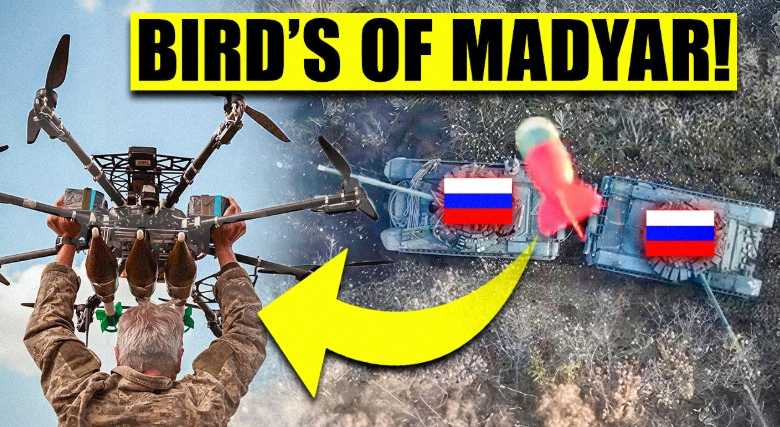
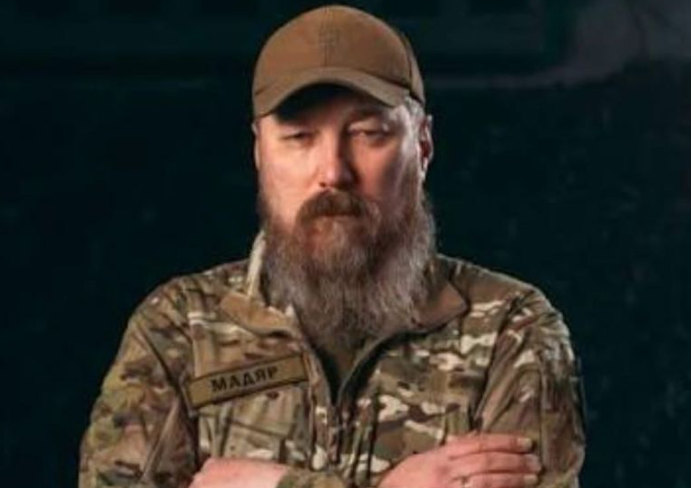
On September 12, according to statements from Robert "Madjar" Brovdi, commander of Ukraine's Unmanned Systems Forces formation known as "Madjar's Birds," operators from the 427th Separate Unmanned Systems Brigade "Rarog" located and struck Grunis in occupied Donetsk.
His death has since reportedly been confirmed by Russian sources.
The irony is difficult to ignore.
A commander who allegedly reported a battlefield success that did not exist was eventually located through one of the technologies that increasingly makes deception harder to sustain.
Because drones are changing more than tactics.
They are changing truth.
Historically, distance protected senior commanders. Generals operated behind layers of security, geography and bureaucracy. The battlefield was dangerous for soldiers. It was less dangerous for those directing them.
Ukraine has shattered that assumption.
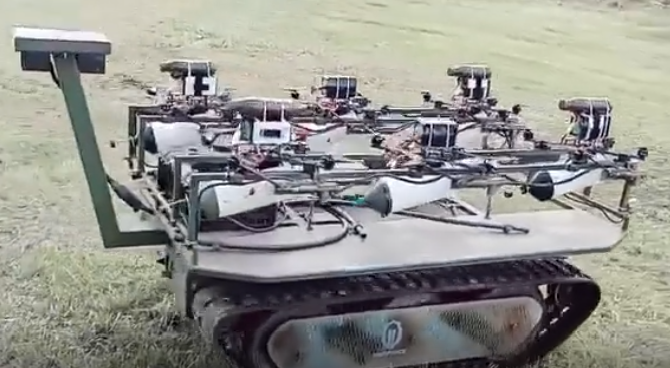
Modern drones have compressed the distance between tactical action and strategic consequence.
The same systems that observe troop movements can identify command posts.
The same sensors that locate artillery can locate commanders.
The same network that tracks a vehicle can eventually track the person inside it.
Visibility has become a weapon.
And increasingly, rank offers little protection against it.
What makes stories like Grunis' death significant is not simply the elimination of a senior officer.
Generals have always been targets.
The significance lies in what it reveals about the battlefield itself.
The modern battlefield is becoming a giant sensor network.
Drones, satellites, electronic intelligence, communications intercepts, software analytics and human operators are merging into an ecosystem capable of finding, tracking and striking targets at unprecedented speed.
The result is a form of warfare in which mistakes travel faster than ever before.
So do lies.
A false report might influence political decision-making for weeks.
A drone may expose reality within hours.
That may be one of the most disruptive aspects of unmanned warfare.
For decades, military power was measured largely in firepower.
How many tanks?
How many aircraft?
How many missiles?
Ukraine increasingly suggests a different metric.
How quickly can you find something?
Because once a target is found, every other capability becomes easier to employ.
The rise of formations such as "Madjar's Birds" reflects this shift.
Their importance is not merely that they operate drones.
It is that they participate in an operational system built around persistent observation, rapid adaptation and immediate action.
This creates an uncomfortable reality for traditional military hierarchies.
A commander can shape a narrative.
A drone can challenge it.
A government can announce territorial gains.
Persistent surveillance can verify whether those gains actually exist.
A military can attempt to hide.
A network of sensors can keep looking.
The battle is no longer only for territory.
It is increasingly a battle for information.
And information has become lethal.
The story of Anton Grunis may ultimately be remembered for more than the death of a Russian general.
It may be remembered as another example of a broader transformation taking place in Ukraine.
A transformation in which technology is redefining accountability on the battlefield.
Because in previous wars, a false claim might survive for years.
Today, a drone might arrive first.