The Expanded Warrior. When Technology Extends the Limits of the Combatant / by Diego Bavio
The first manual I had to learn at the Military College was *The Isolated Soldier and the Patrol*.
It was not a casual choice. Nor was it a relic from another era.
From the very beginning of his training, the infantryman had to understand that he might become isolated. He could lose contact with his unit, be separated from his commander, lose communications—and still be expected to orient himself, understand the situation, make decisions, and continue the mission.
That principle remains at the heart of infantry training today.
But the battlefield is changing.
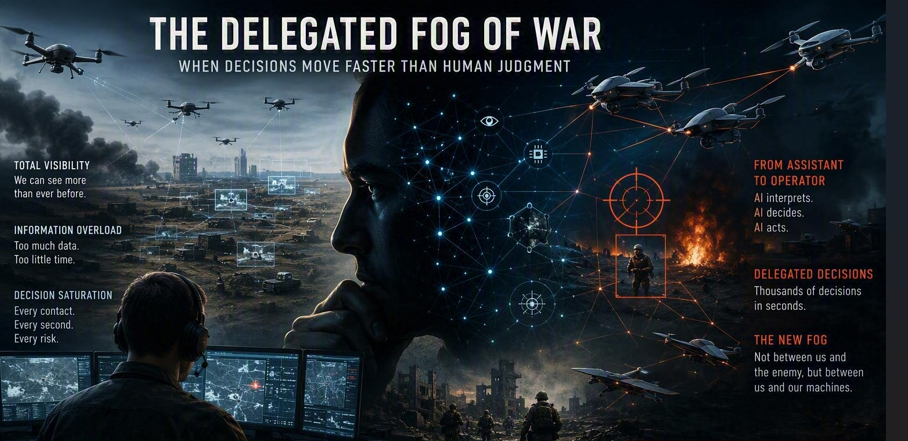
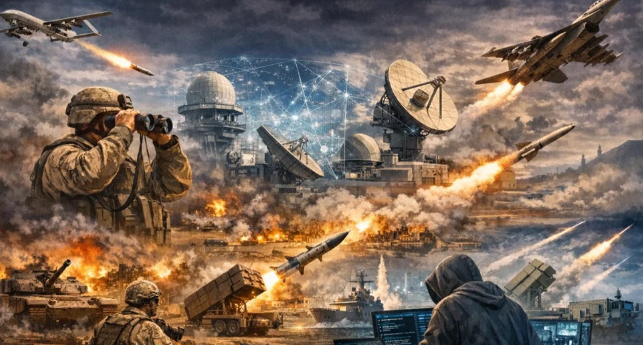
A combatant can now observe a target far beyond his own field of vision. He can receive real-time imagery from a drone, consult digital maps, use thermal sensors, communicate with dispersed elements, and receive information that no soldier of previous generations could have obtained on his own.
Technology is beginning to extend the physical limits of the combatant.
And perhaps that is the true meaning of the expanded warrior.
Seeing Beyond One’s Own Eyes
For centuries, the soldier was constrained by his own senses. He could see only as far as his eyes allowed. He could hear only what was within earshot. He navigated by terrain, map, and compass. To understand what was happening beyond his position, he depended on other men—observers, scouts, commanders—or on reports that inevitably arrived with some degree of delay.
What Clausewitz called the “fog” of war began to change with technology.
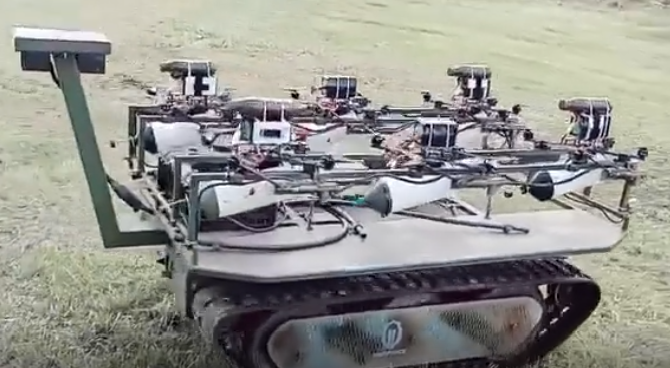
First came binoculars and optical sights. Then thermal cameras, night-vision devices, radios, and positioning systems. Today, a small drone can give a combatant an entirely different perspective of the terrain around him.
But the most interesting transformation is not the sensor itself.
It is what the combatant can do with what the sensor allows him to know.
A combatant in Ukraine described a particularly illustrative situation. During an assault on a Russian position, he was receiving instructions through his earpiece from his platoon leader. The leader was watching the assault from a drone and could direct his attention in real time, identify enemy personnel, and tell him how to adjust his actions.
The combatant was on the ground. His commander was elsewhere. The drone was above them.
Yet, for a few moments, all three became part of the same system.
The man on the ground was no longer relying solely on what his own eyes could see. His senses had been extended by a machine and by another human being observing the same battlefield from a different perspective.
That is more than simply using a drone.
It is fighting with capabilities that extend beyond the physical limits of one’s own body.
The Combatant No Longer Has a Single Point of View
This expansion is not limited to vision.
A combatant may know the position of a friendly unit outside his field of vision, receive information about a target before he sees it, access imagery gathered by another system, receive an alert generated by an algorithm, or communicate with a commander observing the same situation from another location.
The fundamental difference is that the combatant no longer necessarily has a single point of view of the battle.
He has access to a network of points of view.
And that also changes the relationship between the different levels of command.
The commander can observe the subordinate.
The subordinate can transmit information directly from the ground.
An operator can control a system remotely.
A sensor can detect something no human being is observing.
Information begins to flow in every direction.
The battlefield is no longer simply what each combatant can see from his own position.
It is also what the network can show him.
The Limits of Expansion
But there is a paradox.
The more information a combatant can receive, the greater the risk of overwhelming him. The expanded warrior may see, hear, and know more, but he remains human. He must interpret information, distinguish a real threat from a decoy, understand the context, assess the recommendations he receives, and make decisions under pressure.
Technology can extend his senses, but it cannot remove his cognitive limits.
The question, therefore, is no longer simply how much technology we can place around the combatant.
The real question is how much of that technology he can actually turn into combat capability.
Because information is not understanding—and understanding is not decision-making.
The true value of expansion appears only when the combatant can turn what he receives into effective action.
When the Network Disappears
But there is another, even more important question.
What happens when the technology stops working?
The enemy has electronic warfare capabilities as well.
It can jam communications, degrade data links, disrupt navigation, deny certain sensor capabilities, or simply destroy the systems that keep the combatant connected.
The expanded warrior can lose, within seconds, much of what had multiplied his capabilities.
And then the isolated soldier reappears—not as a figure from the past, but as a survival capability for the future.
The combatant must be able to fight while connected when the network is available, but also when the network is degraded.
He must be able to exploit a drone without becoming dependent on it. He must know how to use a navigation system without forgetting how to navigate with a map and compass.
He must be able to receive information from a sensor without losing the ability to read the terrain. He must be able to receive orders, but also understand his mission well enough to act when those orders stop coming.
Technology should expand the combatant. It should not make him dependent on it.
The True Expanded Warrior
This leads to an important distinction.
The expanded warrior is not simply a drone operator. Nor is he the combatant who carries the most devices or receives the most information.
He is the combatant whose ability to see, understand, decide, and act has been extended through a combination of people, sensors, networks, algorithms, and machines.
The expanded warrior does not replace the isolated soldier; he contains him.
Technology allows him to see beyond his own eyes, hear beyond his own ears, understand a situation that exceeds his physical position, and act against targets far beyond what he could reach on his own.
But when the link is cut, when the drone disappears, when the screen goes black and the radio stops transmitting, the man remains.
And that man must know what to do.
How Far Should We Expand the Combatant?
Every form of expansion has a limit: the human ability to process, understand, and turn into decisions the volume of information being received. We can multiply sensors and use artificial intelligence to filter the data, but the outcome will still depend on a human being capable of interpreting what lies before him and acting accordingly.
The challenge, then, is not to give the combatant ever more information. It is to find the point at which information can still be converted into combat power.
Man Remains at the Center
The true technological transformation of the battlefield may not lie in replacing the combatant.
Nor in turning him into someone capable of controlling an ever-growing number of machines.
It may lie in something much simpler and, at the same time, much deeper: enabling a human being to see more, understand more, and do more than his own body would allow.
That is the expanded warrior: a combatant capable of using a network of sensors, information, machines, and other human beings as an extension of his own capabilities—but also capable of continuing when that network disappears.
Because perhaps the true test of technology is not how much it can do for us when everything works.
It is how much it allows us to keep doing when it stops working.
------
Author Biography
Diego Bavio is anArgentine defense and security analyst specializing in military innovation,logistics, and transnational security in Latin America. He holds a Bachelor'sdegree in Security Sciences and developed the Military Learning Velocity(MLV)framework, which examines how the speed of organizational learning isbecoming a decisive factor in modern warfare. His research also focuses ontransnational criminal ecosystems, military adaptation, and regional securitydynamics.