The Ukrainian Paradox II. Peace as an Instrument of Power / by Diego Bavio
The clock is ticking.
On June 4, Volodymyr Zelensky publicly invited Vladimir Putin to meet in order to seek a way out of the war. Two months later, on August 11, he announced that Ukraine had delivered new proposals to U.S. negotiators aimed at ending the conflict. Kyiv says it is seeking, together with its allies, to build a mechanism capable of bringing Russia to the negotiating table.
We do not know whether Putin will agree to sit down and negotiate. Nor do we know what conditions Moscow will impose or which ones Kyiv will be willing to accept.
But there is a question Ukraine should begin discussing with the same intensity with which it discusses territory: What does Ukraine want to be after the war?
Because there may be an outcome in which Ukraine loses territory and, at the same time, gains power.
And that possibility deserves serious consideration.
From Territorial Outcome to Strategic Outcome
The first Ukrainian paradox was relatively simple to formulate.
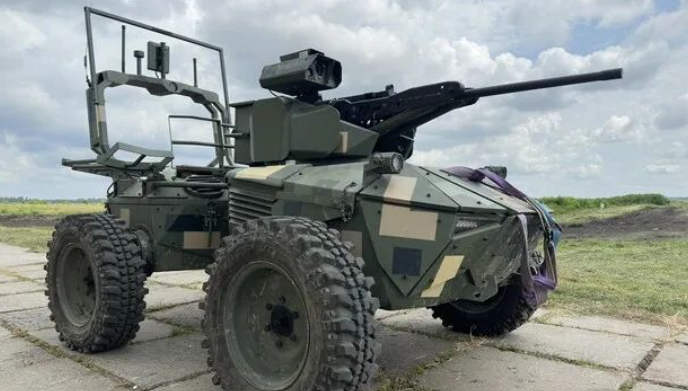
Ukraine has demonstrated an extraordinary ability to inflict damage on Russia through drones, long-range strikes, special operations, and a growing defense technology industry. However, none of these capabilities can indefinitely substitute for the force levels, air defense, industrial depth, and external sustainment required to fight a prolonged war.
The war is also demonstrating that Russia has turned the conflict into a contest of industrial endurance.
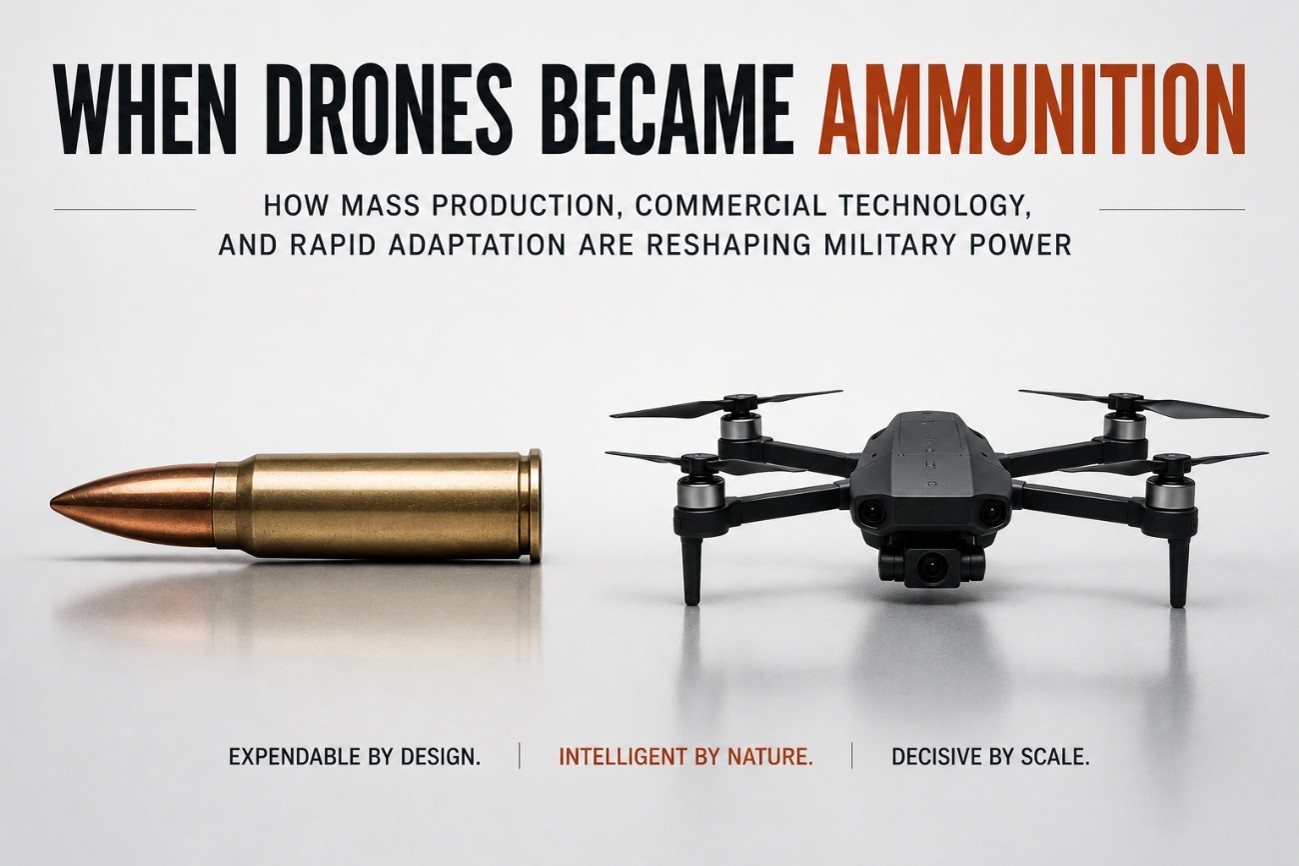
Moscow has expanded military production and adapted a large part of its economy to the needs of war. Ukraine, meanwhile, has built a defense industry that in 2022 barely existed at today's scale and now produces millions of drones and a growing variety of unmanned systems. Some estimates put Ukrainian drone production in 2026 at several million units.
Paradoxically, that volume is creating a new operational bottleneck: how to manage and coordinate hundreds of drones converging simultaneously on the same target.
The problem is that exceptional technological capability does not automatically translate into sufficient strategic capability to recover all lost territory.
And here the second paradox appears.
Ukraine may have to accept that, in the short term, it cannot militarily recover everything it considers its own. But that does not necessarily mean it has to accept a strategic defeat.
A Territorial Defeat Can Become a National Transformation
The political difficulty is obvious.
How can a Ukrainian government present to its society a peace that implies accepting, at least de facto, the loss of territory?
It probably cannot present it as a victory, but neither does it necessarily have to present it as a defeat.
It can present it as an equilibrium point and as the need to avoid sinking into an endless war that continues to bleed the Ukrainian people.
The war would have allowed Ukraine to preserve the independence of the state, consolidate its European orientation, destroy the illusion that Russia could quickly subjugate Ukraine and, above all, build armed forces and a defense industry that Ukraine did not have before 2022.
Peace would then become a strategic pause.
Not a definitive renunciation of Ukraine's territorial positions, but the decision to stop consuming human, economic, and industrial resources in a war whose immediate territorial outcome appears increasingly difficult to change.
The distinction is fundamental.
Accepting a territorial reality does not necessarily mean accepting that reality as permanent.
A future generation of Ukrainians could revisit Crimea, Donetsk, Luhansk, Zaporizhzhia, or Kherson from a completely different political and economic position.
But to reach that point, Ukraine first needs to exist, rebuild itself, and accumulate power.
The Opportunity the War Has Created
Here one of the most interesting phenomena of the war appears.
Ukraine is building something that could become a much more durable strategic advantage than any immediate territorial gain: a defense technology-industrial ecosystem.
Hundreds of companies are developing drones, unmanned vehicles, artificial intelligence, electronic warfare, robotics, unmanned naval systems, military software, and other technologies.
Combat experience is directly feeding this ecosystem. The soldier uses the system, transmits observations, the developer modifies the product, it returns to the battlefield, and the cycle begins again.
That cycle is one of the clearest examples of what we can call Military Learning Velocity: the ability of a military-industrial organization to learn, adapt, and rapidly transform that learning into new capabilities.
The phenomenon is already attracting interest outside Ukraine. The Ukrainian industry is beginning to develop mechanisms to export drones, weapons, technology, and knowledge, including production agreements with foreign partners. In April 2026, Kyiv announced a "Drone Deals" framework to facilitate production, supply, and technology transfer with other countries.
The question then changes:
Why should Ukraine consider this industry only as a tool for winning the current war?
Why not turn it into one of the economic foundations of post-war Ukraine?
The Israeli Model, Without Copying Israel
Israel offers an interesting reference.
For decades it built an ecosystem in which the armed forces, universities, industry, startups, private capital, and exports reinforced one another.
Ukraine is rapidly following a similar path, but it does not need to become a copy of Israel.
It could build its own model: a European military technology power born from a high-intensity conventional war.
The difference would be extraordinary.
Israel developed its ecosystem over decades; Ukraine is developing its own under fire.
And that experience has a value that is difficult to buy.
Ukrainian weapons cannot be marketed merely as laboratory products. Many are being designed and modified through their use in a real war against an adversary possessing major conventional capabilities, drones, electronic warfare, missiles, and an enormous industrial base.
The "Combat-Proven" label often makes the difference when it comes to tipping the balance with potential buyers.
That operational knowledge can become a strategic commodity.
Ukraine could sell not only drones.
It could sell how to wage the war of the 21st century.
Peace Can Become the Beginning of the Second Cycle
This is where the idea of peace takes on a different dimension.
For many Ukrainians, peace might simply appear to be the moment when the country accepts what it could not recover.
But there is another possibility.
Peace could be the moment when Ukraine stops consuming its national capital and begins converting the experience accumulated during the war into economic, technological, and military power.
The sequence could be:
Peace → Reconstruction → Investment → Industry → Technology → Exports → Armed Forces → Deterrence
Reconstruction would not have to mean returning to the Ukraine of 2021.
It could mean building a completely different Ukraine: economically integrated with Europe, with a competitive defense technology industry, exporting drones, robotics, artificial intelligence, electronic warfare, and military systems, with universities connected to industry, and with the armed forces continuing to serve as a laboratory for innovation.
And, above all, a Ukraine that retains the ability to produce military power without depending on external assistance.
That would be a strategic transformation far deeper than the simple recovery of a city.
------
Author Biography
Diego Bavio is an Argentine defense and security analyst specializing in military innovation, logistics, and transnational security in Latin America. He holds a Bachelor's degree in Security Sciences and developed the Military Learning Velocity (MLV)framework, which examines how the speed of organizational learning is becoming a decisive factor in modern warfare. His research also focuses on transnational criminal ecosystems, military adaptation, and regional security dynamics.