The Ukrainian Paradox / by Diego Bavio

Copilot said:
There is a paradox in the Ukrainian war effort that deserves much more attention.
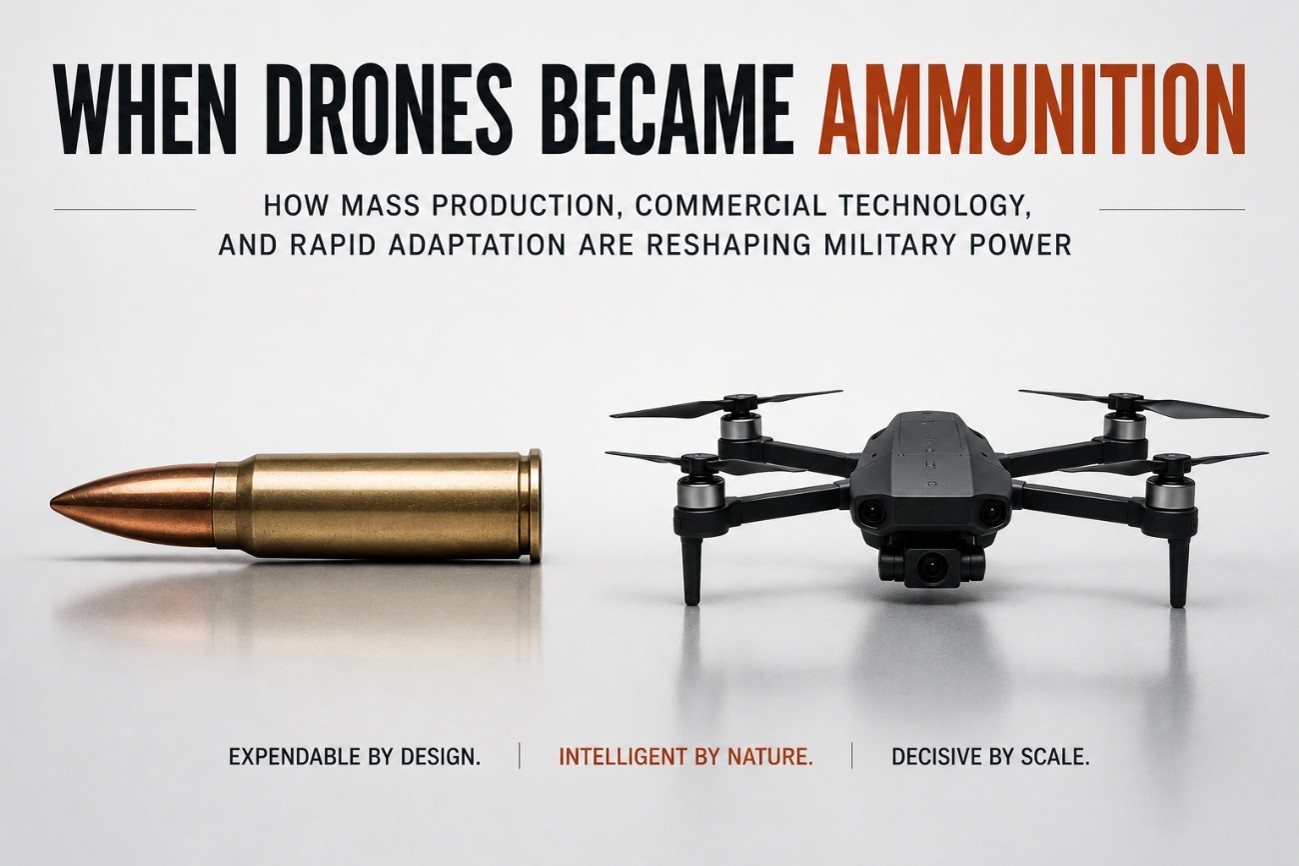
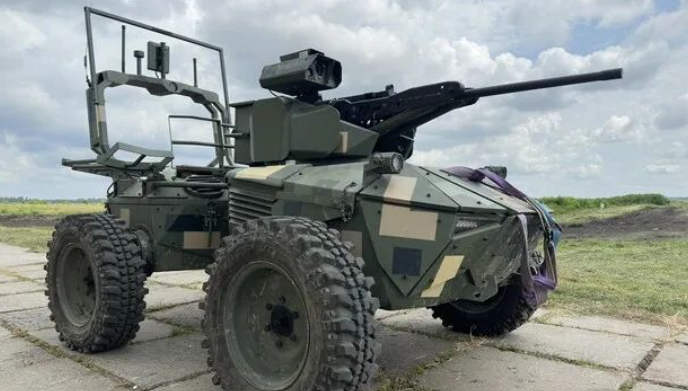
Ukraine has developed one of the most innovative and sophisticated drone ecosystems in modern warfare. Millions of UAVs, increasingly complex attack systems, deep-strike capabilities, and an extraordinary speed of adaptation have transformed the tactical level of the war.
But tactical innovation is not the same as strategic effect.
The central question is not how many Russian targets Ukraine can destroy with its drones. The question is whether that technological advantage can change the operational equation: regain the initiative, regain manoeuvre, alter the balance of forces, and ultimately build a stronger negotiating position.
So far, it has not.
Ukrainian drones have made the Russian advance extraordinarily difficult and costly. They have helped prevent breakthroughs and imposed a tremendous level of attrition. But they have not yet produced the operational effect Ukraine needs to impose its own conditions.
And this creates a dangerous paradox:
A military force can become extraordinarily innovative at fighting a defensive war while progressively losing strategic freedom of action.
This is where the concept of Military Learning Velocity (MLV) becomes useful: not simply how much a military organization learns, but how quickly it turns combat experience into new operational capabilities.
And here we can observe a difference that deserves to be studied.
Ukraine appears to be using much of its learning velocity to deepen defensive capabilities: better drones, greater precision, improved reconnaissance systems, electronic warfare, deep strikes, and new ways of making the Russian advance more costly, but without being able to regain the manoeuvre capability needed to change the situation on the ground.
Russia, by contrast, appears to be using its learning to try to solve a different problem: how to regain manoeuvre and open an operational window of opportunity within a battlefield dominated by drones, sensors, and precision fires.
The difference is subtle, but strategic.
One army can learn to defend itself better. Another can learn to break the defence better.
Russia, meanwhile, is not simply waiting.
Moscow continues experimenting with new ways to regain mechanized manoeuvre and break the positional character of the war. The failure of an attack does not necessarily mean the end of the Russian effort; it can become another iteration within a learning cycle.
And here the real danger appears.
Ukraine does not necessarily need to lose hundreds of kilometres for the dynamics of the war to change radically. A sufficiently deep operational breakthrough could be enough to disrupt the coherence of the defensive system and trigger a succession of withdrawals.
A defence can absorb losses for months. A defence that loses its operational coherence can disintegrate very quickly.
And if Russia manages to open that window, the objective would no longer simply be to conquer territory.
It would be to transform an operational advantage into a strategic advantage.
Because a breakthrough can simultaneously affect logistics lines, command posts, reserves, artillery, communications, and above all, the defender's ability to decide where and how to fight.
And this also completely changes the question of negotiation.
Ukraine's strategic objective should not simply be to demonstrate that it can continue resisting. It should be to demonstrate that it can create a military situation in which Russia has more to lose by continuing the war than by sitting down to negotiate.
Because if Ukraine reaches a point where it can only say, "We can continue resisting," while Russia can respond, "We can continue attacking, and we are also learning to do it better," the negotiating balance of power begins to change.
The decisive question, therefore, is not whether Ukraine can continue resisting.
It is whether it can still use its learning capability to generate a new operational equation before Russia manages to create that window of opportunity.
Because if it cannot, an even greater paradox may emerge:
Ukraine could be using a high learning velocity to perfect a defence that, precisely because it is only defensive, does not allow it to regain the initiative.
Meanwhile, Russia could be using its own learning velocity to find a way to turn a positional war into a war of manoeuvre.
The decisive question is not who learns faster, but who is using that learning to change the strategic equation.
And if it succeeds, the consequence will not be merely territorial. It will be strategic.
------
Author Biography
Diego Bavio is an Argentine defense and security analyst specializing in military innovation, logistics, and transnational security in Latin America. He holds a Bachelor's degree in Security Sciences and developed the Military Learning Velocity (MLV)framework, which examines how the speed of organizational learning is becoming a decisive factor in modern warfare. His research also focuses on transnational criminal ecosystems, military adaptation, and regional security dynamics.