The Drone Changes Hands: From Military Revolution to the New Criminal Threat / by Diego Bavio
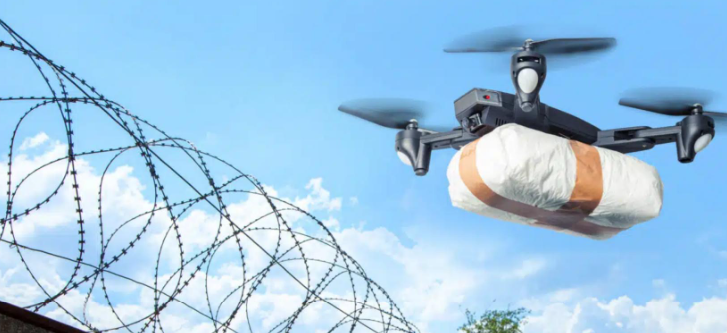
The democratization of technology does not have a single beneficiary.
The same transformation that is allowing Latin American states to develop unmanned capabilities that are more accessible, adaptable and tailored to their own needs is also lowering the barriers to entry for non-state actors.
The war in Ukraine first demonstrated how this technology could transform military operations. Latin America is now beginning to face a second question: what happens when the same logic reaches organized crime?
Since 2022, with the war in Ukraine as its main accelerator, the drone revolution has transformed the military environment and the battlefield. What began as an urgent, often improvised adaptation of systems originally designed for civilian use became, within a few years, one of the fastest military innovation processes in decades.
Necessity produced creativity. Small commercial drones were adapted for reconnaissance, observation and target acquisition; others were modified to carry explosive payloads. FPV systems turned small aircraft into low-cost precision munitions. As the war evolved, purpose-built ISR platforms, attack and loitering munitions, swarms, autonomous-navigation systems and increasingly sophisticated unmanned ground and surface vehicles emerged.
The transformation did not remain in the air. The same logic extended into UGVs and USVs, contributing to an increasingly distributed form of warfare in which sensors, communications, artificial intelligence, electronic warfare and autonomous platforms form a single operational ecosystem.
Ukraine turned the drone into something much more important than a new type of aircraft. It turned it into a new way of conducting war.
Perhaps the most important consequence is not technological but cultural. The world has demonstrated that a relatively inexpensive platform, rapidly modified and creatively employed, can produce effects that previously required much more complex and expensive military systems.
Innovation is no longer the exclusive domain of major defense manufacturers. It can emerge in a workshop, a garage, a military unit or from an operator who discovers a new way to employ existing technology.
Once a technology demonstrates that it can change the relationship between cost and effect on the battlefield, other actors inevitably begin to take notice.
Among them are criminal organizations.
When Crime Discovers the Same Logic
What is obvious to a military commander can also be obvious to a criminal organization.
A drone does not care whether its operator belongs to an army, a guerrilla group or a cartel. The platform offers a capability that is valuable to anyone who needs to see without exposing themselves, transport something without putting people at risk, or reach places that previously required crossing a physical barrier.
That is where a second revolution begins.
Criminal groups do not need to reproduce the sophistication of armed forces. They can select the capabilities that serve their purposes and adapt them to their own needs. They do not need to build an unmanned air force. They need to find concrete applications for technology that already exists.
Surveillance and reconnaissance, route monitoring, attacks and, above all, the movement of high-value cargo are all potential applications. The process does not necessarily involve copying military capabilities. It involves adapting their underlying logic.
A technology developed to solve a battlefield problem can acquire a completely different function when incorporated into a criminal organization. That difference begins to change the nature of the threat.
Colombia Shows the Capability
A recent drone attack against a Colombian military installation showed how far a non-state armed organization can take the incorporation of this technology into a coordinated operation. More than a dozen explosive-laden drones were reportedly used simultaneously against a military installation in Ocaña.
The image is powerful and naturally draws attention. From a military perspective, it raises immediate questions: how can the drones be detected and identified, how can an installation be protected, and how can a relatively small platform produce a significant effect against a military position?
But there is a risk that this image will determine how we interpret the phenomenon.
If we look at the problem exclusively through a military lens, we see the drone as a new weapon requiring new weapons to defeat it.
We are probably seeing only part of the problem.
The real transformation begins when the same technology leaves the battlefield and enters the realm of public security. The user changes, but so does the function.
For a military force, an explosive-laden drone is a weapons system designed to produce an effect against a target. For a criminal organization, the same platform can serve a completely different purpose. It can observe and monitor, transport and deliver. It can become one component of a logistics chain in which human exposure is no longer a necessary condition for executing the mission.
The drone then stops being the center of the operation. The mission becomes what matters.
Colombia Shows the Capability. Mexico May Show the Scale.
The Colombian case illustrates how far a non-state armed organization can go in incorporating drones into an offensive operation. But the more consequential public-security challenge may emerge when the same logic is adopted by criminal organizations with financial resources, logistics networks, replaceable platforms and strong economic incentives to experiment with new technologies.
Mexico is particularly relevant in this regard.
There is another factor that makes the Mexican case significant: the possibility that the transfer may be not only technological, but also human and doctrinal.
In 2025, an investigation reported that Ukrainian counterintelligence was examining the presence of Spanish-speaking volunteers, some allegedly linked to criminal organizations, who were said to have joined the International Legion to gain experience in the use of FPV drones. The investigation reportedly began after an alert from Mexico's National Intelligence Center was transmitted to Ukrainian security services.
The significance of the case lies in a different dimension of the phenomenon.
Ukraine may not only be exporting technology. It may also be, unintentionally, becoming a source of operational knowledge.
For a criminal organization, learning how to use a system may be more valuable than buying the most sophisticated system available. Learning from people already operating such systems under the demanding conditions of a battlefield can provide knowledge that cannot simply be purchased off the shelf.
The case must be treated cautiously. It concerns intelligence investigations and alleged links, not public proof that criminal organizations have established a formal training structure in Ukraine. But as a strategic indicator, it is difficult to ignore.
Technology can be purchased. Experience has to be acquired.
And the war in Ukraine is generating a reservoir of experience in unmanned systems that may extend beyond the battlefield.
The drone does not have to be merely a vehicle for delivering an explosive. It can become one component of a much broader logistics chain.
That is where the equation changes.
For a soldier, a drone carrying an explosive payload is a means of producing an effect. For a criminal organization, the payload may be the economic asset that justifies the entire operation.
The Mission Matters More Than the Drone
What matters, then, is not necessarily how much the platform costs. It is how much value the platform allows the organization to transport, observe or deliver.
A relatively inexpensive drone can be associated with a mission whose value to its operator is vastly greater.
The question therefore changes from “How much does the drone cost?” to “How much is the mission worth?”
That distinction should be central to any public-security strategy involving unmanned systems.
If an adversary can replace a lost platform relatively easily, destroying the vehicle does not necessarily mean destroying the capability.
The real objective must be to change the economics of the mission.
This logic is not confined to the air. Organized crime is beginning to explore it at sea as well.
In both domains, the underlying logic is similar: reduce human exposure, increase persistence and make the platform executing the mission replaceable. What may not be replaceable is what that platform carries.
In recent years, authorities have also detected and seized semi-submersibles used by criminal organizations to transport drugs, some incorporating varying degrees of automation and unmanned navigation.
Whatever the specific characteristics of each vessel, the phenomenon matters for another reason: the logic of unmanned systems is beginning to spread across domains.
The objective is not necessarily to build a sophisticated machine. It is to reduce human exposure, increase persistence and make the platform executing the mission relatively expendable.
The platform can be disposable. The mission is not.
And the greater the value of what the platform can transport, observe or deliver, the greater the incentive to accept the loss of the platform itself.
The problem is therefore no longer exclusively technological. It is economic and operational.
Organized crime is not necessarily copying the weapons of war.
It is copying their logic: separating the human being from the platform executing the mission.
That is where the drone stops being simply a weapons system and begins to become part of a logistics system.
Defense Is Running Behind
When a threat changes, the response changes as well.
The United States has already begun deploying high-energy C-UAS systems, including lasers, against drones associated with cartel activity along its southern border.
This is a significant step. For decades, countering aerial threats often involved systems whose cost, complexity and logistics could greatly exceed those of the platforms they were designed to destroy. Directed-energy systems introduce the possibility of changing that equation, at least under certain conditions.
But even this new generation of defensive systems presents a paradox.
The fact that we can shoot down a drone does not necessarily mean that we have solved the problem.
The adversary is not required to keep its behavior constant. It can modify its platforms, procedures, numbers and, above all, its missions.
The defender develops a capability against a threat it already knows. The adversary is looking for the next way to employ it.
That is one reason technology alone rarely solves a security problem.
A criminal organization can experiment with relatively simple solutions, accept losses and modify procedures quickly. The state, by contrast, must turn an emerging threat into an institutional capability: develop doctrine, acquire technology, train personnel, establish procedures, coordinate agencies, resolve legal issues and ensure that the system can operate safely in airspace shared with civilians.
This is why security often arrives one step behind the criminal—not necessarily because it lacks technology, but because it must turn technology into a permanent, integrated and sustainable capability.
The Problem Is Not Shooting Down the Drone
Even an advanced C-UAS architecture faces a problem more difficult than interception itself: scale.
A defensive system cannot be evaluated only by its ability to shoot down a drone. It must do so sustainably, economically and at a scale compatible with the threat.
Directed-energy systems should therefore not be understood as a single solution, but as another element within a broader defensive architecture. A laser can complement electronic warfare, sensors, jammers and kinetic interceptors. Each can perform a different function, and together they can create a layered response to a threat that can also appear in different forms.
The question is not to find the perfect weapon against the drone.
It is to build the right system for the mission.
And again, economics returns to the center of the problem.
The cost of a C-UAS capability is not determined only by the price of an interceptor or the energy required for an engagement. It includes sensors, operators, maintenance, training, communications, integration, infrastructure and the ability to keep the entire system functioning for years.
On the other side, a criminal organization may accept losing platforms if the value of successful operations continues to justify those losses.
A public-security C-UAS strategy should therefore not simply aim to shoot down more drones. It should aim to change the economics of the adversary's mission—to make an operation too uncertain, too costly or too unreliable to remain attractive.
The defender is not competing against the price of the drone.
The defender is competing against the value of the mission.
From Drone to System
This may be the most important transformation now underway.
Discussion about drones often focuses on the aircraft itself: endurance, range, payload, sensors, speed or price.
But the real revolution is not in the vehicle. It is in the system built around it.
Ukraine is demonstrating that drones, sensors, communications, artificial intelligence, electronic warfare and human operators can be integrated into an extremely dynamic operational ecosystem.
Organized crime can learn the same lesson, even with completely different objectives.
The risk for Latin America is not simply that more drones will appear. It is that criminal organizations will begin incorporating unmanned systems into their own operational architectures.
At that point, we will no longer be talking simply about a new aerial threat.
We will be talking about a transformation of organized crime's logistics system.
And that distinction is fundamental.
A weapons system can be neutralized by destroying the weapon. A logistics system requires something more complex: disrupting the chain that allows the mission to produce its effect.
The real challenge for Latin American security is therefore not simply learning how to detect and shoot down drones. It is understanding what lies behind them, what function they perform, what value they carry and what economic logic sustains their use.
The war in Ukraine turned the drone into a fundamental tool of the battlefield.
Organized crime may be about to turn it into something different: a cheap, flexible, replaceable logistics system increasingly independent of human exposure.
And if that transformation continues, the question facing security forces will no longer be simply, “How do we shoot down the drone?”
It will be:
“How do we make the mission no longer make sense?”