The Baltic Formula: Build in Silence, Deliver in Force
In an age obsessed with visibility, perhaps the most radical strategy is invisibility.
While startups compete for attention, funding announcements, media coverage, and social media engagement, a new generation of defense technology companies across Europe has adopted a different philosophy: keep building, stay quiet, and let operational capability do the talking.
That approach is increasingly becoming a competitive advantage.
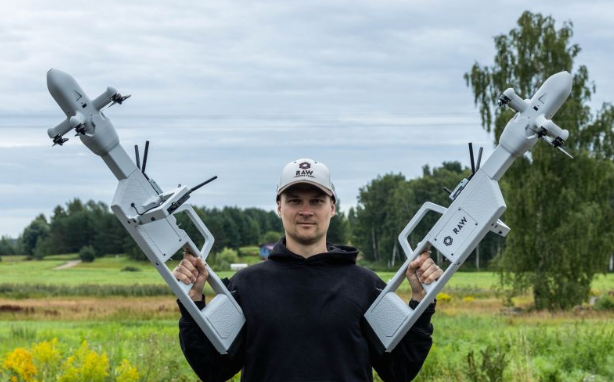
One Latvian defense technology company, RAW Systems, recently offered a rare glimpse behind the curtain. The message was simple: months of engineering, testing, iteration, and development have already happened. What the public is seeing now is merely the beginning.
The statement reflects a broader shift occurring across the defense technology sector.
For years, technology startups borrowed heavily from Silicon Valley playbooks. Growth came first. Visibility came second. Product maturity often came later. Investors rewarded compelling narratives, ambitious visions, and massive promises about the future.
Defense is different.
Nobody cares about slides when lives depend on performance.
Nobody wins contracts because of marketing alone.
In defense technology, reality remains the ultimate judge.
A drone either flies or crashes.
A communication network either survives electronic warfare or fails.
An autonomous system either performs under operational conditions or becomes another expensive prototype.
Success is measured in capability, not clicks.
That reality is creating a new culture among Europe's emerging defense innovators. Instead of announcing concepts years before deployment, many are choosing to remain largely invisible until technologies have been tested, validated, and proven.
The result is a growing number of companies quietly developing capabilities that can reshape modern security.
Latvia is becoming one of the most interesting examples of this trend.
Situated on NATO's eastern flank and closer than most European nations to the realities of contemporary warfare, the Baltic states have developed an unusually pragmatic view of innovation. Technology is not treated as a future ambition. It is viewed as a necessity.
The war in Ukraine accelerated this mindset.
Drone warfare has transformed military planning more dramatically than many analysts expected. Relatively inexpensive unmanned systems now influence tactical operations, intelligence gathering, logistics, reconnaissance, and strategic targeting. The speed of innovation has become astonishing.
What worked six months ago may already be outdated.
What worked last year may already be obsolete.
This creates immense opportunities for agile startups capable of evolving faster than traditional defense contractors.
The winners of this new era will not necessarily be the largest companies.
They may simply be the fastest learners.
That is why rapid prototyping, constant testing, and relentless iteration have become defining characteristics of successful defense technology firms. Every field trial creates data. Every deployment generates lessons. Every challenge becomes a chance to improve.
Innovation cycles that once took years increasingly happen in months.
Sometimes in weeks.
Sometimes even faster.
The defense industry is experiencing the same disruption that transformed software development decades ago. The distinction is that mistakes in defense environments have significantly higher consequences.
This is why quiet development matters.
Testing before talking.
Validation before celebration.
Execution before publicity.
The companies embracing that mindset understand something that many industries have forgotten: credibility cannot be manufactured through marketing campaigns.
It must be earned.
The broader implications extend beyond Latvia.
Across Europe, governments are racing to strengthen industrial capacity, technological sovereignty, and strategic resilience. Defense innovation is no longer solely the responsibility of major contractors and established players. Startups are increasingly becoming critical contributors to national security ecosystems.
They bring speed.
They bring experimentation.
They bring unconventional thinking.
And perhaps most importantly, they challenge assumptions.
The next breakthrough in autonomous systems, artificial intelligence, electronic warfare, or next-generation drone technology may not emerge from a multinational corporation with thousands of employees.
It may emerge from a small team working quietly in a workshop, testing ideas away from public attention.
That possibility is exactly what makes Europe's defense technology renaissance so fascinating.
RAW Systems' message therefore resonates beyond a single company announcement.
It captures the spirit of an entire movement.
A movement that values engineering over noise.
Progress over headlines.
Capability over promises.
Because in a world increasingly shaped by technological competition, the most powerful statement is not what you say you are building.
It's what works when nobody is watching.
And sometimes the most disruptive innovations arrive without warning.