Latvia’s Underwater Drones SUBmerge Are Entering the War - and Redefining Baltic Defence Tech
The war in Ukraine is not only reshaping borders and battlefields. It is quietly redrawing Europe’s defence-tech map.
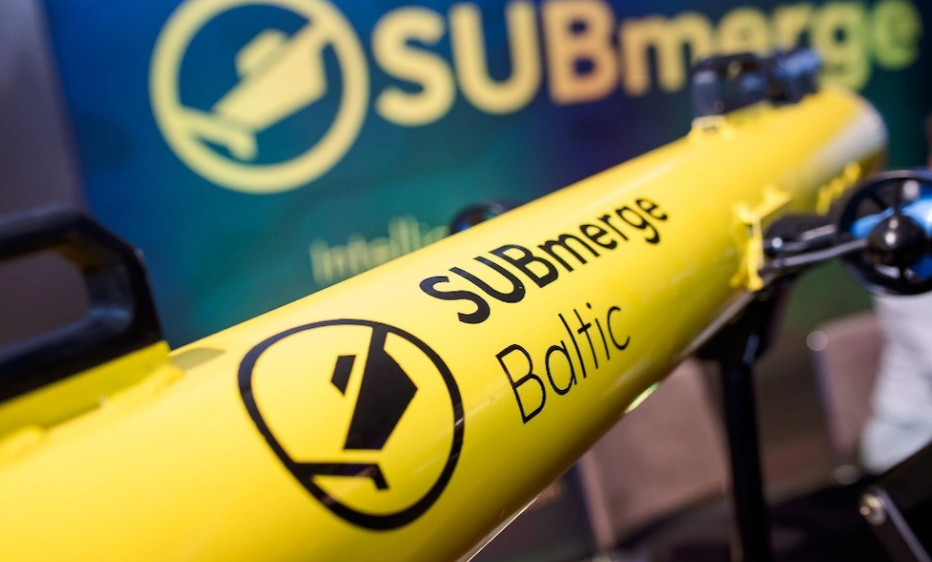
Latvian startup SUBmerge Baltic has signed a cooperation memorandum with one of Ukraine’s leading defence technology manufacturers, marking a significant step for Baltic deep‑tech companies entering real operational environments. The agreement covers product distribution in Ukraine, partial manufacturing, joint development of maritime systems, and the integration of electronics and software across both firms’ platforms.
This is not theoretical collaboration. In the coming months, SUBmerge Baltic will deliver tethered underwater drones to Ukraine, followed by fully autonomous underwater systems later this year. Their initial mission is mine clearance—an unglamorous but deadly necessity in a country whose rivers, ports, and coastal zones are heavily contaminated by explosives.
Underwater warfare doesn’t dominate headlines like drones in the sky. Yet it shapes everything from maritime trade to civilian safety. Clearing mines from water bodies is slow, dangerous, and expensive when done by divers. This is precisely the environment where robotic systems change the equation.
SUBmerge Baltic’s founder, Kārlis Bērziņš, is explicit about the trajectory. While current deployments focus on humanitarian and civilian safety tasks, the cooperation may extend to operational military needs. That quiet statement reflects a broader reality: technology tested under fire tends to evolve quickly—and finds broader defence applications fast.
What makes this partnership notable is not just where the drones are going, but how the cooperation is structured. Partial manufacturing in Ukraine is being explored, while critical technologies—electronics, navigation systems, and software—remain under Latvian control. This model balances scale and security, allowing rapid adaptation without surrendering intellectual sovereignty.
For Ukraine, the value is obvious: access to rare underwater systems at a time when maritime awareness is critical. For Latvia, the implications are strategic.
Cooperation with a Ukrainian manufacturer experienced in unmanned ground vehicles and autonomous systems dramatically increases SUBmerge Baltic’s visibility in one of the world’s most demanding defence markets. Ukraine is not a testbed—it is a filter. Products that perform there tend to find customers elsewhere.
SUBmerge Baltic’s roots are unapologetically academic. The company originated at Riga Technical University, where students initially designed an underwater drone for inspection and search operations in murky Baltic waters—a region where visibility is notoriously poor. To compensate, the system relies on high‑resolution real‑time video and advanced inertial navigation sensors that track movement and depth when vision fails.
Civilian use cases were always obvious: port inspections, infrastructure monitoring, environmental pollution detection, and tragic but essential work such as searching water bodies for missing persons. Latvia’s high drowning rate makes that application painfully relevant.
But war accelerates focus.
Over time, SUBmerge Baltic sharpened its emphasis on defence and maritime security. Its five‑year ambition is bold: to become a technology integrator for NATO and allied countries, delivering full maritime and underwater situational awareness, along with tools for deterrence and protection.
The company is moving quickly. Its tethered drone is already in small-scale production. The autonomous system is in advanced testing and expected to reach production soon. Several additional products are currently in prototype stages.
This shift—from research to deployment—is underway alongside active collaboration with Latvia’s National Armed Forces and ongoing discussions with the Ministry of Defence. Talks are also progressing with partners in the Middle East.
SUBmerge Baltic may be young, founded only in 2023, but its trajectory reflects a wider pattern. Europe’s defence innovation is no longer confined to established primes. It is emerging from universities, startups, and small countries willing to move fast.
Underwater, far from public view, a new layer of Europe’s security architecture is taking shape.
.jpg)
.jpg)
.png)