The Baltic Becomes a Test Range - Germany’s New Play for Autonomous Maritime Security

If you want to understand how maritime warfare and maritime security are changing, stop looking for bigger ships—and start looking for smarter fleets. At SeaSEC 2026 in Rostock, an industry coalition led by Rheinmetall demonstrated exactly that: a networked autonomous system designed to improve decision‑making in complex maritime operations, with critical infrastructure protection as a headline use case.
The stage matters. SeaSEC—hosted by the German Navy at the Seabed Security Experimentation Center—focuses on the problem everyone in Northern Europe now understands viscerally: maritime infrastructure is exposed, surveilled, and increasingly contested. In that context, “autonomy” is not a buzzword; it is a response to time pressure, operator overload, and the growing cost of putting crewed platforms in harm’s way.
At the center of Rheinmetall’s demonstration was the AMC12, a 12‑meter “Autonomous Modular Craft” trial platform that was tested under real conditions during the SeaSEC challenge weeks. Rheinmetall describes the concept as an AI‑supported system with autonomous capabilities for participation in maritime traffic, improved situational decision support, and maritime reconnaissance, surveillance, and defense.
The point is not the boat—it’s the architecture behind it.
A consortium model for autonomy
Rheinmetall’s Naval Systems division has formalized a strategic technology collaboration with IBM, Anschütz, and besecke to develop autonomous surface vehicles, aiming to connect crewed and uncrewed systems “over, under and in the air.” The pitch is blunt: a connected system of systems reacts faster, reduces risk to crews, and increases operational efficiency.
That’s the crucial shift. Autonomy isn’t presented as a single platform replacing sailors; it’s presented as a force multiplier—a distributed sensor and effect network that extends reach while compressing decision cycles.
In this model, each partner owns a critical layer: IBM contributes AI, cloud, and cyber capabilities; Anschütz provides navigation and command systems; besecke covers ship automation; and underwater sensing integration enables detection, classification, and identification of subsea objects to build a more precise picture of what’s happening below the surface.
Why “modular” is the real keyword
The AMC12 is designed as a modular mission craft—swapping payloads and modules depending on the mission, from navigation and sensors to communications and AI applications. Rheinmetall and reporting around the demo highlight features like automated collision avoidance, remote controllability, and high redundancy as core reliability elements.
That modularity is not just engineering elegance. It is a procurement argument. The navies that win in the next decade will not be the ones that buy perfect, monolithic platforms—they will be the ones that field upgradable systems that can be reconfigured at speed as threats evolve.
The strategic message: infrastructure defense is now a frontline mission
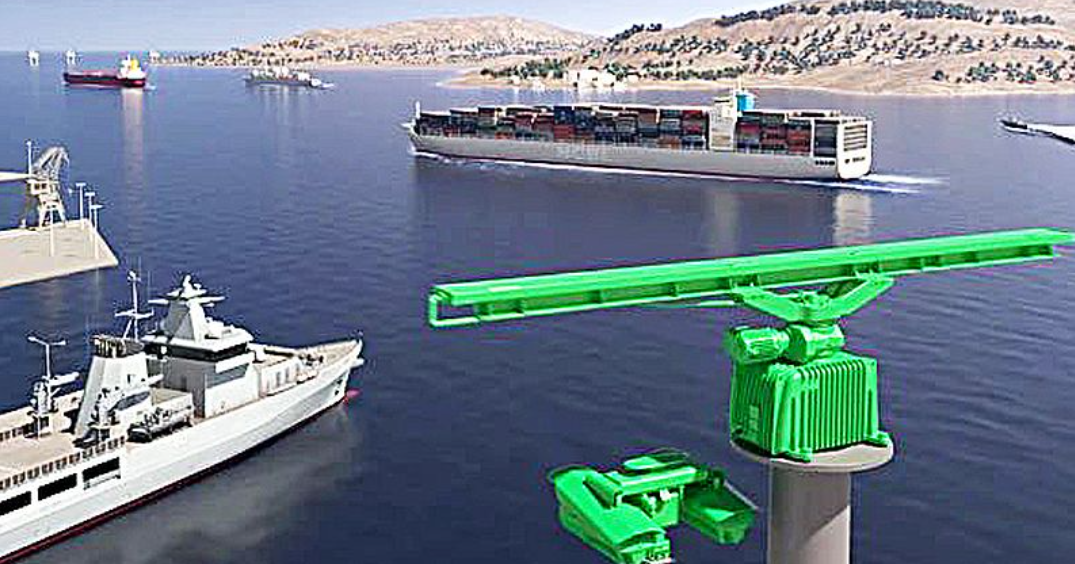
SeaSEC explicitly framed the AMC12 deployment as reconnaissance to protect critical maritime infrastructure such as pipelines and offshore wind parks—targets whose disruption can have outsized economic and political impact.
The SeaSEC context also reflects a broader security reality in the Baltic: damaged cables and the region’s heightened awareness of seabed vulnerability have pushed “seabed security” into the operational mainstream, not the niche.
From demo to scale: can Germany industrialize autonomy?
Demonstrations are easy. Scale is the real battlefield. Notably, Rheinmetall has also pointed to production momentum elsewhere in its naval autonomy portfolio: series production of the Kraken K3 Scout unmanned surface vessel has begun at the Blohm+Voss site in Hamburg, with an initial capacity cited around 200 units per year and scalability up to 1,000 depending on orders.
This is where Germany’s message becomes provocative: it is not merely experimenting—it is preparing to industrialize.
And that is the uncomfortable truth for anyone still thinking in terms of single “hero” platforms: the future of maritime security may be decided less by flagship tonnage and more by who can deploy networked, modular, autonomous fleets—fast enough, safely enough, and in quantity.
SeaSEC 2026 was a demonstration of technology. It was also a demonstration of intent.