The 2030 Deadline: When a War Goal Starts Looking Like a Geopolitical Roadmap
Wars are often measured in battles.
Sometimes they are measured in years.
And occasionally, they are measured in ambitions.
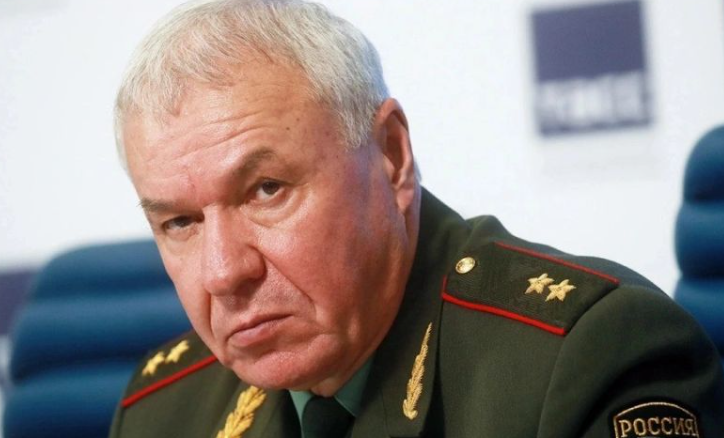
Recent comments from Russian State Duma Defence Committee member Viktor Sobolev have attracted attention not because they describe the current battlefield, but because they appear to outline a future geopolitical timeline.
According to the reported remarks, Russia's war against Ukraine must end in what was described as an "absolute victory" by 2030, while Ukraine should be forced into surrender before Poland and other NATO countries become fully prepared for a potential confrontation with Russia.
Whether these statements ultimately reflect official policy or personal opinion is a separate question.
What matters strategically is what such comments reveal about how some voices inside Russia may be thinking about the future.
The focus is no longer solely on Ukraine.
The focus appears to be on what comes after.
From Battlefield Objectives to Strategic Timelines
Military rhetoric often centers on immediate operational goals.
Capture territory.
Defend positions.
Disrupt supply lines.
Gain battlefield initiative.
What makes the reported comments unusual is their long-term perspective.
The reference to 2030 suggests a strategic horizon extending well beyond current military operations.
It implies that the conflict is being viewed not merely as a war over territory, but as part of a larger competition involving military preparedness, industrial capacity, and geopolitical influence.
In modern warfare, timelines matter.
They determine production targets.
Force modernization plans.
Recruitment programs.
Defense budgets.
Industrial investment.
The side that believes time favors its position often seeks to prolong competition.
The side that believes time works against it seeks faster results.
Viewed through that lens, talk of a 2030 endpoint is less about a calendar date and more about strategic planning.
The NATO Factor
Perhaps the most significant element of the remarks is the explicit reference to NATO countries, particularly Poland.
For several years, European nations have dramatically increased defense spending, expanded military procurement, and accelerated modernization programs.
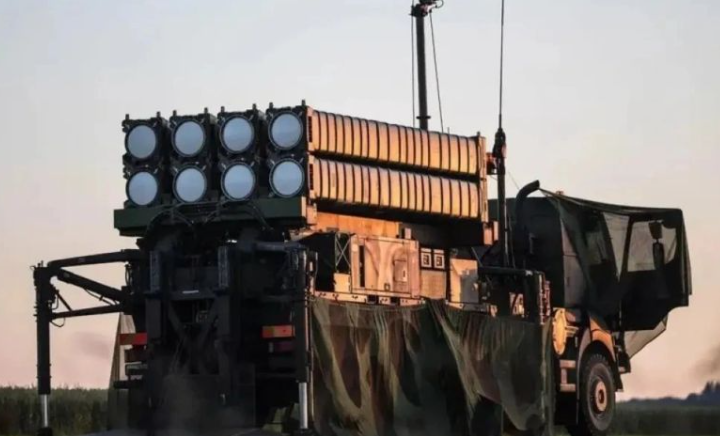
New air-defense systems.
New armored vehicles.
Expanded ammunition production.
Large-scale military exercises.
The security landscape across Europe is changing faster than at any point since the end of the Cold War.
In that context, references to NATO readiness reveal that military planners increasingly evaluate Ukraine within a broader European security framework.
The war is no longer viewed in isolation.
Instead, it is becoming part of a larger calculation involving deterrence, force generation, and strategic balance across the continent.
The Industrial Dimension of Modern Conflict
The comments also highlight an often-overlooked aspect of contemporary warfare.
Wars are no longer decided solely by armies.
They are increasingly influenced by industrial capacity.
Who can manufacture more ammunition?
Who can build more drones?
Who can replace losses faster?
Who can sustain production over years rather than months?
This is why the 2030 timeline matters.
It reflects the reality that modern conflict has become a competition of endurance.
Factories matter.
Supply chains matter.
Innovation matters.
Economic resilience matters.
The ability to sustain military power over time increasingly defines strategic success.
The Return of Long-Term Competition
For much of the post-Cold War era, many European governments operated under the assumption that large-scale interstate conflict was increasingly unlikely.
That assumption has changed dramatically.
Countries are rebuilding defense industries.
Expanding armed forces.
Increasing procurement budgets.
Developing new military technologies.
What was once considered contingency planning is becoming central strategic policy.
Against this backdrop, rhetoric about timelines extending to 2030 reflects a broader reality.
Many governments are preparing for long-term competition rather than short-term crises.
The expectation is no longer that security challenges will disappear soon.
The expectation is that they may persist for years.
The Bigger Question
The most important question is not whether a specific date will prove accurate.
History has repeatedly shown that wars rarely follow political schedules.
The more important question is what these statements reveal about strategic thinking.
If policymakers and military planners increasingly view the conflict through a decade-long lens, then decisions made today will be shaped by assumptions about 2030, not merely 2026.
That affects military investment.
Defense production.
Technology development.
Infrastructure protection.
And alliance planning.
The significance therefore lies less in the prediction itself and more in the mindset behind it.
Because when leaders begin talking about end states years into the future, they are no longer discussing only the next battle.
They are discussing the shape of the future security order.
And that may be the most consequential signal of all.
The war in Ukraine remains the immediate challenge.
But the strategic conversation increasingly appears to be about what Europe, Russia, and NATO will look like when the conflict eventually ends.
Whenever that may be.