Crimea Is Already Under Siege. Russia’s Latest War Game Reveals It Knows It
Discussions about a potential Ukrainian operation against Crimea have been dominated by images borrowed from the past: landing craft approaching beaches, armored vehicles pushing ashore, and a modern replay of World War II amphibious assaults.
A recently revealed Russian military exercise suggests Moscow may be thinking about something very different.
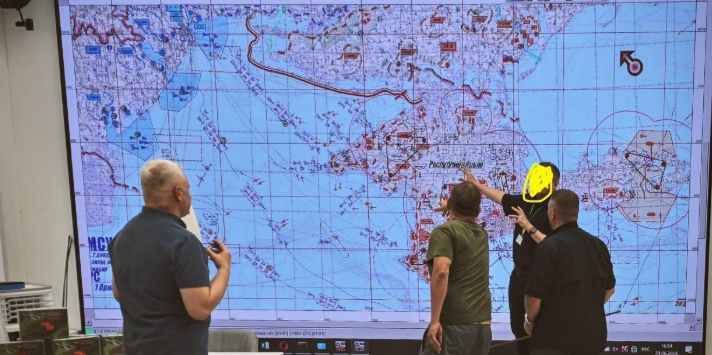
The operational command-and-staff exercise, titled "Crimean Reveille," reportedly focused on a hypothetical Ukrainian operation against occupied Crimea. Yet the scenario appears to have little in common with traditional amphibious doctrine. Instead, it reflects a battlefield transformed by drones, precision weapons, networked sensors, and rapid maritime strike platforms.
Perhaps the most interesting aspect of the exercise is not that it happened—but what Russian planners appear to be afraid of.
A Landing Without Landing Craft
According to publicly available descriptions, the exercise involved Russian reserve and retired officers divided into opposing staffs.
The fictional Ukrainian force, designated the "Blue" side, reportedly employed unconventional methods and extensive use of modern detection and strike systems.
The defending "Red" side was forced into a largely defensive posture.
Maps associated with the exercise reportedly highlighted potential Ukrainian approaches from the northwestern Black Sea and the Odesa direction, while also depicting Russian defensive deployments around Sevastopol, Kerch, and other key locations across Crimea.
Yet the scenario appears to have focused less on beaches and more on networks.
Rather than modeling a large amphibious invasion force, it reportedly explored the effects of long-range precision strikes, unmanned systems, maritime drones, intelligence assets, and rapid attacks against critical lines of communication.
This is not the Crimea invasion envisioned in military history books.
It is a twenty-first-century campaign.
The Real Target: Isolation
Modern military operations no longer require immediate physical occupation to create strategic effects.
The first goal is often isolation.
Looking at the publicly discussed scenario, the emphasis appears to have been on detecting targets at long range and attacking critical infrastructure, transport routes, logistics hubs, and military communications.
For Russia, Crimea's greatest vulnerability is geography.
The peninsula functions as a military fortress—but only as long as it remains connected.
Its ports, bridges, roads, airfields, logistics centers, and command networks are all potential pressure points.
A campaign centered on drones, precision strikes, and maritime systems could aim to gradually disrupt those connections rather than immediately seize territory.
In many ways, that reflects trends already visible across the broader conflict.
The Drone Factor
One striking element of the reported scenario is the prominence of unmanned systems.
Ukraine has repeatedly demonstrated an ability to combine aerial drones, naval drones, intelligence assets, and long-range strike capabilities into integrated operations.
Traditional military planning often separates domains.
Modern Ukrainian operations increasingly connect them.
Aerial drones identify targets.
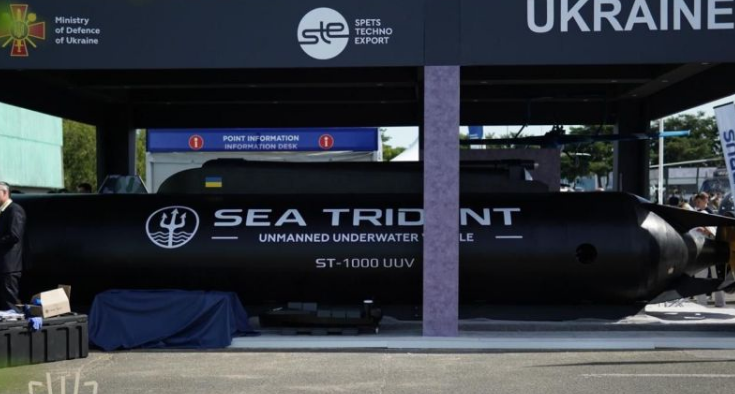
Naval drones threaten coastal infrastructure.
Long-range precision systems exploit vulnerabilities that intelligence platforms uncover.
Each system amplifies the others.
The result is a form of warfare where a relatively small platform can create strategic effects disproportionate to its size.
If the exercise accurately reflects Russian concerns, Moscow may be less worried about large troop formations than about thousands of interconnected unmanned systems operating simultaneously.
Why Publish the Map?
Another important question is why details of the exercise became public.
Maps reportedly circulated through a public Telegram channel rather than remaining inside classified military networks.
That fact deserves careful consideration.
The exercise may have been based largely on publicly available information and open-source analysis rather than sensitive operational planning.
It may also have been intended for strategic messaging.
Military exercises serve multiple audiences.
They inform planners.
They reassure domestic audiences.
They signal readiness to adversaries.
Sometimes they do all three at once.
By publicly displaying scenarios focused on defending Crimea, Russian authorities may be communicating both concern and confidence: acknowledging potential threats while emphasizing preparedness.
Whether that message is aimed at domestic audiences, foreign observers, or both remains open to interpretation.
A Preview of Future Warfare
The most revealing aspect of "Crimean Reveille" may be what it says about how military thinking is changing.
For decades, analysts measured power through divisions, fleets, and aircraft squadrons.
Today, military planners increasingly focus on sensors, data networks, autonomous systems, electronic warfare, precision strike capabilities, and logistics resilience.
The reported exercise appears to reflect exactly that evolution.
Instead of rehearsing another Normandy-style landing, participants reportedly explored a scenario defined by:
- Maritime drones
- Long-range precision weapons
- Persistent surveillance
- Networked targeting
- Disruption of supply routes
- Multi-domain operations
In other words, not a battle for Crimea's beaches.
A battle for Crimea's connectivity.
What Russia’s War Game Really Reveals
Whether "Crimean Reveille" was a serious operational exercise, a public strategic communication effort, or a combination of both, it offers an intriguing insight into Russian military thinking.
The scenario reportedly did not center on waves of Ukrainian troops storming ashore.
Instead, it focused on an adversary capable of striking from long distances, operating across multiple domains, and attacking the systems that make military control possible.
That may be the most important takeaway.
The future contest for Crimea—if it ever comes—may not begin with a landing.
It may begin with isolation.
And Russia's own war game suggests it knows it.