NATO Is Plugging Ukraine’s Wartime Innovation Machine Into the Alliance

Ukraine has spent years proving an uncomfortable truth about modern warfare: the side with the best weapon does not necessarily win the technology race. The side that learns, modifies and deploys faster might.
Now NATO wants to bring that innovation dynamic closer to the Alliance.
Under a new defence innovation agreement, Ukrainian companies and start-ups are set to gain access to opportunities within NATO DIANA, the Defence Innovation Accelerator for the North Atlantic.
On paper, this sounds like another international innovation partnership.
It could be considerably more important.
From battlefield improvisation to an innovation ecosystem
Ukraine has become a brutal real-world laboratory for military technology.
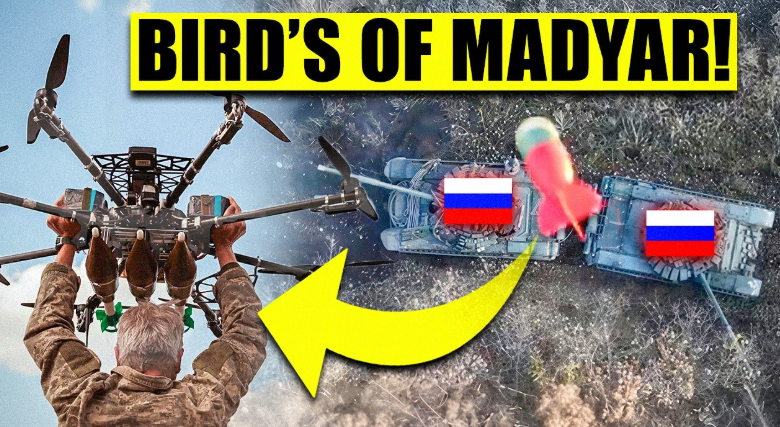
Drones are modified in months rather than years. Electronic-warfare countermeasures trigger counter-countermeasures. Software changes quickly. Operators provide feedback, engineers respond, and technologies return to the battlefield.
Traditional defence procurement was never designed for innovation cycles this compressed.
That is precisely why connecting Ukrainian innovators with NATO DIANA matters.
According to the announcement provided, Ukrainian companies will be able to access DIANA challenges and grants, a network of more than 200 testing centres across Allied nations, investment opportunities through the DIANA Capital Network and the programme’s Rapid Adoption Service.
That combination attacks several of the classic obstacles facing defence start-ups.
Money is one.
Testing is another.
But perhaps the hardest problem is crossing the infamous gap between“great demonstration” and “someone actually buys it.”
NATO needs Ukraine’s speed. Ukraine needs NATO’s scale.
This is where the agreement becomes strategically interesting.
Ukraine has accumulated something money cannot simply purchase: continuous feedback from high-intensity warfare against a technologically capable adversary.
But battlefield innovation alone does not automatically create industrial power.
A prototype that works in Ukraine still has to be tested, manufactured reliably, financed, integrated and potentially certified for use across different forces.
That is where NATO can offer something Ukraine cannot generate alone: scale.
The Alliance connects national militaries, test infrastructure, defence companies, researchers, investors and procurement systems across a vast technology market.
The opportunity is therefore reciprocal.
Ukraine brings urgency. NATO brings infrastructure.
Ukraine brings battlefield iteration.
NATO can provide pathways toward multinational testing, capital and potentially wider adoption.
The real enemy may be the procurement cycle
There is, however, an uncomfortable question hanging over the initiative.
Can NATO institutions move quickly enough?
A Ukrainian engineering team may change a drone, sensor or electronic-warfare system because an enemy adaptation made yesterday’s solution obsolete.
A conventional defence programme can require years to establish requirements, secure budgets, test systems and award contracts.
Those timelines increasingly collide.
A technology that takes five years to acquire may be technically excellent and operationally outdated by the time it reaches soldiers.
That makes DIANA’s Rapid Adoption Service particularly significant.
The critical measure of success will not be how many innovation challenges are launched or start-ups invited.
It will be how quickly useful technology gets through the system and into the hands of operators.
A different model of defence innovation
The agreement also signals something larger about Ukraine’s relationship with NATO.
Interoperability is usually discussed in terms of ammunition, communications, standards and military doctrine.
But there is another form of interoperability becoming increasingly important:
innovation interoperability.
Can engineers in Kyiv test solutions in Allied facilities?
Can battlefield requirements influence European and North American technology development?
Can investors identify technologies that deserve industrial scale?
And can a solution proven in one army move quickly enough to become relevant to many?
If the answer becomes yes, this initiative could do more than support Ukrainian start-ups.
It could help change the way the Alliance innovates.
Because the lesson emerging from Ukraine is brutally simple:
On tomorrow’s battlefield, having the superior technology will matter. But adapting it faster than the enemy may matter even more.
And NATO is now connecting itself more directly to one of the fastest military innovation cycles in the world.