#FrontlineStoriesUkraine / Zaluzhnyi’s NATO Reality Check. What If Ukraine Never Gets the Invitation?
For more than two decades, Ukraine's strategic compass pointed in a single direction.
West.
Toward NATO.
Toward collective defense.
Toward a future secured by Article 5.
Now, one of the most respected military figures in modern Ukrainian history is publicly asking a question few leaders have dared to voice:
What if that future never arrives?
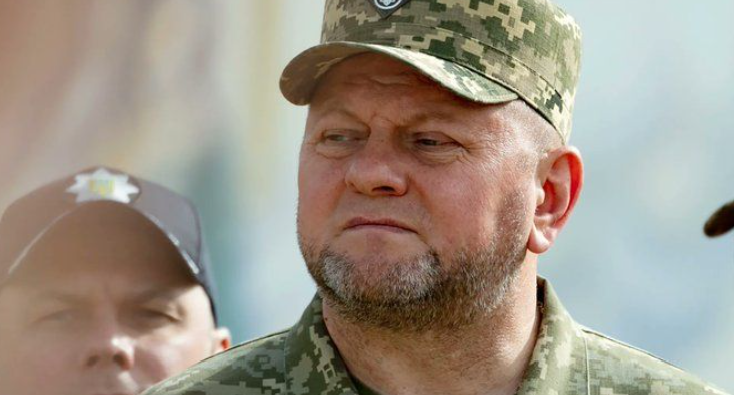
Valerii Zaluzhnyi, the former commander-in-chief who led Ukraine's armed forces through the opening years of Russia's full-scale invasion, has delivered perhaps the most politically uncomfortable assessment of Ukraine's NATO ambitions since the war began.
After spending years overseeing the military's transformation toward NATO standards, he said he repeatedly heard promises that membership was getting closer.
His conclusion was blunt.
"Unfortunately, we will never join."
Whether one agrees with him or not, the significance lies not in the prediction itself.
It lies in the fact that somebody of Zaluzhnyi's stature is willing to say it publicly.
The End of Strategic Waiting
For years, Ukraine's security strategy rested on a central assumption:
Reforms would eventually bring membership.
Military modernization would eventually bring membership.
Political alignment would eventually bring membership.
War itself, many believed, would accelerate membership.
Yet NATO operates on consensus.
Not aspiration.
Not sacrifice.
Not battlefield performance.
Consensus.
And consensus among dozens of governments with different interests, political pressures, and risk calculations remains extraordinarily difficult.
Zaluzhnyi's message effectively acknowledges a reality many policymakers privately understand.
The biggest obstacle is not Ukraine.
It is politics.
A Dangerous Strategic Dependency
The most provocative element of Zaluzhnyi's statement is not criticism of NATO.
It is criticism of dependency.
Nations build their futures on assumptions.
Sometimes those assumptions become dangerous.
For more than a decade, Ukraine invested enormous political, military, and diplomatic capital into a project whose final outcome remains outside its control.
Every member of NATO holds a veto.
Every election inside NATO can alter the political landscape.
Every geopolitical crisis can shift priorities.
Building a national security strategy around decisions made in other capitals carries inherent risks.
Zaluzhnyi appears to be arguing that Ukraine can no longer afford those risks.
The Rise of Alternative Security Architectures
What makes his comments particularly important is that he did not stop at skepticism.
He pointed toward alternatives.
Among them is deeper integration with the Joint Expeditionary Force (JEF), a UK-led multinational security framework involving Northern European allies.
Unlike NATO, the JEF is designed for flexibility.
Unlike NATO, it does not require years of accession negotiations.
Unlike NATO, it can move relatively quickly.
Critics immediately point out the obvious limitation.
The JEF is not Article 5.
No automatic collective defense guarantee exists.
No treaty obliges members to respond militarily in the same way NATO does.
Yet the fact that Ukraine is increasingly discussing such frameworks reflects a broader European trend.
Security is becoming more modular.
More flexible.
More networked.
Europe's Security Revolution
Russia's invasion has transformed European defense thinking.
Countries are increasing military spending.
Defense industries are expanding production.
Regional partnerships are multiplying.
New intelligence-sharing arrangements are emerging.
The result is an increasingly layered security system.
NATO remains the cornerstone.
But it is no longer the only pillar.
Coalitions of willing states, bilateral defense agreements, industrial partnerships, technology-sharing arrangements, and regional military formations are becoming more important.
Zaluzhnyi may be recognizing that Ukraine's future security architecture could emerge from this broader ecosystem rather than a single membership decision.
The Uncomfortable Question for NATO
His comments also raise an awkward question for the Alliance itself.
What happens if Ukraine fights, reforms, interoperates, and modernizes to NATO standards but still remains outside NATO?
At some point, credibility becomes a strategic resource.
Repeated declarations that Ukraine "will become a member" eventually collide with political reality.
If the pathway remains indefinitely undefined, alternative models become increasingly attractive.
Not because they are better.
Because they are available.
Planning for the Door That Never Opens
Perhaps the most important aspect of Zaluzhnyi's intervention is psychological.
He is shifting the debate.
The question is no longer:
"When will NATO invite Ukraine?"
The question becomes:
"What security architecture should Ukraine build if no invitation arrives?"
Those are fundamentally different conversations.
The first focuses on waiting.
The second focuses on acting.
The first depends on external decisions.
The second depends on national strategy.
That shift may ultimately prove more consequential than any particular statement about NATO itself.
Because history is often shaped by leaders who stop asking for permission and start planning for alternatives.
Zaluzhnyi's message is not necessarily that NATO is irrelevant.
Nor is it that Ukraine has abandoned its Western course.
It is something potentially more disruptive.
The assumption that NATO membership is inevitable may no longer be safe.
And if that assumption changes, the entire European security conversation changes with it.