If You Want to Save Your World, Help Ukrainians Save Theirs
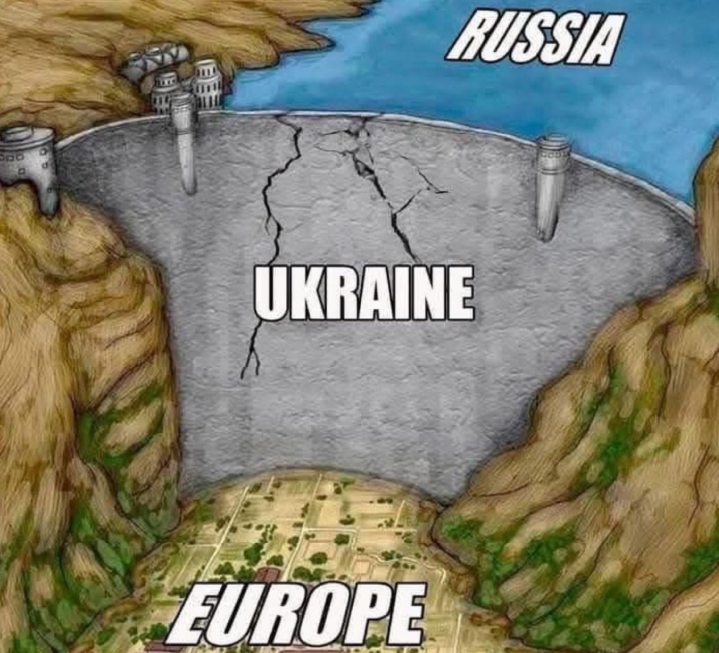
There are moments in history when a war stops being local.
Not because new countries enter the fight. Not because borders change. But because the outcome begins to shape the future far beyond the battlefield itself.
Ukraine has become one of those moments.
More than four years after Russia's full-scale invasion, the conflict is often discussed in terms of territory, military aid, sanctions, drones, missiles, and geopolitics. Analysts examine maps. Politicians debate budgets. Commentators argue over strategy.
Yet beneath all of that lies a far simpler question.
What kind of world do we want to live in?
Because Ukraine's war is no longer only Ukraine's problem.
It is a stress test for the international order that emerged after World War II. An order based on a simple principle: borders should not be changed by force, sovereign nations should be free to determine their own future, and military power alone should not dictate political outcomes.
These ideas are imperfectly enforced.
But they matter.
Without them, the world becomes governed by a different principle entirely: might makes right.
That is why the stakes extend far beyond Kyiv, Kharkiv, Odesa, or the Donbas.
The outcome will be studied in capitals around the globe.
In Europe.
In Asia.
In the Middle East.
Every government is watching.
Every military planner is watching.
Every authoritarian leader is watching.
If a large country can achieve political objectives through sustained aggression and military pressure, others will draw conclusions. If democratic nations lose the will to defend their principles when the costs become uncomfortable, others will notice that too.
History is rarely isolated.
It sends signals.
And signals shape future decisions.
Ukraine's struggle therefore represents something larger than national survival. It has become a demonstration of whether democratic societies possess the endurance to defend the values they frequently celebrate.
Freedom sounds powerful in speeches.
Its true cost becomes visible during crises.
That cost is being paid daily by Ukrainians.
Soldiers on the front lines.
Emergency responders pulling civilians from rubble.
Engineers repairing damaged infrastructure.
Teachers conducting lessons during air raid alerts.
Families rebuilding after missile attacks.
An entire society adapting to pressures that would have seemed unimaginable only a few years ago.
Resilience has become a national characteristic.
But resilience alone is not enough.
No country should be expected to shoulder such a burden indefinitely without support.
This is where the debate often becomes confused.
Helping Ukraine is frequently portrayed as an act of charity.
It is not.
It is an investment in strategic stability.
It is an investment in deterrence.
It is an investment in a world where aggression carries consequences rather than rewards.
The lesson extends beyond military support.
The modern battlefield is no longer defined only by tanks and artillery. It is shaped by industrial capacity, technological innovation, cyber capabilities, logistics networks, energy security, and economic resilience.
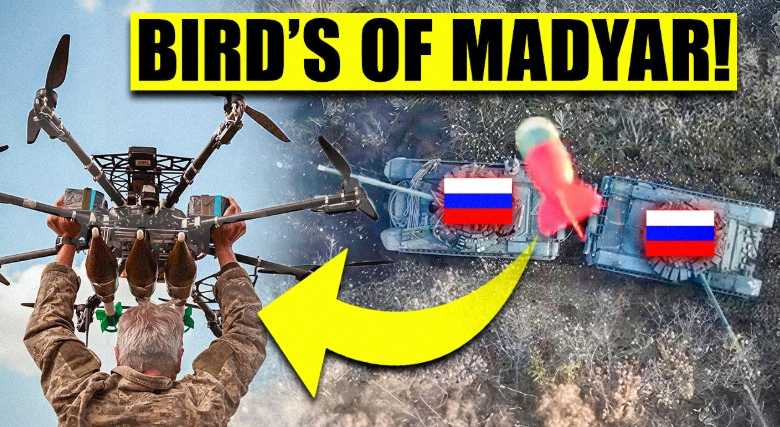
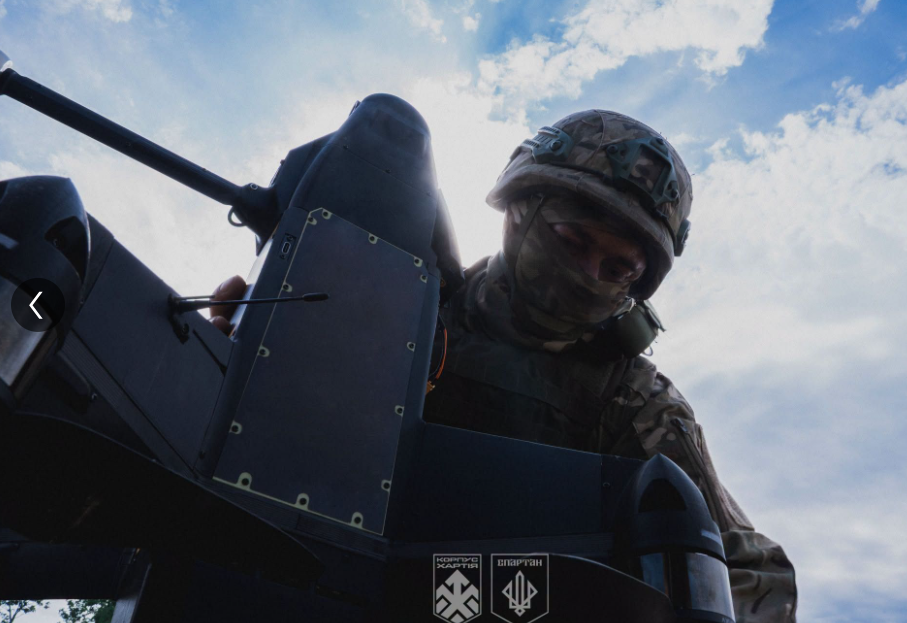
Ukraine's experience has accelerated innovation in drones, battlefield communications, autonomous systems, electronic warfare, and defense manufacturing at a pace few imagined possible.
In many ways, the country has become a laboratory for twenty-first century resilience.
The rest of the world is learning from it.
The uncomfortable reality is that many democratic societies have spent decades assuming peace was permanent. Defense industries shrank. Military stockpiles declined. Strategic planning often gave way to short-term political priorities.
Ukraine shattered those assumptions.
It reminded the world that security is not self-sustaining.
It must be maintained.
Protected.
Strengthened.
The greatest misconception about this war may be the belief that distance provides protection.
History repeatedly proves otherwise.
Instability spreads.
Economic shocks spread.
Security consequences spread.
Political consequences spread.
What begins as a regional crisis rarely remains one forever.
That is why the phrase matters:
If you want to save your world, help Ukrainians save theirs.
Not because Ukraine is fighting for everyone.
But because the principles being tested there affect everyone.
The choice confronting democratic societies is not merely whether to support a country under attack.
It is whether they still believe in the foundations of the system that created decades of relative peace and prosperity.
Future generations will not ask how many speeches were delivered.
They will not remember hashtags or press conferences.
They will ask a much simpler question.
When those principles were challenged, who stood behind them?
And who looked away?