Ukraine Can Build Weapons in Days. Netherland Keeps Them Waiting Years.

When Ukraine’s largest drone and missile manufacturer decided not to come to the Netherlands, it wasn’t because of money, technology, or talent.
It was paperwork.
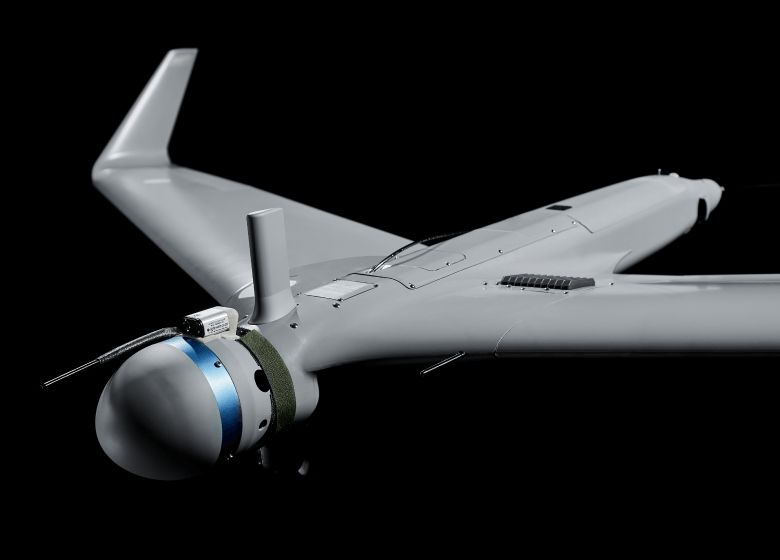
Denis Shtilerman, founder and chief designer of Fire Point — now producing roughly 200 drones and three cruise missiles a day — describes the European regulatory environment as “running with a lead backpack.” In Ukraine, he says, he can stand up a new production line in two days. In Europe, he would need more staff to manage compliance than to build rockets.
“Eighteen months before you’re allowed to build something?” Shtilerman says. “We don’t have that time.”
That refusal lands uncomfortably close to home. Only weeks earlier, Dutch Prime Minister Rob Jetten stood alongside President Volodymyr Zelensky and promised major investment in drone production and joint manufacturing between Ukraine and the Netherlands. On paper, the ambition is clear. In practice, the factory gates remain closed.
The contradiction is not unique to the Netherlands. It runs through much of Europe’s defence policy: strong rhetoric, deep pockets — and systems optimised for caution, not speed.
Ukraine’s war economy has become the ultimate stress test for defence manufacturing. Innovation cycles are brutal and unforgiving. According to Ukraine’s Ministry of Defence, battlefield technologies now last three to six months before countermeasures make them obsolete. Survival depends on iteration speed, not perfection. Designs change weekly. Loss is expected. Replacement is immediate.
To enable that pace, Ukraine dismantled peacetime bureaucracy after Russia’s invasion. Licensing was compressed. Standards were simplified. Institutional friction was treated as a threat equal to the enemy’s firepower. The result: over 2,700 defence companies in just a few years, many founded by engineers with no prior weapons background and knowledge pulled from open sources.
Fire Point itself is emblematic of that transformation. Founded by non‑specialists, it now builds drones and cruise missiles capable of striking deep into Russian territory and disrupting energy exports. The company is already working on a new ballistic missile system — not as a business opportunity, but as a matter of survival.
Europe, by contrast, remains structurally committed to peacetime logic.
In the Netherlands, industry representatives acknowledge the tension. The country is highly capable in high‑tech manufacturing and a reliable defence partner. But offensive weapons production requires heavier permits, longer reviews, and a level of regulatory certainty investors struggle to accept. The system prioritises legal assurance — not wartime urgency.
Denmark offers a sharp counterexample. Fire Point chose to produce rocket fuel there after Danish authorities deliberately eased requirements, treating speed as necessity rather than exception. The difference was not technological sophistication, but institutional mindset.
This is the core lesson Europe keeps avoiding: modern defence manufacturing is not constrained by brilliance, but by friction.
Nobody disputes the need for oversight, safety, or accountability. The problem is proportionality. Procedures designed for stability fail under attrition. Rules written for peace actively weaken states preparing for war.
As Ukraine’s inspector general for defence development bluntly puts it: traditional military bureaucracy is “the greatest enemy of innovation.”
This is not an argument for chaos. Nor is it a call to abandon standards. It is a warning that systems unable to adapt will learn under fire rather than preparation. Technologies that cannot be deployed quickly enough might be flawless — and irrelevant.
Europe’s vulnerability is no longer measured by how much it spends on defence, but by how slowly that spending turns into output. Factories delayed are capabilities denied. Production blocked is deterrence deferred.
Ukraine learned this lesson the hard way. It had no choice.
Europe still does. But time — and potential partners — are already moving on.