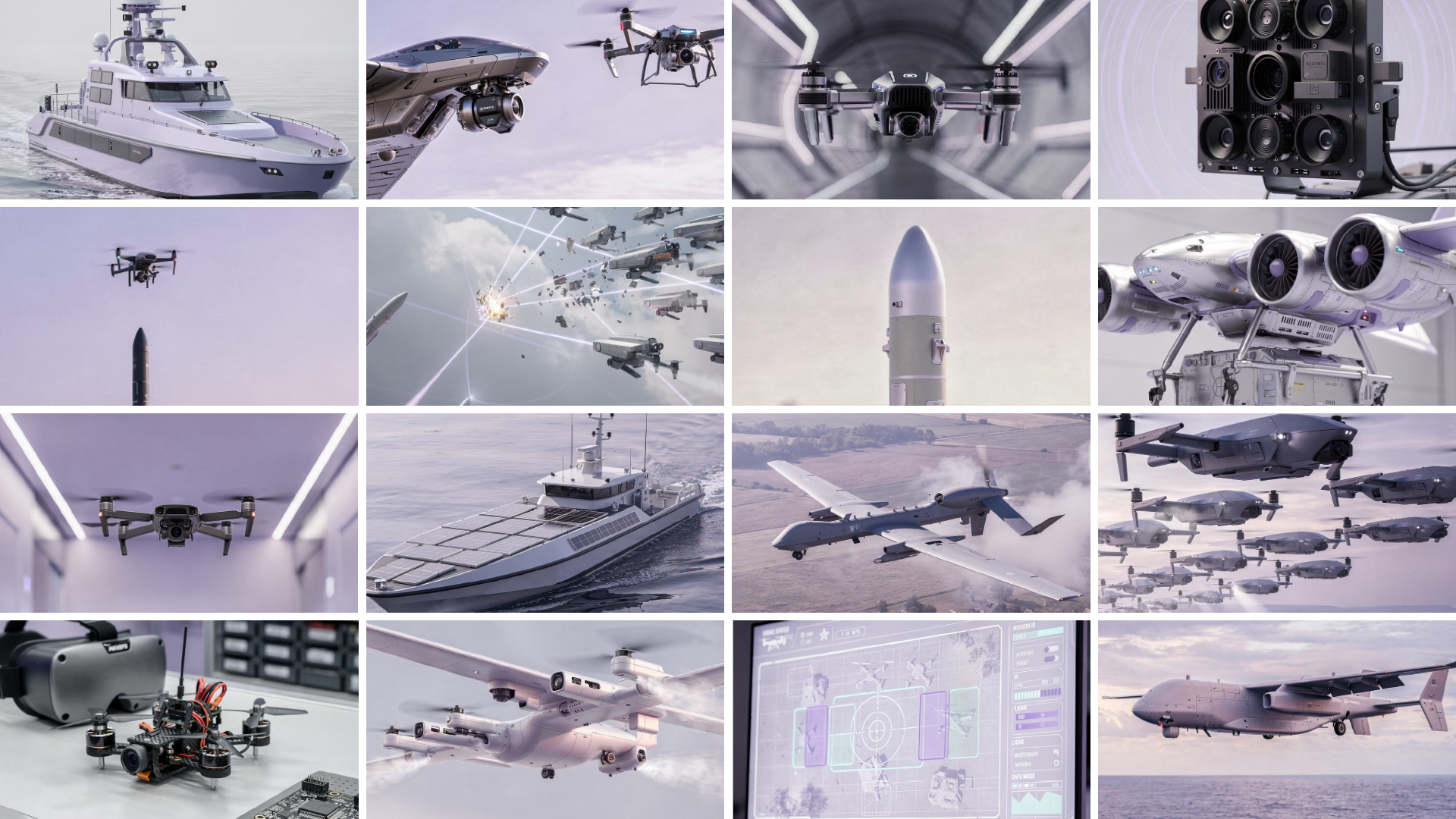
Ukrainian Drone Brief 2026. Ten new drone models are born every day
The first shipment of Ukrainian drones has arrived in the United States.
At first glance, this may seem like a simple export story. In reality, it marks the beginning of something much bigger: the emergence of Ukraine as one of the world's most innovative defense technology exporters.
Born under the brutal pressure of full-scale war, Ukraine's drone industry has become a battlefield laboratory where new technologies are developed, tested, and improved at a speed unmatched anywhere else on Earth.
As one Ukrainian officer joked, "Ten new drone models are born every day."
It sounds exaggerated—until you see the facts. More than 500 drone models were officially codified in Ukraine last year alone. Hundreds more are believed to be operating at the unit level without formal certification.
The result is an ecosystem that now spans aerial drones, ground robots, naval drones, AI systems, electronic warfare, and autonomous air-defense solutions.
The Aerial Drone Explosion
At the center of this industrial surge stands the Brave1 Marketplace, Ukraine's defense innovation platform.
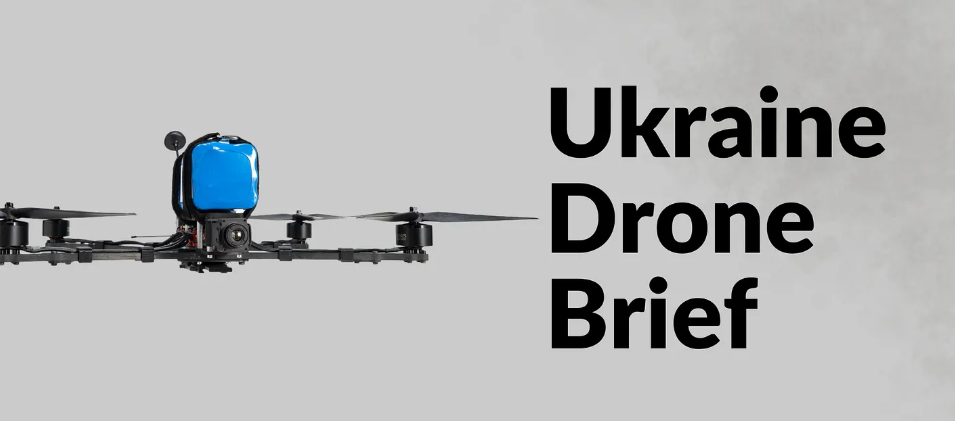
Among its strongest performers is TAF Industries' Kolibri FPV drone, ranking among the marketplace leaders for both combat effectiveness and military orders.
Meanwhile, Vyriy Industries is testing the SLAVIK reconnaissance drone, designed as a Ukrainian alternative to DJI systems. With a flight endurance of up to 1.5 hours, SLAVIK represents Kyiv's determination to eliminate dependence on foreign commercial UAVs.
Another innovation comes from ROBONEERS, which unveiled the WARDOG TRN relay drone. Able to carry up to 3 kilograms of communications equipment and deploy airborne relay nodes at 900 meters altitude, WARDOG TRN addresses one of the most important challenges in modern warfare: battlefield connectivity.
Across the front line, drones are no longer individual systems. They are becoming networked ecosystems.
Ground Robots Are Taking Over Dangerous Missions
While aerial drones attract most headlines, perhaps the most transformative developments are happening on the ground.
Since the beginning of 2026, Ukraine's Ministry of Defense has codified 50 unmanned ground vehicle (UGV) models, nearly matching the total number approved during the entire previous year.
The reason is simple: they work.
Between January and June 2026 alone, Ukrainian forces conducted more than 50,000 logistics and casualty evacuation missions using robotic ground systems.
The most striking example may come from Ukraine's 60th Mechanized Brigade, which has received an AI-enabled robotic air-defense platform capable of autonomously identifying, tracking, and engaging aerial threats.
The battlefield is moving beyond remote-controlled systems toward autonomous robotics.
Naval Drones Are Becoming Strategic Weapons
The success of Ukraine's naval drones is now drawing global attention.
The Magura unmanned surface vessel (USV) developed by UForce recently made its Indo-Pacific debut during Exercise Balikatan 2026 in the Philippines, where it successfully destroyed a target ship in a live-fire demonstration.
This was far more than a military exercise.
It was a signal that Ukrainian naval drone technology is entering international markets and demonstrating capabilities beyond the Black Sea.
Even neighboring NATO member Romania is now discussing how Ukrainian naval drones should be programmed to self-destruct if they drift near Romanian waters, highlighting the growing strategic relevance of these systems.
The New Air Defense: Drone Versus Drone
Perhaps nowhere is innovation moving faster than in counter-drone warfare.
Ukraine's LITAVR interceptor drone boasts speeds of up to 350 km/h, operational ranges exceeding 40 kilometers, and the advanced Pixel Lock automatic terminal guidance system.
Not to be outdone, Yartura's Dancer 4.5.0 interceptor pushes performance even further, reaching 450 km/h while incorporating the Automatic Target Tracking System (ATTS) that enables repeated engagement attempts.
Meanwhile, General Cherry's Bullet interceptor has evolved specifically to destroy fast-moving jet-powered Shahed variants. Enhanced with the STRIX chemical booster, Bullet launches faster and engages more challenging targets.
These systems are increasingly replacing expensive missile interceptors with low-cost autonomous alternatives.
AI, Airbus and the Internationalization of Ukrainian Defense Tech
Artificial intelligence is becoming the next battlefield frontier.
More than 100 companies now have access to Brave1 Dataroom, a secure platform providing real-world combat data for AI model training.
The goal is clear: automate drone detection, tracking, interception, and battlefield decision-making.
International partnerships are accelerating this evolution.
SkyFall and Airbus have announced plans to integrate the P1-Sun interceptor drone into Airbus' Air C2 airspace management system.
Germany's INTEC and Ukraine's Skyeton are expanding European drone capabilities through the deployment of the Raybird tactical UAV, renowned for long-endurance reconnaissance missions.
At the same time, Quantum Systems plans to integrate its Jäger hit-to-kill interceptor drone with Airbus military helicopters.
Elsewhere, Ukrainian electronic warfare specialist Unwave conducted international testing of its tactical EW systems in the Czech Republic against DJI, Autel, and FPV drone threats.
Meanwhile, startup MaXon Systems is beginning a seed funding round to accelerate development of its nearly autonomous interceptor platform.
The Global Drone Powerhouse Emerges
For decades, military power was measured in tanks, fighter jets, and warships.
Today, it is increasingly measured in software, autonomy, artificial intelligence, and the ability to innovate faster than an adversary.
From Kolibri, SLAVIK, WARDOG TRN, Magura, LITAVR, Dancer 4.5.0, Bullet, P1-Sun, Raybird, and Jäger, Ukraine has created a portfolio of combat-proven systems that few nations can match.
The opening of Ukrainian arms exports is not simply a commercial milestone.
It is the arrival of a new global defense technology power.
And the rest of the world is watching.