From Spotify to Strike Systems. Europe’s Top VC Is Rewriting the Rules of Defence Tech
For years, Europe’s top venture capitalists chased the same dream: the next Spotify, the next Revolut, the next unicorn built on code, consumers, and scale.
Now, one of the most influential among them is abandoning that playbook.
Klaus Hommels—the man who backed some of Europe’s biggest tech successes—is moving into defence. And with a €25 million investment from BAE Systems, Europe’s largest defence contractor has just signaled that this isn’t a niche pivot.
It’s a strategic shift.
From Consumer Unicorns to Strategic Power
Hommels built his reputation spotting winners early. Spotify, Klarna, Revolut—his portfolio reads like a timeline of Europe’s digital economy.
But in 2025, he made a decisive break. No more generalist funds. No more chasing the next fintech giant.
Instead, his focus turned to defence, aerospace, and resilience—a move that, until recently, would have seemed out of place in Europe’s venture ecosystem.
Not anymore.
With geopolitical tensions rising and global supply chains under pressure, defence has moved from political afterthought to investment frontier. And Hommels is positioning himself at the center of it.
BAE’s Signal: Defence Meets Venture Capital
The €25 million commitment from BAE Systems is not just a financial endorsement—it’s a structural one.
Through its Launchpad programme, BAE is investing €50 million across two funds: Hommels’ Lakestar and the Warsaw-based Expeditions. The logic is clear: instead of building everything internally, the defence giant wants access to the speed and innovation of startups.
This is defence procurement—rewritten through venture capital.
Traditionally, major contractors dominated development cycles measured in years, even decades. Startups, by contrast, operate in weeks and months.
Bringing those two worlds together is not optional anymore—it’s necessary.
The Race for European Sovereignty
Behind this investment lies a bigger story: Europe’s urgent attempt to close its technological gap in defence.
In 2025 alone, European defence and security startups raised a record $8.7 billion—a 55% year-on-year increase. The sector is growing fast, but still trails U.S. momentum and scale.
Hommels frames the moment bluntly: Europe must redefine its security and technological sovereignty—and quickly.
That means building systems locally, financing innovation locally, and deploying capabilities faster than ever before.
And it means trusting startups with missions once reserved for industrial giants.
Speed vs. Structure: The Uncomfortable Trade-Off
But there’s a tension at the heart of this strategy.
Startups thrive on speed, autonomy, and risk-taking. Defence contractors operate under strict processes, regulation, and control.
The question is whether these worlds can really coexist.
BAE’s approach—investing rather than acquiring—is designed to preserve startup agility while providing access to expertise, customers, and markets.
In theory, it’s a win-win.
In practice, the risk is subtle but real: that capital from large contractors comes with invisible gravity—slowing down the very innovation it aims to accelerate.
From Pitch Decks to the Frontline
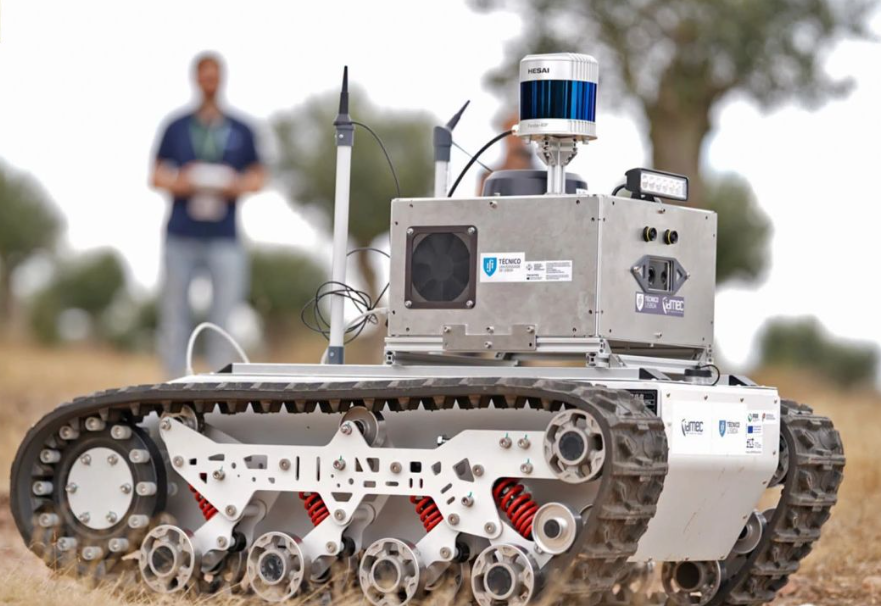
What makes funds like Expeditions particularly disruptive is their connection to real-world deployment.
Unlike traditional venture capital, which optimizes for growth metrics and exits, defence-tech investors are increasingly optimizing for something far more immediate: operational usefulness.
Technologies are expected to move from idea to field deployment in months—not years.
That is not venture capital as Europe knew it.
It is venture capital adapted to urgency.
A New Tech Economy Emerges
For Europe, this shift could redefine its innovation landscape.
Consumer tech built platforms.
Defence tech builds infrastructure.
Consumer tech scaled globally.
Defence tech anchors sovereignty locally.
The implications go beyond funding.
If successful, this model could create a new generation of companies—hybrid in nature, combining startup speed with strategic impact.
The Real Bet
BAE’s €25 million is not a massive check by venture standards. But its significance lies elsewhere.
It’s a signal that Europe’s defence industry is no longer waiting for innovation to come from within.
It’s going outside.
Into venture networks.
Into startup ecosystems.
Into the same world that once gave us music streaming and mobile banking.
Only this time, the stakes are different.
This is not about convenience.
It’s about capability.
And the real question is no longer whether Europe can fund defence innovation—
but whether it can do it fast enough.