Russia's Most Expensive Boomerang. The Kremlin Is Buying Back Its Own Oil
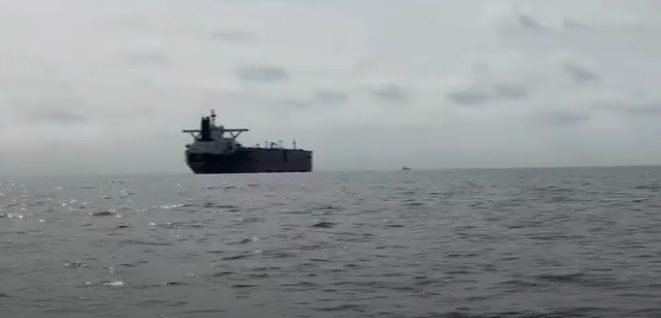
Few images better capture the contradictions of modern warfare than this:
A country exports its own oil thousands of kilometers away, watches it get refined abroad, and then buys it back because it can no longer process enough of it at home.
Yet that is precisely the situation Russia appears to be facing.
According to reports, Moscow is considering importing gasoline from India that was produced using Russian crude oil. The reason is simple, but strategically significant: repeated Ukrainian drone strikes have disrupted parts of Russia's refining capacity, creating pressure on domestic fuel supplies.
If confirmed at scale, it would mark one of the most remarkable economic side effects of the drone war.
Not because Russia lacks oil.
Russia remains one of the world's largest oil producers.
The problem is something else entirely.
The bottleneck is processing.
For more than a century, military strategists have understood a simple truth: destroying production is difficult, but disrupting logistics is often easier. The same principle increasingly applies to energy infrastructure. A barrel of crude oil sitting in the ground has limited value. A barrel transformed into gasoline, diesel, aviation fuel, or petrochemical products is where economic power is created.
Refineries are not just industrial assets.
They are strategic assets.
And in the age of long-range drones, they have become targets.
For years, energy security was largely viewed through the lens of pipelines, shipping lanes, and sanctions. Today, another factor has entered the equation. Low-cost unmanned systems are giving militaries the ability to strike critical infrastructure hundreds or even thousands of kilometers from the front line.
The implications are profound.
Historically, attacking strategic targets deep inside a large country required expensive aircraft, cruise missiles, or sophisticated special operations. Now increasingly capable drones are changing the economics of long-range strikes.
The result is a new form of vulnerability.
Infrastructure once considered relatively secure is being forced to adapt to a world in which persistent aerial threats can appear with little warning.
Russia's reported decision to seek fuel imports from India illustrates how modern warfare can create unexpected economic loops.
Russian crude travels to India.
Indian refineries process it.
The refined product may then return to Russia.
In purely commercial terms, it sounds absurd.
In strategic terms, it demonstrates something important.
The global energy market is remarkably flexible.
Oil molecules do not care about politics.
They flow wherever infrastructure, shipping capacity, refining availability, and economics allow them to flow.
This flexibility has helped Russia maintain significant oil exports despite years of geopolitical turbulence. But it also highlights a deeper reality: exporting raw materials is not the same thing as controlling the entire value chain.
Refining capacity matters.
So does resilience.
The broader lesson extends beyond Russia.
Governments around the world are watching the conflict in Ukraine closely because it offers a glimpse into the future of industrial warfare. Energy networks, ports, logistics hubs, refineries, factories, and transportation corridors are becoming increasingly exposed to asymmetric threats.
The war has accelerated a strategic rethink.
Military planners are investing not only in offensive drone capabilities but also in infrastructure protection, air defense systems, electronic warfare, and counter-drone technologies.
The battlefield is expanding beyond soldiers and weapons.
It now includes industrial capacity itself.
What makes this story especially striking is the symbolism.
For decades, oil was often viewed as Russia's ultimate strategic advantage. Energy exports financed budgets, expanded influence, and strengthened geopolitical leverage.
But the current situation reveals a more complicated picture.
Owning resources is one thing.
Converting them into usable products under wartime pressure is another.
And that distinction may become increasingly important in the drone age.
The modern economy is built on interconnected networks of production, processing, transportation, and distribution. Disrupt one node and unexpected consequences ripple across the entire system.
Today, one of those consequences may be Russia buying back gasoline made from Russian oil.
Not because it wants to.
Because it has to.
And that may be one of the most powerful demonstrations yet of how drones are quietly reshaping the economics of war.