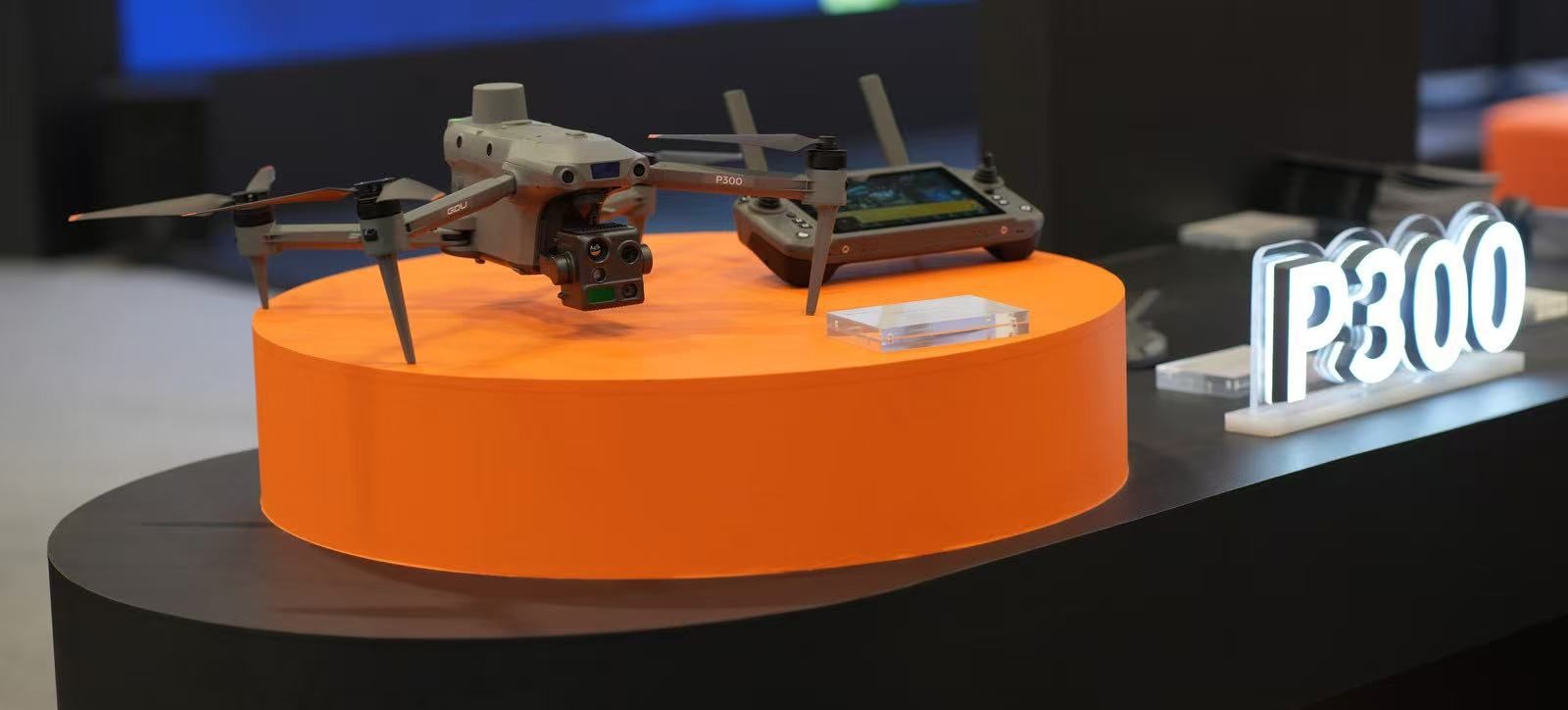
The Drone Built to Kill DJI’s Assumptions - GDU P300 vs DJI Matrice 30T
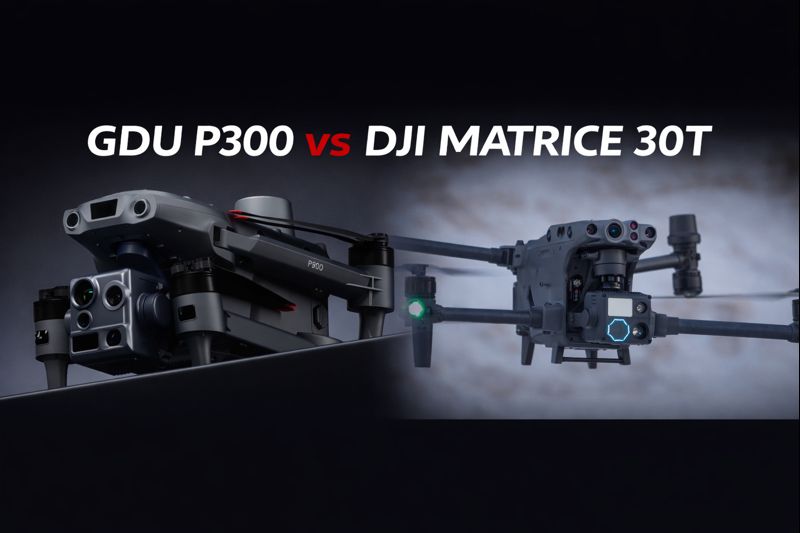
Every monopoly ends the same way. Not with collapse, but with denial.
For years, the DJI Matrice 30T has been untouchable in European public safety. Police, fire services, border control, and emergency response units didn’t compare - they defaulted. The M30T became the answer before the question was finished. Rugged, reliable, safe.
Then GDU Tech launched the P300, and suddenly the conversation stopped being comfortable.
This isn’t another “DJI alternative.” This is a drone designed to attack DJI where it’s most vulnerable: assumptions.
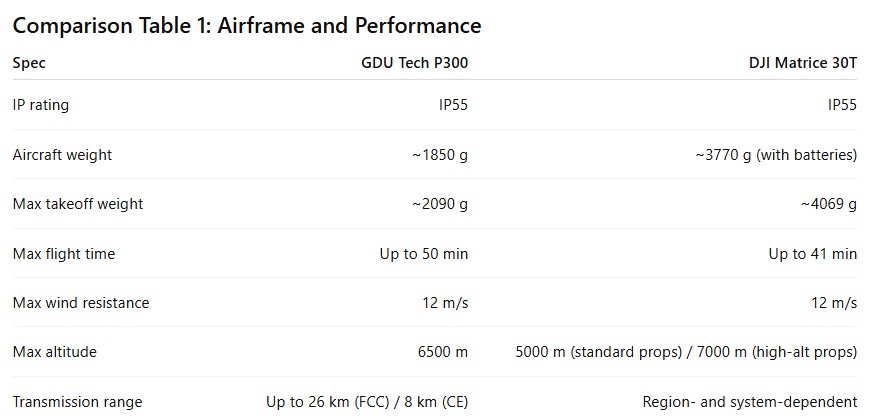
On paper, P300 delivers a striking headline - roughly half the mass of the M30T, longer stated endurance, and the same weather protection. That alone is enough to force evaluations that didn’t exist before.
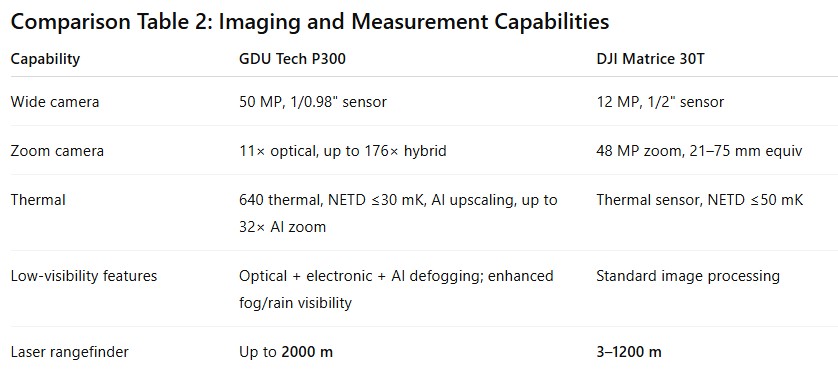
DJI’s imaging stack is mature and battle-tested. GDU is openly targeting the pain points public safety operators complain about most: fog, rain, low light, and long-range precision marking under stress.
Navigation and Resilience: Where the Real Battle Is
Here’s the uncomfortable reality few brochures emphasize: if your operational concept collapses when GNSS or data links degrade, you don’t have resilience - you have good-weather capability.
P300 is built around visual SLAM fusion navigation for GNSS- and link-denied environments, paired with anti-interference image transmission and hardened return-to-home logic. The messaging is clear: assume interference is normal, not exceptional.
Matrice 30T offers mature obstacle sensing and stable navigation within its ecosystem, but its core positioning remains industrial reliability rather than explicit denial-environment operation.
For law enforcement and public-sector teams, that difference matters more every year.
Payload Philosophy: Fixed Versus Flexible
M30T is an integrated, all-in-one platform. What you buy is what you fly - and for many agencies, that simplicity is a feature.
P300 leans toward modularity, supporting a wider range of payloads including night-vision penta systems, quad-sensor modules, speakers, spotlights, and AI processing boxes. One airframe, many mission profiles.
This reflects two different worldviews: minimize variables versus maximize adaptability.
So Which One Should Europe Bet On?
If you want the incumbent standard, deep ecosystem maturity, and a widely deployed track record, the Matrice 30T remains the conservative choice.
If you want a platform designed to challenge “normal conditions” thinking - lighter, longer stated endurance, aggressive low-visibility imaging, explicit anti-interference positioning, and 2 km laser ranging - the P300 is the disruptive evaluation candidate.
The real question for agencies isn’t “Is P300 better than M30T?”
It’s this:
What happens to a DJI-only strategy the first time a competitor completes a mission precisely because conditions refused to cooperate?
So Is P300 Really a DJI Killer?
Not today. And that’s the point.
DJI didn’t lose dominance overnight. It gained it because competitors couldn’t match credibility. P300 is dangerous because it does.
It doesn’t ask agencies to abandon DJI. It asks them a more uncomfortable question:
What happens when your backup starts outperforming your primary?
DJI still owns the ecosystem. But ecosystems collapse when belief erodes.
And the P300 isn’t attacking DJI’s market share.
It’s attacking the idea that DJI is the only serious choice.
That’s how “DJI killers” actually win.