IPET's IV7215. The Drone Motor Revolution Isn't About More Power - It's About Smarter Cooling
When discussing UAV propulsion, conversations usually revolve around larger motors, higher thrust, better batteries, or more efficient propellers. Yet one of the biggest performance bottlenecks often remains invisible: heat.
As drone power systems continue to evolve, thermal management is becoming one of the defining engineering challenges. Every additional watt generated inside a motor or electronic speed controller (ESC) eventually becomes heat, and excessive temperatures directly reduce efficiency, reliability, and component lifespan.
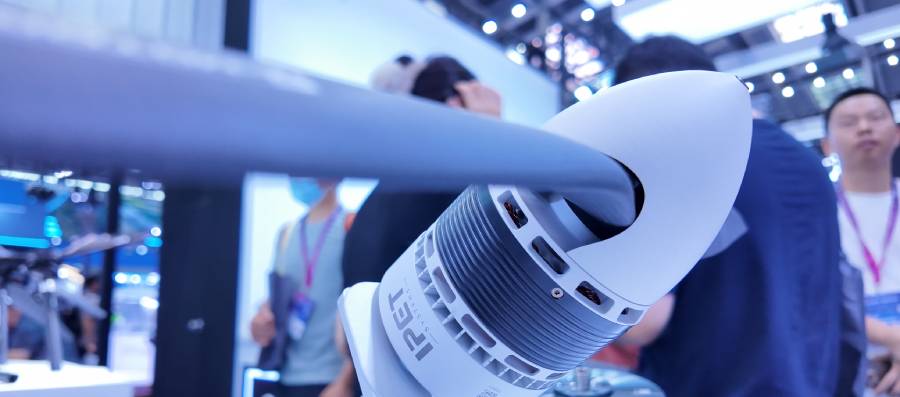
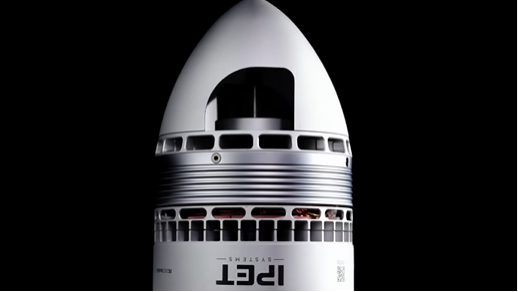
IPET SYSTEM's new IV7215 UAV Integrated Motor takes aim at that challenge with an elegant engineering solution—a shared cooling channel for both the motor and the ESC.
At first glance, this may appear to be a minor design improvement. In reality, integrating thermal management across two of the drone's most heat-intensive components could have significant operational benefits.
Traditionally, UAV motors and ESCs are cooled separately. The motor relies primarily on airflow generated by the propeller, while the ESC often depends on passive cooling or its own dedicated airflow path. This separation creates uneven temperature distribution and can leave one component operating significantly hotter than the other.
The IV7215 approaches cooling as a complete system.
By allowing the motor and ESC to share a common cooling channel, airflow is utilized more efficiently, improving heat dissipation across the entire propulsion unit. Better thermal balance allows both components to sustain higher continuous power while reducing the likelihood of thermal throttling.
Why does that matter?
Because drones rarely operate under ideal laboratory conditions.
High ambient temperatures, heavy payloads, aggressive maneuvering, long-endurance missions, and limited airflow during hovering all place significant thermal stress on propulsion systems. Excessive heat not only reduces efficiency but may also trigger automatic power reductions or accelerate component wear.
Improved cooling directly translates into greater reliability.
For commercial UAV operators, this means fewer maintenance issues and longer service intervals. For industrial inspection platforms, delivery drones, and defense applications, consistent performance under demanding operating conditions can be even more valuable than peak power output.
Integrated thermal design also supports the industry's broader trend toward higher power density.
Modern UAV manufacturers are continuously attempting to reduce size and weight while increasing payload capacity and endurance. As electronics become more compact, removing heat efficiently becomes increasingly difficult. Instead of relying solely on larger heat sinks or additional cooling hardware, smarter airflow management offers another pathway toward improved performance.
The concept also highlights a growing shift in UAV engineering philosophy.
Rather than optimizing individual components independently, manufacturers increasingly design complete propulsion ecosystems where motors, ESCs, batteries, software, and cooling systems operate as one integrated platform.
This systems-level approach often delivers greater real-world benefits than simply increasing motor power alone.
Although detailed performance data for the IV7215 has not yet been released, the shared cooling architecture demonstrates how incremental engineering innovations can produce meaningful operational improvements without fundamentally changing the motor itself.
As UAV applications continue expanding into logistics, infrastructure inspection, emergency response, and defense, thermal management is likely to become an increasingly important competitive factor.
In the future, the most advanced drone motors may not necessarily be those producing the highest thrust—but those capable of delivering that performance continuously, efficiently, and reliably under real operational conditions.
Sometimes, the biggest innovation isn't generating more power.
It's knowing how to keep it cool.