AI, Drones and Robot Dogs- Inside CyberXHub’s Autonomous Inspection Revolution
In many industries today, inspections are still slow, manual, and expensive. Workers walk dangerous sites with clipboards. Pilots fly repetitive drone missions. Engineers sort through thousands of images after the fact. Everyone collects data, but turning that data into clear action takes time.
CyberXHub believes there is a better way.
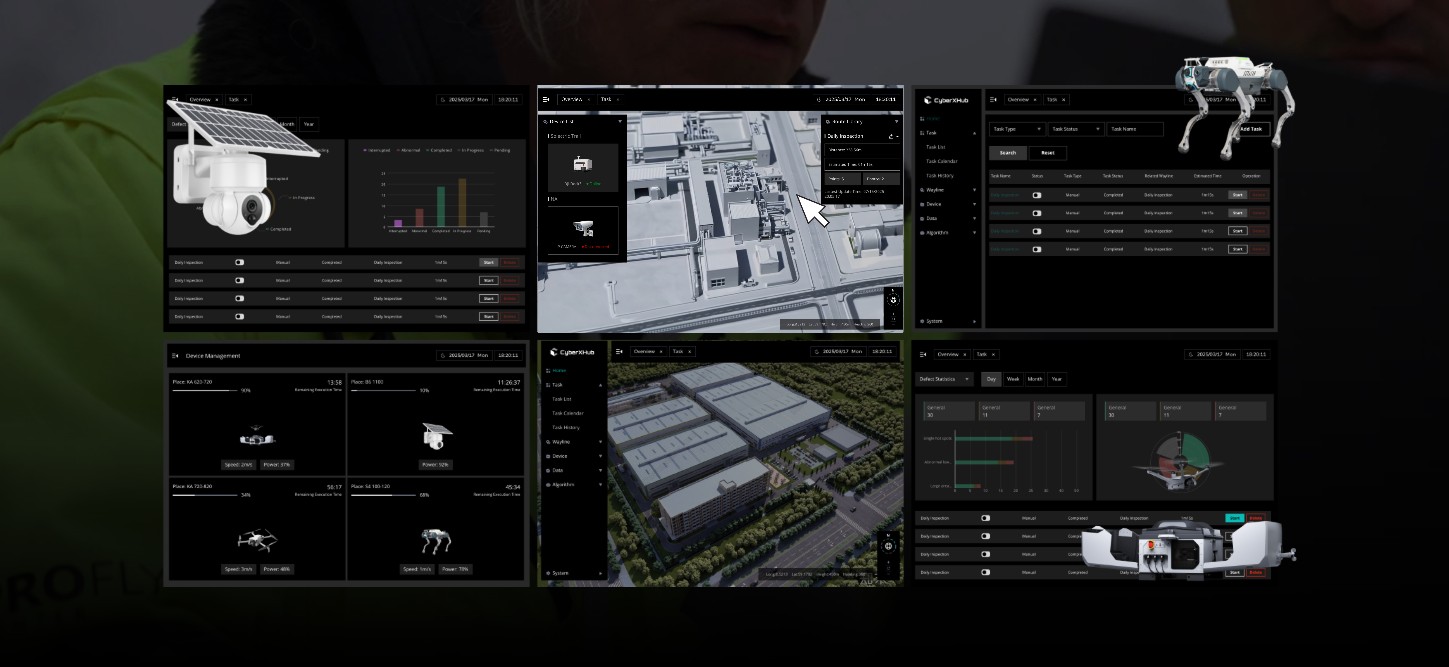
The platform is built around a simple but powerful idea - connect drones, robots, cameras, sensors, and artificial intelligence into one unified system that can inspect, analyze, and report automatically.
Not separate tools. Not disconnected software.
One intelligent ecosystem.
CyberXHub positions itself as an end-to-end autonomous inspection platform. That means it is not just flight planning software or an image analysis tool. It is designed to control missions, gather data, analyze results, and trigger follow-up actions with minimal human involvement.
At the center of CyberXHub is its AI-driven orchestration layer. This “brain” coordinates different machines and data sources so they work together. A drone can scan an area from the air. A fixed camera can watch a specific zone. A ground robot can move in for closer inspection. Sensors can track temperature, vibration, or gas levels. All of it feeds into one system.
The result is a digital operations hub that sees across air and ground in real time.
CyberXHub breaks its platform into several functional layers.
First is autonomous flight. Drones can launch, fly pre-planned routes, collect data, and land without manual piloting. Missions can be scheduled or triggered by events.
Second is AI-powered vision and analytics. Images and video are processed automatically to detect problems such as cracks, corrosion, overheating, missing components, or safety hazards.
Third is multi-device coordination. Ground robots, robot dogs, cameras, and sensors can be linked into the same workflows as drones.
Finally, everything is managed through a central operating system that stores data, generates reports, and allows operators to monitor operations from one dashboard.
This approach is especially attractive for industries with large physical assets.
Solar farms can be scanned for defective panels using thermal imaging. Power lines can be inspected for damage or vegetation encroachment. Mines can monitor slope stability and equipment condition. Construction sites can check safety compliance and progress. Oil and gas operators can inspect pipelines and storage tanks.
In all of these cases, CyberXHub aims to replace slow, manual inspections with fast, automated ones.
Speed is one benefit.
Safety is another.
Instead of sending people into hazardous environments, companies can send machines. Drones fly over unstable terrain. Robots approach dangerous equipment. AI reviews footage before a human ever needs to step on site.
Cost reduction is a third benefit. Automated inspections reduce labor hours, repeat visits, and downtime.
But perhaps the biggest promise is consistency.
Humans get tired. They miss things. They interpret data differently.
AI systems apply the same standards every time.
CyberXHub also emphasizes flexibility. Companies can tailor AI models to their specific assets. They can integrate different brands of drones and sensors. They can deploy the platform in the cloud or on their own secure servers.
This matters for regulated industries and critical infrastructure, where data control and cybersecurity are essential.
CyberXHub’s vision reflects a broader shift happening across industrial technology.
The future is not just smarter drones.
It is smarter systems.
Instead of isolated machines doing single tasks, industries are moving toward connected networks of autonomous agents that cooperate.
A drone finds a problem.
AI confirms it.
A robot investigates it.
The system generates a report.
A maintenance ticket is created automatically.
Human teams step in only when needed.
That is the workflow CyberXHub is trying to build.
Of course, challenges remain.
Autonomous systems must be reliable. AI models must be accurate. Hardware from different vendors must work together smoothly. Cybersecurity risks must be managed.
No platform can eliminate complexity entirely.
But CyberXHub’s strength is that it tackles complexity head-on rather than pretending it does not exist.
Instead of offering another single-purpose drone app, it offers a full operational framework.
If the platform delivers on its promises, it could mark a turning point in how industries think about inspections.
Not as occasional projects.
Not as manual chores.
But as continuous, automated, intelligent processes running quietly in the background.
CyberXHub is betting that the future of inspections is not human-first.
It is system-first.
And in a world filled with aging infrastructure, rising safety demands, and pressure to do more with less, that bet may be well placed.