FASTLIGHT SHIELD from INLEAP Photonics - Germany's New Unmanned Hunter Could Change Battlefield Defense Forever

The race to counter the rapidly growing drone threat has entered a new phase. German technology company INLEAP Photonics has unveiled a highly mobile laser-based counter-drone system capable of neutralizing hostile drones in less than a second - without firing a single round of ammunition.
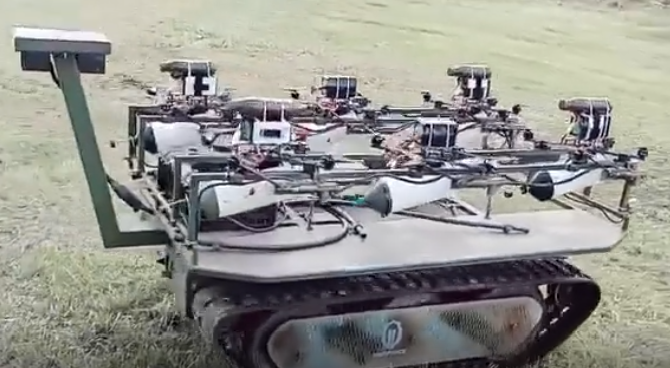
The new system combines INLEAP's FASTLIGHT SHIELD laser technology with the Ziesel unmanned ground vehicle (UGV), creating a compact and highly maneuverable robotic platform designed to protect troops, critical infrastructure, and mobile military units in dynamic operational environments.
As drones continue to reshape modern warfare, military forces around the world face a growing challenge. Small and medium-sized unmanned aerial systems are becoming cheaper, more capable, and increasingly difficult to defeat using conventional methods. Traditional countermeasures often rely on kinetic interceptors, electronic warfare systems, or expensive missiles. Each of these solutions has limitations in terms of cost, logistics, or operational effectiveness.
FASTLIGHT SHIELD takes a different approach.
Instead of using ammunition, the system employs a high-energy laser to disable or destroy incoming drones. According to INLEAP, engagement occurs in less than one second, allowing the platform to react rapidly against fast-moving aerial threats.
One of the most significant advantages is the elimination of ammunition consumption. Unlike missile-based air defense systems, laser weapons can engage multiple targets without requiring costly reloads. This drastically reduces operating costs while simplifying logistics in the field.
The system also minimizes the risk of collateral damage. Since no physical projectiles are fired, operators can engage threats in environments where conventional weapons might create additional hazards for nearby personnel, civilians, or infrastructure.
The integration onto the Ziesel UGV adds another strategic advantage: mobility without risk to soldiers. The unmanned vehicle can move into forward positions, secure vulnerable areas, or support maneuvering units while keeping personnel at a safe distance.
Designed for difficult terrain, the Ziesel platform can operate where larger vehicles struggle, making it suitable for protecting temporary command posts, logistics hubs, radar stations, and mobile combat formations.
To further enhance operational effectiveness, the project was developed in cooperation with Hentschel System GmbH and defense technology company STARK. STARK contributes the software architecture that supports counter-UAS operations, target identification, and mission management.
The system specifically targets NATO UAS Class I and II drones - the categories most frequently observed in current conflicts. These smaller drone systems have become a persistent threat due to their low cost, widespread availability, and ability to conduct reconnaissance or attack missions.
Interest from military organizations appears to be strong. The platform was presented at the Bundeswehr Innovation Center Technology Show in Erding on May 12, 2026. According to the company, the system directly addresses the requirements of a Bundeswehr procurement initiative focused on highly mobile counter-drone capabilities.
Field trials are expected to begin during the third quarter of 2026 in a national and allied defense scenario, with initial deliveries planned for 2027.
While many laser weapons remain experimental, FASTLIGHT SHIELD represents a clear trend in defense technology: autonomous systems, directed-energy weapons, and rapid-response air defense are converging into a new generation of battlefield protection.
The question is no longer whether laser weapons will become part of modern military arsenals.
The question is how quickly they will become indispensable.