The End of the Missile Age? Lockheed Martin’s Microwave Weapon Wants to Kill 50 Drones With a Single Shot
For decades, military power was measured by missiles.
Bigger. Faster. More expensive.
But what happens when a $50,000 missile is used to destroy a $500 drone?
You lose. Even when you win.
That harsh reality has become one of the defining problems of modern warfare. Across Ukraine, the Middle East, and beyond, militaries are discovering that cheap drones can exhaust some of the world's most sophisticated air-defense systems. The economics simply don't work.
Now Lockheed Martin believes it has a solution.
And it doesn't involve firing another missile.
Instead, it uses microwave energy.
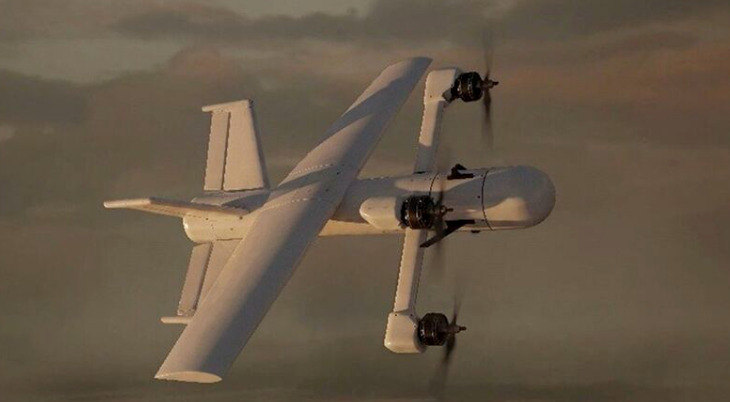
The American defense giant has unveiled Morfius X-rotor, a reusable airborne counter-drone platform designed to disable entire drone swarms during a single mission. Rather than physically destroying targets, the system attacks something more vulnerable: the electronics that make drones fly.
If successful, Morfius could mark one of the most significant shifts in air defense since the introduction of precision-guided missiles.
The Drone Swarm Problem
Modern militaries are increasingly worried not about one drone, but hundreds.
Drone swarms present a nightmare scenario for conventional defenses. Air-defense systems were designed to intercept aircraft, cruise missiles, and high-value threats. They were never optimized for dozens of small autonomous targets arriving simultaneously from different directions.
Traditional missile-based defenses face two fundamental challenges.
The first is capacity.
Every missile launcher carries a finite number of interceptors.
The second is cost.
Using expensive guided missiles against mass-produced drones creates an unsustainable equation. The attacker can spend thousands of dollars while the defender spends millions.
That is precisely the vulnerability Morfius is designed to exploit.
Instead of carrying separate munitions for each target, the system employs high-power microwave technology capable of disrupting communications, sensors, processors, and control systems across multiple drones at once.
In theory, one attack can affect many targets simultaneously.
A Different Kind of Weapon
Morfius represents a broader trend transforming military technology: the rise of directed-energy weapons.
Unlike conventional weapons that rely on explosives, projectiles, or kinetic impact, directed-energy systems use electromagnetic energy to achieve operational effects.
Think of it less as shooting down drones and more as turning them off.
The aircraft reportedly can engage large numbers of drones during a single mission and then return for recovery, maintenance, and relaunch.
That concept changes the economics dramatically.
A reusable interceptor capable of neutralizing dozens of targets in one sortie offers a very different business model for air defense than constantly expending costly missiles.
In an era defined by drone saturation attacks, logistics may become as important as firepower.
The Real Test Begins Now
The promise is impressive.
The proof remains ahead.
Lockheed Martin's performance figures are company claims that will ultimately require independent operational validation. History is full of military technologies that looked revolutionary in demonstrations but struggled under real-world conditions.
Questions remain.
How effective will microwave attacks be against hardened military drones?
What happens in adverse weather conditions?
Can autonomous systems operate effectively without external communications?
How close must Morfius be to its targets?
How resilient are future drone swarms likely to become?
Every breakthrough immediately creates a new race between offense and defense.
The side effect of every successful defensive technology is that adversaries start designing ways to defeat it.
The Future Is Layered Defense
Despite the excitement, microwave weapons are unlikely to replace traditional air defense systems entirely.
The future battlefield will almost certainly belong to layered protection architectures.
Sensors.
Electronic warfare.
Directed-energy systems.
Interceptor drones.
Guns.
Missiles.
Artificial intelligence.
Each capability addresses a different part of the threat spectrum.
The real revolution is not any individual technology. It is the ability to combine them into one integrated defense network.
Morfius may become one of those layers.
And potentially one of the most important.
A Warning About the Future of War
What makes Morfius truly significant is what it says about warfare itself.
Military competition is increasingly shifting away from explosive power toward information, software, autonomy, and electronic dominance.
Tomorrow's wars may not be won by who launches the most missiles.
They may be won by who controls the electromagnetic spectrum.
If Lockheed Martin's microwave drone interceptor performs as advertised, it will send a clear message to military planners around the world:
The era of spending millions to stop thousands may be coming to an end.
And the next air-defense revolution might arrive not with a bang.
But with an invisible pulse.