The Robot War on the Ground - Investments and Next Steps

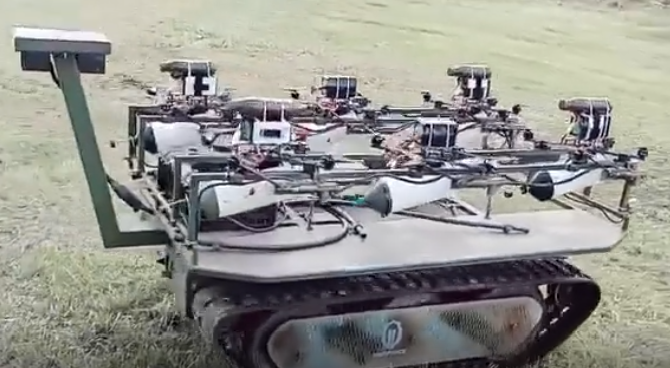
Unmanned ground vehicles (UGVs) are quietly moving from novelty to necessity on Ukraine’s battlefield. In March alone, Ukrainian forces conducted over 9,000 frontline missions using ground robots, according to the Ministry of Defence. That figure is not anecdotal—it is operational scale.
The pace is accelerating. In the first half of 2026, Ukraine plans to contract approximately 25,000 UGVs, double the total procured in all of 2025, signalling that ground robotics has crossed from experimentation into industrial mobilisation.
This is not about futuristic autonomy or science‑fiction battlefields. It is about logistics, survival, and arithmetic.
From Curiosity to Core Capability
UGVs are now performing tasks once handled by soldiers under fire: ammunition delivery, resupply, casualty evacuation, engineering, and mine operations. The goal is blunt and human: remove people from the most exposed tasks wherever possible.
What makes the shift notable is not just volume, but institutionalisation. 167 Ukrainian units were operating UGVs by March 2026, up from 67 just four months earlier. Dedicated UGV sub‑units now exist across roughly 17 formations, supported by expanding training systems, simulation, logistics chains, and digital tasking platforms. [mod.gov.ua]
This mirrors the early days of UAV adoption—but faster. Where drones took years to standardise, UGVs are compressing that learning curve into months.
A Market Under Fire
Behind the frontline statistics sits a rapidly expanding industrial ecosystem. According to Ukraine’s defence authorities, the UGV sector now includes over 280 companies and more than 550 active solutions, spanning logistics platforms, strike systems, evacuation robots, demining vehicles, and remote minelayers.
Crucially for investors, procurement behaviour is evolving. The Ministry of Defence has begun issuing forward contracts covering the following year, a shift designed to stabilise manufacturing capacity, improve supply forecasts, and address one of the sector’s biggest historical risks: uncertainty in demand planning.
This matters. Defence investors do not fear technical risk—they fear procurement volatility. Ukraine appears to be solving that problem in real time, under combat conditions.
Why Ground Robots Now?
The battlefield has changed. Persistent aerial surveillance, FPV drones, and precision artillery have made even short movements behind the front line dangerous. What once required trained soldiers and armoured vehicles can now be executed by low‑cost, expendable robotic platforms.
The logic is brutal: robots are cheaper than training replacements, quicker to scale than manpower, and politically easier to lose.
Ground robots cannot yet manoeuvre like infantry, fight independently, or replace human judgment. But they do not need to. They only need to absorb risk.
A Live Test Environment—With Global Implications
Ukraine is offering something no other country can: a real‑world, high‑intensity testing and scaling environment for unmanned ground systems. Designs are evaluated not in controlled trials, but under electronic warfare, artillery fire, mud, snow, and continuous adaptation by an adversary doing the same.
Success here carries weight well beyond Ukraine. Militaries watching from NATO capitals see a glimpse of their own future force structures—and the uncomfortable reality that traditional logistics concepts may already be obsolete.
The Signal Beneath the Noise
For investors, the message is unambiguous. The UGV market is no longer emerging. It is entering operational maturity, driven not by doctrine papers, but by measurable battlefield demand.
For militaries, the lesson is more sobering. The next revolution in land warfare is not about tanks or hypersonics. It is about removing humans from the most dangerous meters of ground.
The robots are not coming tomorrow.
They are already there.