Europe's Deterrence Dilemma. Are We Running Out of Peaceful Options?
Europeans have comforted themselves with a simple assumption: that war, at least in its traditional form, belongs to the past. Conflict would remain grey, ambiguous, and distant. Cyberattacks, disinformation campaigns, sabotage, economic coercion, and proxy battles would replace tanks crossing borders and missiles striking cities.
That assumption is beginning to look dangerously outdated.
The uncomfortable reality is that many of the tools associated with wartime are already being used. Critical infrastructure is probed. Supply chains are disrupted. Information space has become a battlefield. Undersea cables, energy systems, satellites, and communication networks have all become strategic targets. Yet governments continue to treat these incidents as isolated events rather than pieces of a larger confrontation.
The problem is not merely military. It is political.
People tolerate uncertainty. They do not tolerate casualties.
The moment losses become impossible to ignore, pressure on elected leaders changes dramatically. Public patience shrinks. Calls for restraint compete with demands for action. Politicians who appear weak risk losing credibility, while those who project resolve gain support. In that environment, retaliation ceases to be a strategic debate and becomes a political necessity.
History shows that grief rarely remains private for long. It becomes public pressure. And public pressure demands visible responses.
This is where Europe faces its greatest challenge.
Modern deterrence is no longer primarily about massive armies waiting on national borders. The digital and drone age has fundamentally changed the character of conflict. Warfare has become hybrid by default, attritional by design, and increasingly centered on information rather than territory.
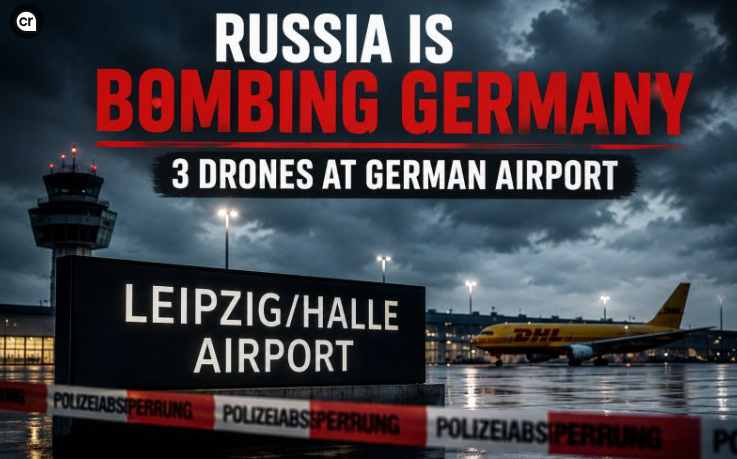
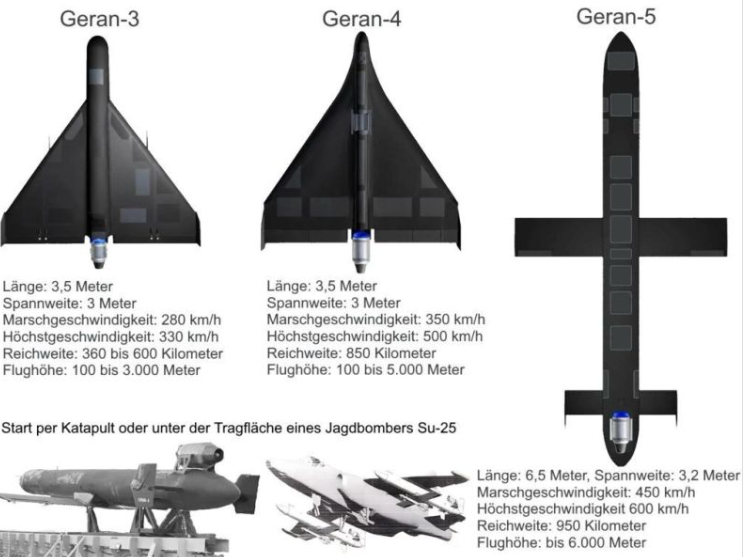
A hostile actor can create disruption without crossing a border. A coordinated cyber campaign can achieve strategic effects once possible only through military force. A handful of drones can generate headlines once reserved for large-scale operations. Influence operations can shape perceptions long before any shots are fired.
The battlefield has expanded beyond geography.
Yet Europe remains intellectually attached to older concepts of deterrence.
The question is no longer whether nations possess military capability. The question is whether they possess the willingness to act in ways that make aggressors reconsider escalation.
Deterrence only works when consequences are believable.
An actor willing to absorb criticism, sanctions, and diplomatic condemnation may not be influenced by statements alone. If retaliation remains permanently off the table, deterrence becomes less convincing with every new incident. The perception of weakness can become its own strategic vulnerability.
This does not mean Europe should abandon its values or embrace recklessness. Quite the opposite.
The real challenge is finding forms of deterrence that remain effective without sacrificing the legal and moral foundations on which democratic societies depend. That requires a level of strategic creativity that has often been missing.
It means investing in resilient infrastructure. It means accelerating defense procurement that too often becomes trapped in bureaucracy. It means developing technological advantages at wartime speed rather than peacetime pace. It means creating the industrial capacity to produce systems at scale rather than discussing them in conferences.
Most importantly, it means recognizing that national security today begins in classrooms, laboratories, and factories.
The countries best positioned for competition in this century are not necessarily those with the largest armies. They are the ones capable of producing engineers, software developers, electronics specialists, cyber experts, and innovators faster than their competitors.
Industrial resilience has become a military capability.
And that leads us to the uncomfortable paradox at the heart of Europe's security debate.
Respond too aggressively, and you may hand an adversary exactly the confrontation it seeks.
Respond too cautiously, and you may invite further escalation.
The traditional distinction between peace and war is fading. Societies increasingly find themselves operating somewhere in between, navigating a constant state of pressure that falls below the threshold of conventional conflict yet carries many of its consequences.
That is Europe's deterrence dilemma.
The greatest danger may not be military weakness alone. It may be strategic uncertainty, an inability to decide what must be defended, how it should be defended, and what costs are acceptable in the process.
Europe still possesses enormous economic strength, technological potential, and political influence.
The question is whether it can translate those advantages into credible deterrence before events force the issue.
Because once deterrence fails, the choices become far fewer, far riskier, and far more expensive.
And history suggests that nobody gets to postpone those decisions forever.