Zeitenwende 2.0. Germany Draws a Red Line Against Russia
For years, Europe spoke about Russian hybrid warfare as a distant threat. Cyberattacks, sabotage, disinformation campaigns, suspicious explosions, mysterious fires, and covert operations were treated as isolated incidents, often difficult to prove and politically uncomfortable to confront.
That era may be ending.
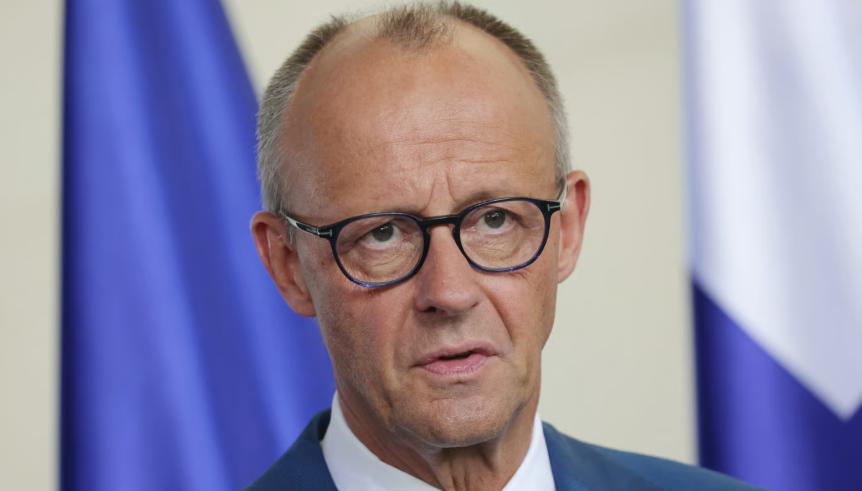
Germany is reportedly preparing what officials describe as a "Zeitenwende 2.0" following the attempted drone attack near Leipzig. If Chancellor Friedrich Merz proceeds as expected, Berlin will formally attribute responsibility to Russia and unveil a package of extensive punitive measures aimed at Russian entities. Such a move would represent the most significant escalation in German policy toward Moscow since the beginning of the war in Ukraine.
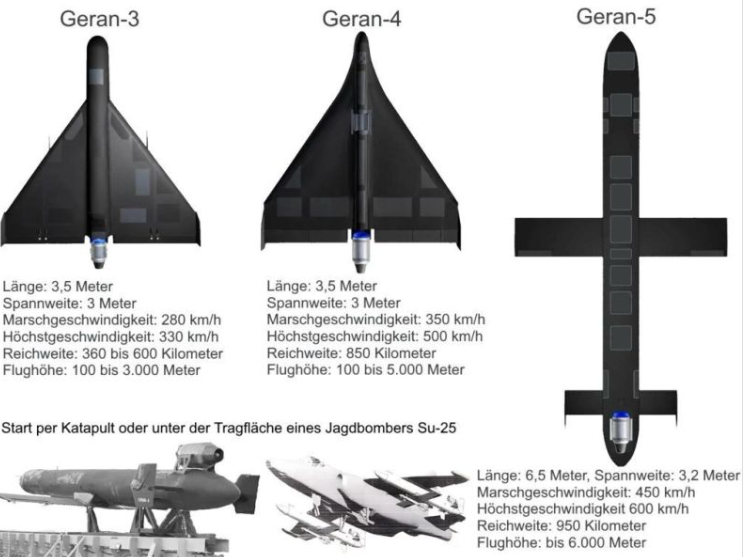
The immediate trigger is the attempted attack involving an explosive-laden drone allegedly targeting a Ukrainian Antonov cargo aircraft at Leipzig/Halle Airport. According to reports, intelligence assessments from both German and American sources increasingly point toward Russian involvement.
Whether Berlin possesses definitive proof remains unclear. Official attribution requires an exceptionally high evidentiary threshold. Yet the fact that Germany appears ready to publicly assign blame suggests authorities believe the accumulated evidence has crossed a political and security threshold.
The implications extend far beyond a single drone.
What concerns policymakers across Europe is a growing pattern.
In Romania, authorities discovered and neutralized an explosive-equipped marine drone near a major Black Sea energy project. In Slovakia, police foiled an alleged arson attack against a drone manufacturing facility. Estonia is investigating possible foreign involvement in an attack against a defense contractor. Meanwhile, an underground weapons cache discovered near Berlin has raised uncomfortable questions about potential sleeper networks and future sabotage operations inside Germany itself.
Viewed individually, each incident can be debated.
Viewed collectively, they tell a different story.
European governments increasingly believe they are facing a coordinated campaign designed to intimidate, destabilize, and test NATO's resilience without crossing the threshold of open military confrontation.
The term "hybrid warfare" was once useful because it implied ambiguity.
Now that ambiguity may be disappearing.
That explains why officials are invoking the phrase "Zeitenwende 2.0." The original Zeitenwende, announced by Chancellor Olaf Scholz in 2022 after Russia's full-scale invasion of Ukraine, transformed Germany's defense policy. Billions were committed to military modernization, long-standing assumptions collapsed, and Berlin embraced a more assertive role in European security.
The emerging version could prove equally significant.
This time the focus is not military spending.
It is deterrence.
German officials reportedly believe traditional responses are no longer enough. Expelling diplomats, issuing condemnations, and symbolic protests may satisfy diplomatic protocols, but they do little to alter strategic calculations in Moscow. If Russia is ultimately blamed for the Leipzig incident, Berlin appears prepared to impose direct costs through sanctions, economic restrictions, and potentially expanded support for Ukraine.
The European Union is moving in the same direction.
Diplomatic sources indicate that Brussels is preparing another major sanctions package affecting hundreds of individuals and companies. Discussions are also reportedly returning to one of the most controversial questions of the war: whether frozen Russian state assets should be used more aggressively in support of Ukraine.
Such discussions would have seemed politically impossible a few years ago.
Today they are increasingly mainstream.
Yet the timing is politically risky.
Germany faces important regional elections, particularly in eastern states where the Alternative for Germany (AfD) maintains strong support and advocates a significantly softer approach toward Russia. Any major confrontation with Moscow will inevitably become part of the domestic political debate.
Merz therefore faces a delicate balancing act.
He must convince the public that the threat is real, that the evidence is credible, and that stronger measures serve Germany's interests rather than merely escalating tensions.
Russia, meanwhile, denies involvement in such incidents and has consistently rejected accusations of sabotage or covert attacks in Europe. Moscow is also expected to retaliate if Berlin announces significant new sanctions.
This is why the coming days matter.
If Germany formally points the finger at Russia, it will not simply be responding to an attempted attack in Leipzig.
It will be making a broader statement about the future of European security.
A statement that hybrid warfare is no longer viewed as background noise.
A statement that covert operations will carry consequences.
And perhaps most importantly, a statement that Europe's largest economy is increasingly willing to treat attacks in the shadows as seriously as attacks in the open.
The original Zeitenwende changed Germany's defense policy.
Zeitenwende 2.0 may change how Europe responds to conflict itself.
.png)