EASA Easy Access Rules. Why EASA’s Latest Drone Regulations Matter More Than Most New Drone Technologies

Europe's drone industry is obsessed with technology.
Manufacturers showcase longer flight times. Startups compete over AI autonomy. Investors chase the next breakthrough in BVLOS operations, drone delivery, emergency response, and urban air mobility.
Yet one of the most important developments for the future of European drones in 2026 didn't involve a new aircraft at all.
It involved a rulebook.
The European Union Aviation Safety Agency (EASA) has released the June 2026 revision of its Easy Access Rules for Unmanned Aircraft Systems (UAS), introducing a significantly upgraded digital platform and integrating the latest SORA 2.5 (Specific Operations Risk Assessment) framework developed by JARUS.
At first glance, it sounds like regulatory housekeeping.
It isn't.
It may be one of the most consequential updates for European drone operators in years.
The Real Bottleneck Was Never Technology
Europe possesses world-class drone manufacturers, software developers, and research institutions.
Yet scaling drone operations has often been slowed by something far less exciting than engineering: regulatory complexity.
For many operators, obtaining authorization for complex missions has required navigating multiple documents, guidance materials, acceptable means of compliance, and risk-assessment methodologies.
In practice, compliance often became a project of its own.
EASA's latest revision aims to change that by consolidating regulations, guidance material, and operational requirements into an enhanced digital environment available in PDF, machine-readable XML, and an upgraded online format. The new version introduces faster navigation, permanent rule-specific links, and improved search and filtering functions across desktop and mobile devices.
That may sound mundane.
But for an industry increasingly conducting complex BVLOS, infrastructure inspection, public safety, and industrial operations, accessibility of regulation becomes operational efficiency.
SORA 2.5 Becomes the New Reference Point
The headline change is the incorporation of ED Decision 2025/018/R, which formally introduces SORA 2.5 into the Easy Access Rules.
For operators flying in the "Specific Category," SORA has become the dominant risk assessment methodology used to obtain operational authorization across Europe.
The framework allows operators to systematically evaluate operational risks and demonstrate that complex missions can be conducted safely.
The latest version seeks to improve consistency, refine risk classification methods, and make assessments more structured and practical for both operators and aviation authorities.
In essence, SORA increasingly functions as the common language between innovators and regulators.
The better that language works, the faster new drone capabilities can reach the market.
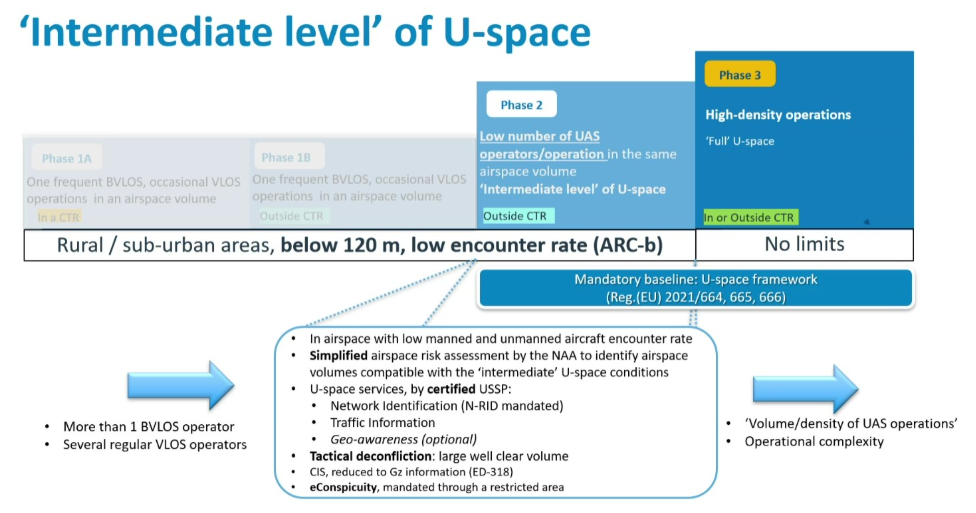
Europe Is Quietly Building a Digital Airspace Economy
The significance of this update extends beyond compliance.
Europe is laying the foundations for a continent-wide drone economy.
As drone operations move beyond visual line of sight, airspace becomes more complex. Infrastructure inspections, cargo transport, public safety missions, emergency response, critical infrastructure monitoring, and future autonomous operations all require predictable regulatory frameworks.
Investors do not scale uncertainty.
Operators do not build business models on inconsistent approvals.
And regulators cannot approve novel operations without structured risk methodologies.
The June 2026 revision addresses all three challenges simultaneously.
By making the rules easier to access and applying a unified risk-assessment methodology, EASA is reducing friction between innovation and deployment.
The Competitive Race Has Shifted
The next phase of the drone industry may not be determined solely by who builds the best drone.
It may be determined by who best understands the rules.
Hardware advantages are increasingly temporary. Software capabilities spread quickly. AI features are becoming ubiquitous.
Regulatory competence, however, is harder to copy.
Organizations that master SORA 2.5, integrate compliance into mission planning, and develop repeatable authorization processes could gain a significant advantage over competitors focused only on technology.
This is especially true as European regulators prepare for increasingly complex BVLOS, autonomous, and large-scale drone operations.
The Future Is Not Less Regulation—It's Smarter Regulation
Critics often portray regulation as an obstacle to innovation.
The reality is more complicated.
Without trusted frameworks, advanced drone operations remain limited.
Without standardized risk assessments, authorities cannot approve increasingly ambitious missions.
Without clear digital access to rules, operators waste time navigating bureaucracy instead of flying.
EASA's June 2026 revision signals a broader shift: Europe's drone future will not be built solely by engineers.
It will be built by engineers, operators, regulators, and risk specialists working from the same playbook.
The drones may grab the headlines.
But the rulebook may ultimately determine who wins the market.