Counter UAV Startups in Europe: Analysis and Analytics
1. Introduction: From UAV Proliferation to Counter-UAV Necessity
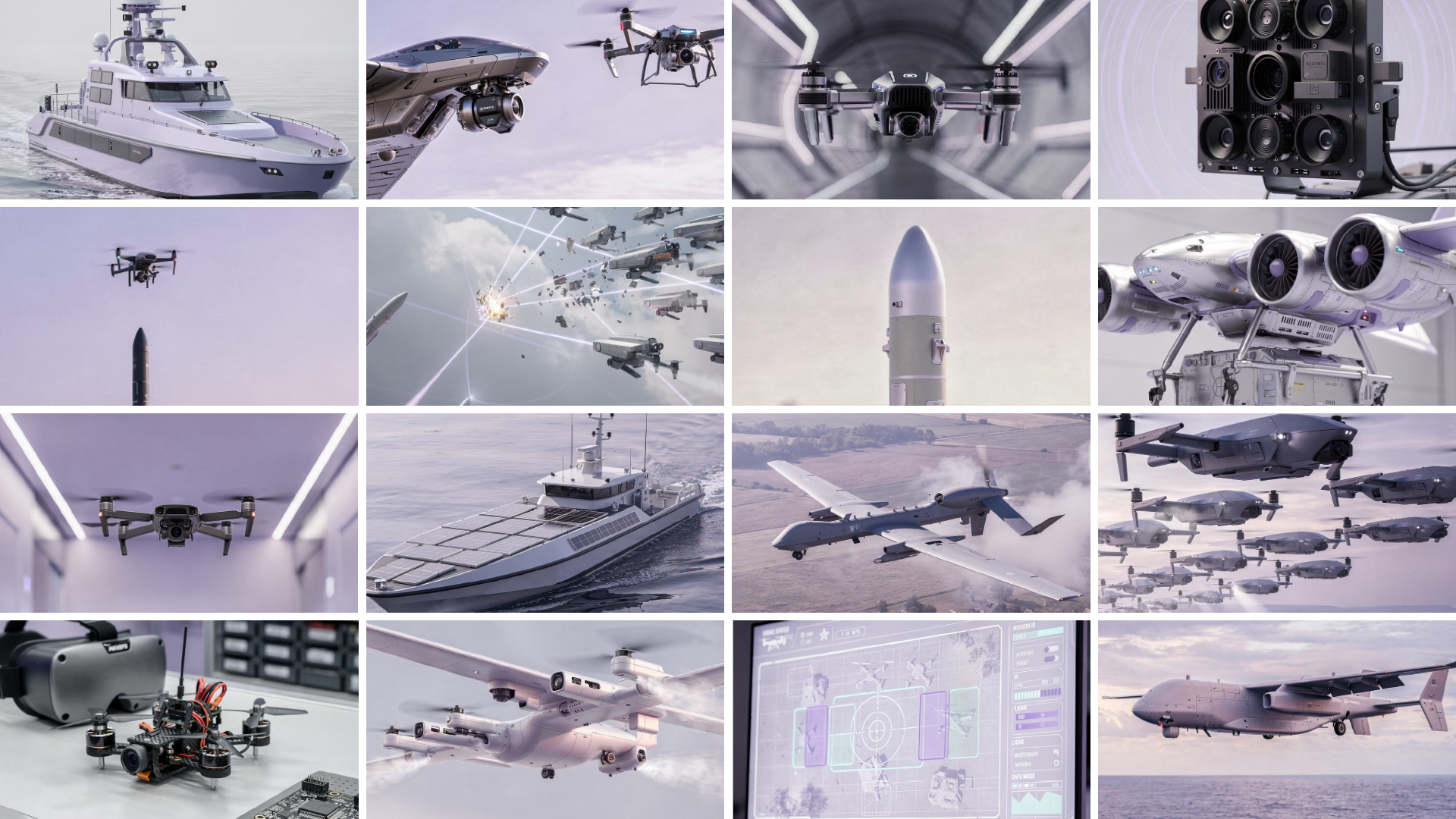
The document highlights a rapidly evolving European defense-tech landscape where low-cost, scalable UAVs are driving a parallel surge in counter-UAV (cUAS) innovation. The ecosystem is no longer limited to traditional jamming or static defenses. Instead, it spans:
- Interceptor drones
- Missile-based interception
- Air-to-air counter-UAV systems
- Acoustic and AI-based detection
- Software-driven autonomy and coordination layers
A key observation across all companies is a shift toward scalability, autonomy, and cost-efficiency, driven by the increasing use of drone swarms and inexpensive attack UAVs.
2. Core Counter-UAV Approaches (Technology Segmentation)
2.1 Air-to-Air Interceptor Drones (Mobile cUAS)
These systems represent the most dynamic and scalable counter-UAV approach.
Key players:
- Alpine Eagle
- TYTAN Technologies
- Quantum Systems (Jaeger)
- EGIDE (partial overlap)
Alpine Eagle’s Sentinel system uses drones (or swarms) to detect and intercept UAVs in flight, emphasizing mobility and protection of moving assets, unlike static defenses.
TYTAN Technologies goes further with fully autonomous interceptors (METIS) capable of high-speed engagements and multi-target management per operator.
Quantum Systems complements ISR drones with the Jaeger interceptor, showing a dual ISR + cUAS integration strategy.
EGIDE adds a layered defense architecture, combining interceptor drones with software-driven coordination and sensor fusion.
✅ Key differentiator:
- Alpine Eagle → mobility and swarm interception
- TYTAN → full autonomy and high-speed engagement
- EGIDE → integrated system-of-systems
- Quantum Systems → ISR + interception convergence
👉 Trend insight:
Airborne interception is becoming the dominant paradigm, replacing static jamming systems.
2.2 Missile-Based Interception (Hard-Kill Systems)
Key players:
- Cambridge Aerospace
- Frankenburg Technologies
Cambridge Aerospace focuses on low-cost interceptor missiles (Skyhammer) to reduce per-engagement costs.
Frankenburg Technologies emphasizes mass-producible, swarm-resistant missile systems, explicitly designed to counter loitering munitions at scale.
✅ Key differentiator:
- Cambridge Aerospace → cost reduction of existing missile paradigm
- Frankenburg → redesigning interceptors for swarm warfare economics
👉 Trend insight:
Missiles remain relevant but are being re-engineered for affordability and mass deployment, rather than precision-only use.
2.3 Sensor and Detection Layer (Soft-Kill Enablers)
Key players:
- Arcani Systems
Arcani Systems introduces acoustic detection, enabling identification of drones that are invisible to radar or RF-based systems (e.g., fiber-optic or pre-programmed UAVs).
✅ Unique value:
- Works against non-emitting drones, where traditional detection fails
👉 Trend insight:
Detection is evolving toward multi-modal sensing, not just RF/radar.
2.4 Integrated Counter-UAV Platforms
Key players:
- UFORCE
- EGIDE
UFORCE offers a bundled ecosystem: drones, naval drones, counter-drone systems, and command software under one framework.
EGIDE similarly integrates AI-driven detection, distributed sensors, and layered interception via its Mystique platform.
✅ Key differentiator:
- UFORCE → platform aggregation (multi-company ecosystem)
- EGIDE → vertically integrated architecture
👉 Trend insight:
The future of cUAS is system integration, not standalone products.
3. Enabling Technologies Supporting cUAS
Several companies are not directly “counter-UAV” providers but are critical enablers:
3.1 Autonomy & GNSS-denied Navigation
- Lendurai
- Robotto
- Alpha Autonomy
These firms develop GPS-independent navigation and targeting, essential for both offensive and defensive UAV operations.
👉 Critical for:
- Operating in contested environments
- Enabling autonomous interception
3.2 Swarm and Mass-Production UAV Ecosystems
- Orbotix
- Orqa FPV
- 24Industries
- FlyFocus
These companies contribute to the problem space (mass UAV proliferation) while also indirectly shaping cUAS requirements.
For example:
- Orbotix → swarm drones up to 50 units
- Orqa FPV → scaling to millions of drones annually
👉 Insight:The scale of UAV production directly drives demand for scalable cUAS solutions.
3.3 Large ISR & “Mother Drone” Platforms
- TEKEVER
- Quantum Systems
These platforms act as:
- ISR backbone
- Potential command nodes for counter-UAV operations
TEKEVER’s ARX can coordinate smaller drones, suggesting future defensive swarm coordination roles.
4. Comparative Positioning Matrix

5. Key Strategic Trends
5.1 Shift from Static to Mobile Defense
- Airborne interceptors outperform ground-based systems in flexibility.
5.2 Cost-per-Kill is the Critical Metric
- Nearly all cUAS players focus on affordability vs. cheap drones.
5.3 Autonomy is Becoming Mandatory
- Multiple companies emphasize human-out-of-the-loop engagement.
5.4 Swarm vs. Swarm Warfare
- Defense is evolving toward:
- Interceptor swarms
- Distributed detection
- AI-coordinated responses
5.5 System Integration over Point Solutions
- Winning players combine:
- Sensors
- AI
- Interceptors
- Command software
6. Conclusion
The European counter-UAV ecosystem is transitioning into a multi-layered, AI-driven defense architecture where:
- Airborne interceptors (TYTAN, Alpine Eagle) are the most disruptive innovation
- Missile startups (Frankenburg, Cambridge Aerospace) are redefining economics
- Integrated platforms (EGIDE, UFORCE) indicate the direction of full-system solutions
- Autonomy and sensing startups are enabling next-generation capabilities
👉 Overall insight:
The competitive advantage is shifting from individual hardware platforms to integrated, scalable, and autonomous defense ecosystems capable of countering large volumes of low-cost UAVs.

%20(1).jpg)