Ukraine’s Ground Drone Surge The Robot War Delivering Ammo, Evacuating Wounded, and Rewriting Tactics
he drone war in Ukraine is no longer confined to the sky. It’s rolling forward on tracks and wheels—down cratered roads, through tree lines, and into the last kilometers where a human silhouette is practically a death sentence.
This isn’t “future warfare.” It’s a brutal present-tense adaptation: when the air is saturated with FPV drones and sensors, the ground becomes too transparent for routine movement. The result is a surge in uncrewed ground vehicles (UGVs) built for the missions armies can’t stop doing—resupply, casualty evacuation, engineering work, mine tasks, and direct combat support—but can no longer afford to do with people.
The real driver: the last mile is lethal
The most revealing detail isn’t a weapon caliber or a spec sheet. It’s a statistic: in March 2026, Ukraine’s forces carried out more than 9,000 combat and logistics missions using ground robots. That wasn’t a pilot program; it was industrial tempo.
And that tempo is growing. Reporting from Ukraine’s defense ecosystem describes missions rising month-on-month, with UGVs used across frontline tasks like ammunition delivery, logistics support, and casualty evacuation, increasingly replacing personnel “wherever possible.”
This is the core logic of the ground-robot push: replace the most dangerous movements first. Not because robots are “better soldiers,” but because they can be better risk absorbers.
Not one robot—an ecosystem
What makes Ukraine’s approach provocative isn’t one wonder-machine. It’s the sheer breadth of the ecosystem. In a major deep-dive, one senior Ukrainian defense innovation leader described an environment in which hundreds of companies and hundreds of models exist—meaning the country isn’t betting on a single program, but iterating fast across many designs.
This “many models, rapid iteration” mindset mirrors what happened with aerial drones: field feedback drives design changes, and losses are expected. The battlefield becomes the test range, and manufacturing becomes the strategic weapon.
Three missions that matter most
The ground robot arsenal clusters around three brutal necessities:
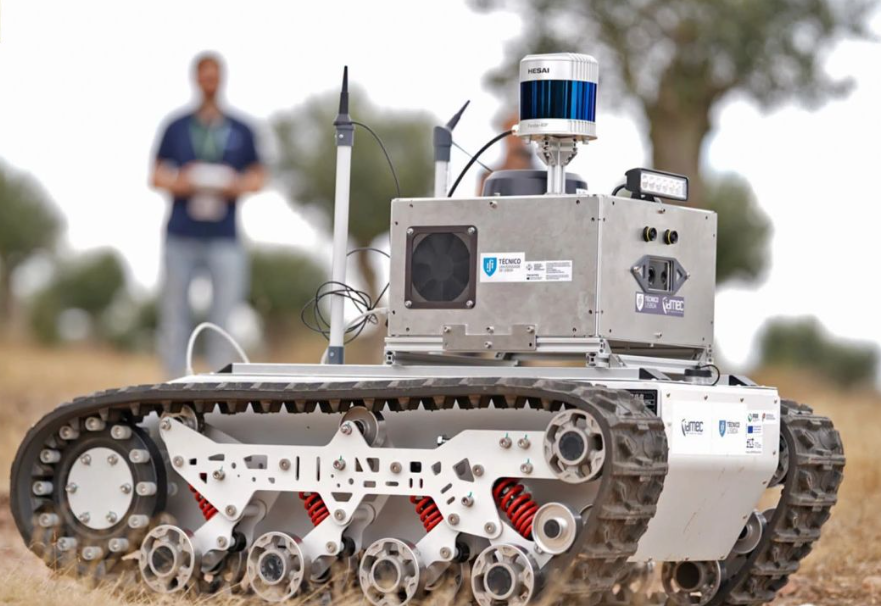
1) Logistics UGVs — the pack mules of the drone age. These platforms move construction materials, ammunition, provisions, and other essentials through the “gray zone,” where the final kilometers to the front line are watched and hunted.
2) Evacuation UGVs — because casualty evacuation is now a targetable event. If a drone can track vehicles and foot movement, medevac becomes a kill opportunity. Ground robots turn evacuation into a remote-controlled process, reducing exposure in the most dangerous corridors.
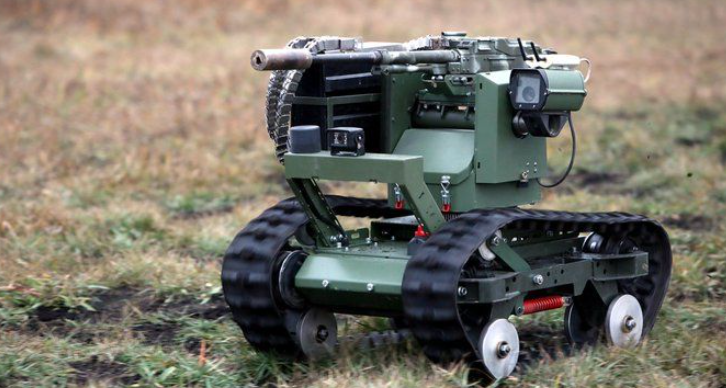
3) Combat UGVs — the most controversial category: armed platforms and remote turrets that provide direct fire support and, in some cases, help counter aerial threats. The key point isn’t that robots are “replacing infantry.” It’s that firepower can be projected without placing a human body in the kill zone.
The scale is the message
This is not boutique experimentation. Ukraine’s defense establishment has openly set massive production and procurement targets, including contracting tens of thousands of UGVs within 2026 timelines and pushing toward robotic logistics at scale.
That matters because scale changes doctrine. A handful of robots is a novelty. Tens of thousands becomes a new layer of combat power—one that shifts how units plan routes, sustain positions, and survive under constant aerial surveillance.
The uncomfortable lesson for modern armies
Most militaries still treat ground robots as experimental add-ons—useful, but peripheral. Ukraine is forcing a different conclusion:
In a drone-saturated battlefield, movement itself is combat.
Resupply is combat. Evacuation is combat. Engineering work is combat.
So the decisive question becomes: How much of that combat can be done without a human presence?
Ukraine’s answer is blunt and operational: push machines into the spaces where people have become too valuable to spend. And once an army learns to do that at scale, the battlefield doesn’t just change.
It becomes permanently more robotic.