Russian soldiers faced Ukrainian Robotic Unmanned Ground System

The Russian soldiers never saw their enemy.
They heard gunfire nearby. A machine gun. Close enough to matter. With no clear escape and no visible opponent, they made a calculation familiar to every battlefield in history: it was time to surrender.
Only later did they learn the truth.
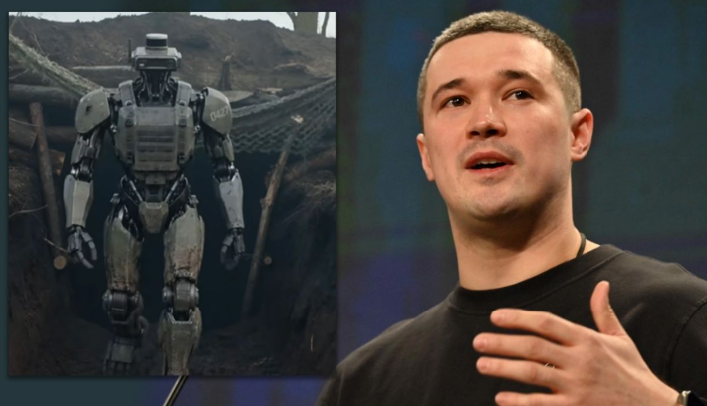
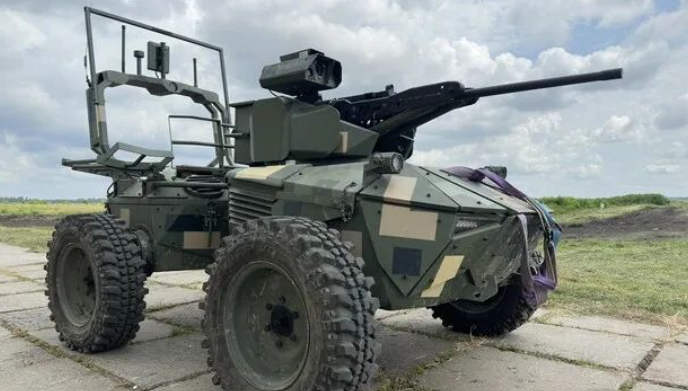
The firing position was not held by Ukrainian infantry. It was a ground robotic complex, remotely operated and armed, advancing ahead of Ukrainian troops in the Huliaipole direction. The Russians had surrendered—not to soldiers—but to a machine.
The incident was confirmed by a Ukrainian officer known by the call sign Mengel, head of a combat training group in the 131st Separate Reconnaissance Battalion, who described how the encounter unfolded during clearing operations in populated areas.
“They didn’t even think about who was firing,” Mengel said in remarks reported by Ukrainian media. “They heard the shooting, and it was enough for them to make the right decision.”
Robots on the front line
Ground robotic systems are no longer experimental curiosities in Ukraine’s war. They are becoming routine participants in reconnaissance, logistics, evacuation, and now—direct combat support.
Heavy versions of these platforms can reportedly carry hundreds of kilograms of cargo and travel long distances over rough terrain, allowing Ukrainian units to move supplies, evacuate drones, and conduct operations without exposing soldiers to immediate danger.
In Huliaipole, the robotic system did not act alone. Ukrainian infantry followed behind it, maintaining fire control and ultimately taking the surrendered Russian soldiers into custody. The robot’s role was not symbolic—it shaped the enemy’s decision before a human ever appeared.
This was not an isolated event.
Not the first surrender to machines
Since mid‑2025, Ukraine has documented multiple cases where Russian troops surrendered under pressure from unmanned systems alone. In July 2025, Ukraine’s 3rd Separate Assault Brigade announced what it described as the first confirmed battlefield surrender to unmanned platforms, involving FPV drones and ground-based robotic vehicles in Kharkiv Oblast.
In that operation, Ukrainian infantry did not initially engage. Drones struck fortified positions, ground robots advanced, and Russian soldiers signaled their intent to surrender. Only after the area was secured did Ukrainian troops move in to take prisoners.
Similar incidents have since been recorded through late 2025 and into early 2026, with videos released showing Russian soldiers emerging from cover and surrendering while being monitored by robotic systems and drones.
A psychological turning point
What makes these encounters notable is not firepower—but perception.
On today’s battlefield, surrender often follows recognition: identifying who is shooting, how close they are, and whether resistance makes sense. Robotic systems disrupt that logic. A machine does not shout, posture, or expose itself. It advances methodically, without visible fear or hesitation.
As Mengel described, simply hearing sustained fire from an unseen source was enough to break resistance. The robot did not need to negotiate. It did not need to intimidate. Its presence collapsed uncertainty into inevitability.
For Ukrainian units, these surrenders carry strategic value beyond the immediate tactical gain.
Captured Russian soldiers add to Ukraine’s exchange fund—critical leverage for securing the return of Ukrainian prisoners of war. Mengel emphasized that Ukrainian troops celebrate every capture for this reason, even in the midst of active clearing operations.
Clearing without sacrifice
Ground robotic complexes are now integrated into reconnaissance and clearing tactics, particularly in populated areas where enemy infiltration is common and ambush risk is high.
Ukrainian teams operate on foot behind robotic systems, using them as forward elements during search operations. When contact occurs, the enemy is often exposed quickly and left with few options: retreat, be neutralized, or surrender.
Increasingly, they choose the last.
The Russians who surrendered in Huliaipole never knew their opponent was a robot. But that may be the point.
In modern war, fear doesn’t require a face.
Sometimes, the sound is enough.
.png)