Top Ukrainian Unmanned Ground Vehicles (UGVs). From Rys Pro till Vysluk 2.0
A wounded Ukrainian soldier lay stranded under fire. Reaching him would have meant risking more lives. Instead, a 19-year-old operator dispatched an unmanned ground vehicle (UGV). Six hours later, after crossing 30 kilometers of snow-covered and frozen terrain, the robot returned carrying the soldier to safety.
He survived.
That mission captures the true significance of Ukraine's ground robotics revolution. These machines are not experimental technology showcased at defense exhibitions. They are operational systems saving lives every day on one of the world's most dangerous battlefields.
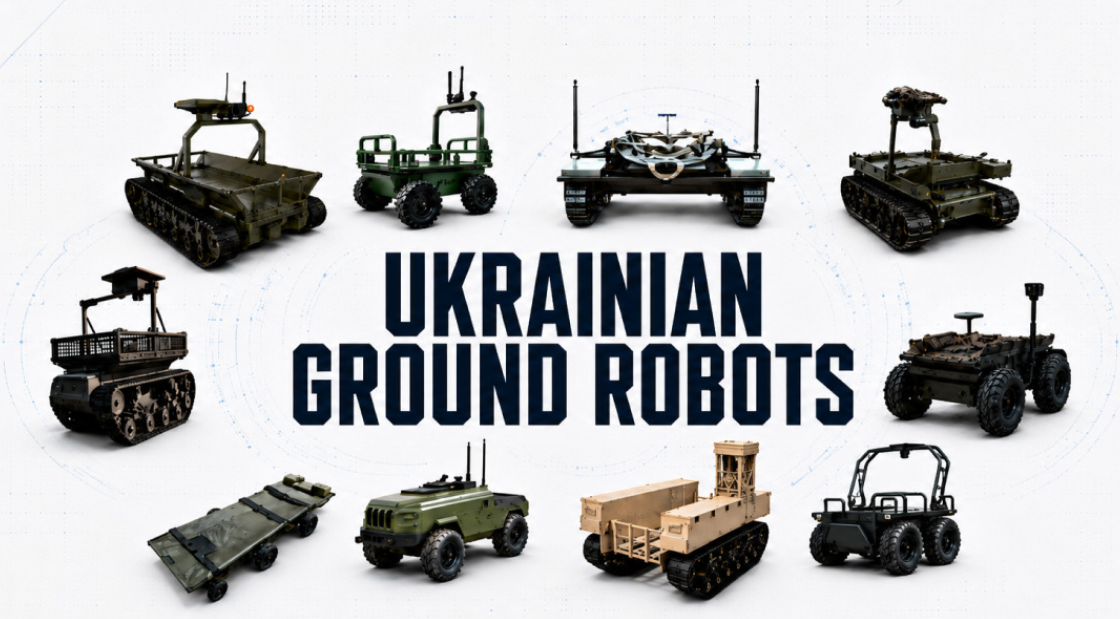
Since the beginning of Russia's full-scale invasion, Ukraine has emerged as one of the most advanced real-world laboratories for ground robotics. Driven by necessity, Ukrainian engineers, startups, military units, and volunteer initiatives have developed a diverse ecosystem of unmanned ground vehicles optimized for logistics, casualty evacuation, reconnaissance, and support operations in frontline environments.
Why Ground Robots Matter
Before 2022, many military planners viewed UGVs as future capabilities. They appeared in defense industry presentations and research programs but rarely played meaningful roles in sustained combat operations.
Ukraine changed that perception.
On today's battlefield, every resupply run, casualty evacuation, and engineering mission carries significant risk. Ground robots offer a simple but powerful advantage: they allow dangerous tasks to be performed without exposing soldiers to enemy fire.
Unlike humans, robots do not become exhausted, panic under pressure, or require protection from cold, smoke, darkness, or contaminated terrain.
As Victory Robots commander Serhii Volkov noted following one evacuation mission:
"Without this evacuation, he would not have survived."
Ukraine's defense sector now views UGVs as force multipliers capable of supporting logistics, medical evacuation, reconnaissance, and mine-clearing operations. The systems described below represent some of the most important evacuation and logistics platforms currently operating on the front line.
The Core Fleet of Ukrainian Ground Robots
Rys Pro
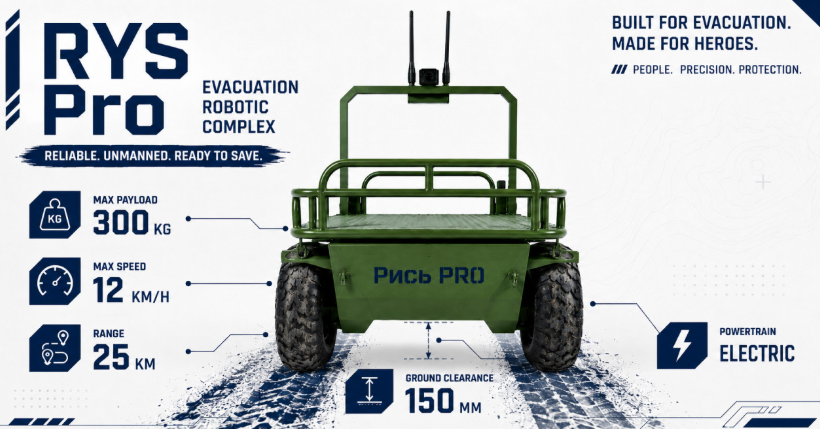
The Rys Pro is an upgraded version of the Rys platform, offering twice the payload capacity while maintaining a compact footprint.
Specifications
- Payload: 300 kg
- Speed: 12 km/h
- Range: 25 km
- Power: Electric
- Ground Clearance: 150 mm
The system balances mobility and carrying capacity, making it suitable for frontline logistics operations where maneuverability is as important as payload.
Rys
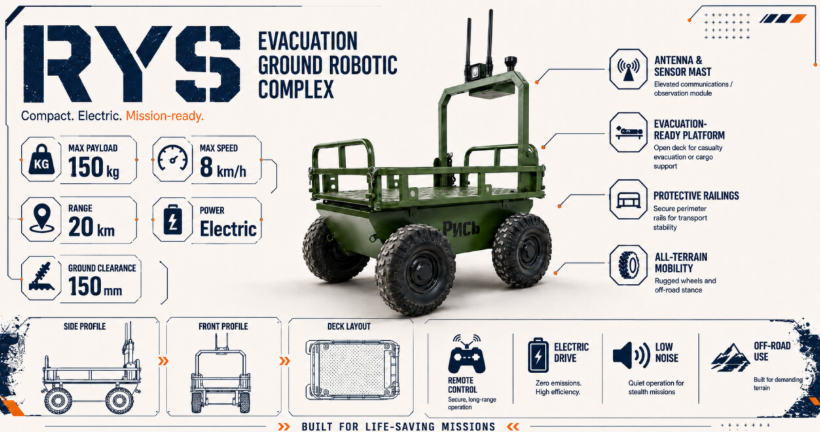
The base Rys platform prioritizes simplicity and compactness.
Specifications
- Payload: 150 kg
- Speed: 8 km/h
- Range: 20 km
- Power: Electric
- Ground Clearance: 150 mm
Its smaller size makes it useful for forward-area supply missions and sensor deployment tasks.
HNOM-LM
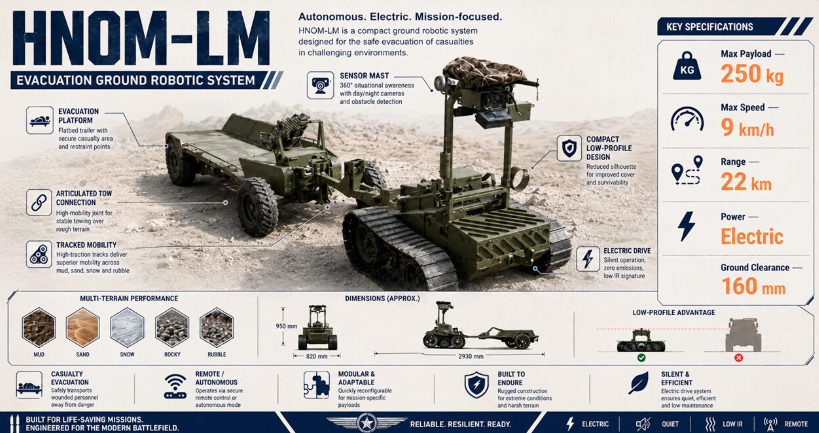
The HNOM-LM fills the gap between lightweight and heavy-duty systems.
Specifications
- Payload: 250 kg
- Speed: 9 km/h
- Range: 22 km
- Power: Electric
- Ground Clearance: 160 mm
With improved obstacle-clearing capabilities and substantial carrying capacity, it offers an effective middle-ground solution.
Murakha
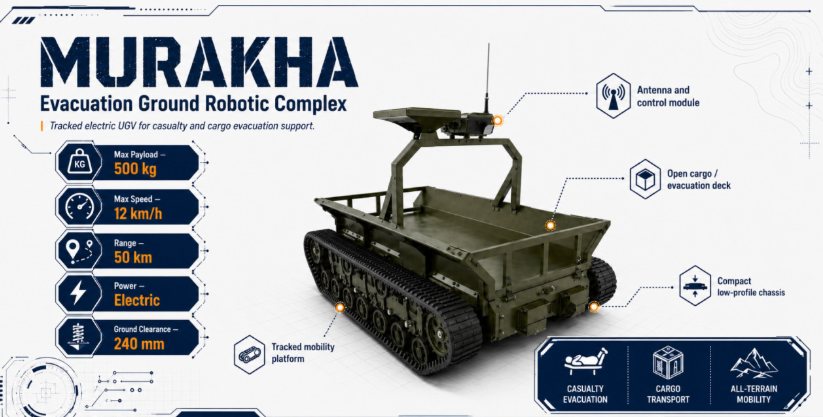
Named after the Ukrainian word for "ant," Murakha is among the most capable electric logistics platforms developed in Ukraine.
Specifications
- Payload: 500 kg
- Speed: 12 km/h
- Range: 50 km
- Power: Electric
- Ground Clearance: 240 mm
Murakha combines the highest payload capacity among electric systems with exceptional range, enabling sustained operations over long distances.
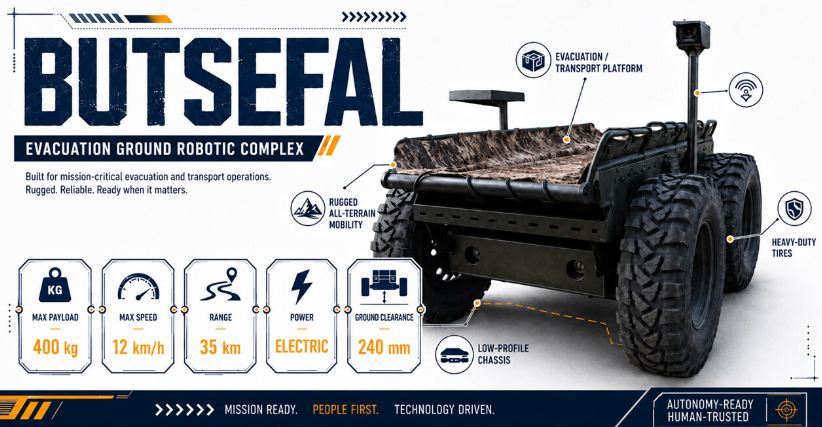
Butsefal
Inspired by Alexander the Great's legendary horse Bucephalus, this platform emphasizes endurance and carrying power.
Specifications
- Payload: 400 kg
- Speed: 12 km/h
- Range: 35 km
- Power: Electric
- Ground Clearance: 240 mm
Its high clearance enables reliable performance across rough terrain common on Ukrainian battlefields.
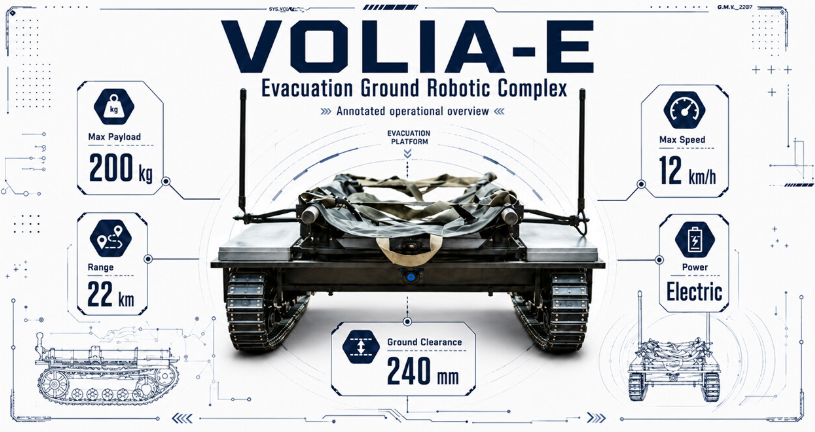
Volia-E
Volia-E prioritizes agility.
Specifications
- Payload: 200 kg
- Speed: 12 km/h
- Range: 22 km
- Power: Electric
- Ground Clearance: 240 mm
Although it carries less weight than larger systems, its maneuverability makes it highly effective for fast-moving support missions.
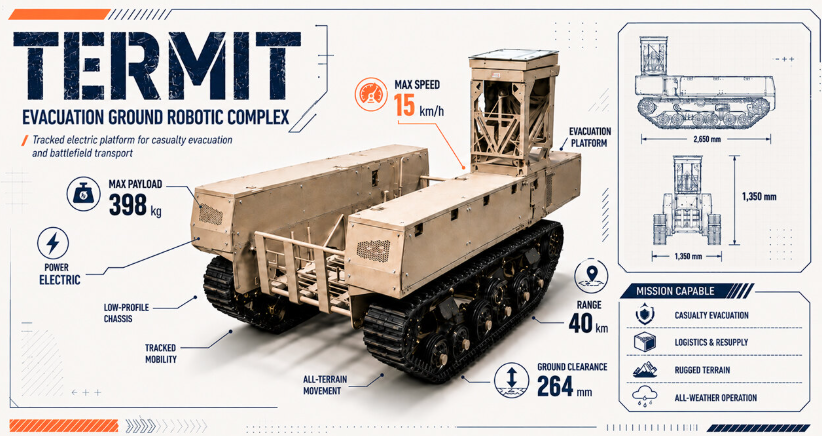
Termit
The Termit stands out as the fastest electric UGV currently documented.
Specifications
- Payload: 398 kg
- Speed: 15 km/h
- Range: 40 km
- Power: Electric
- Ground Clearance: 264 mm
Speed can be decisive during casualty evacuations, and Termit's performance provides important operational advantages when minutes matter.
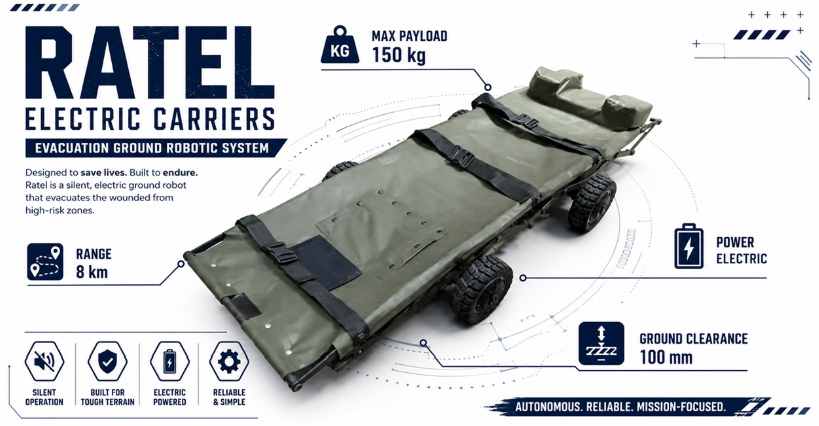
Ratel Electric Carriers
Designed primarily for medical evacuation, Ratel systems prioritize accessibility and simplicity.
Specifications
- Payload: 150 kg
- Range: 8 km
- Power: Electric
- Ground Clearance: 100 mm
Their mission is straightforward: reach wounded soldiers in areas too dangerous for conventional evacuation teams.
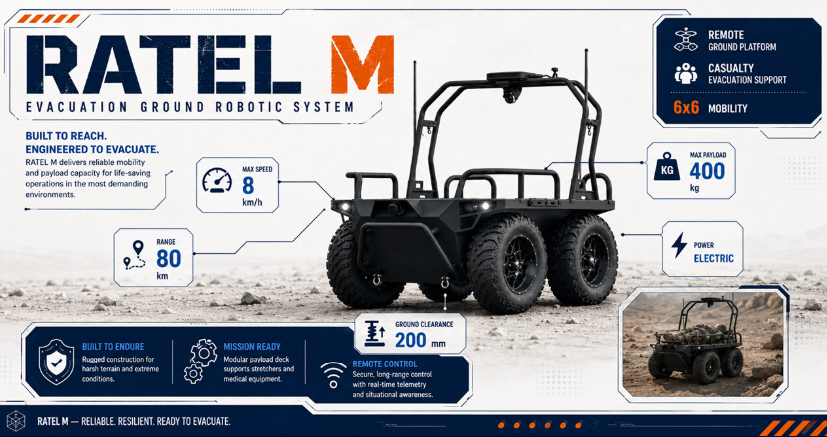
Ratel M
The larger Ratel M extends endurance significantly.
Specifications
- Payload: 400 kg
- Speed: 8 km/h
- Range: 80 km
- Power: Electric
- Ground Clearance: 200 mm
Its long operational range makes it particularly suitable for sustained supply operations linking rear bases with frontline positions.
Protector
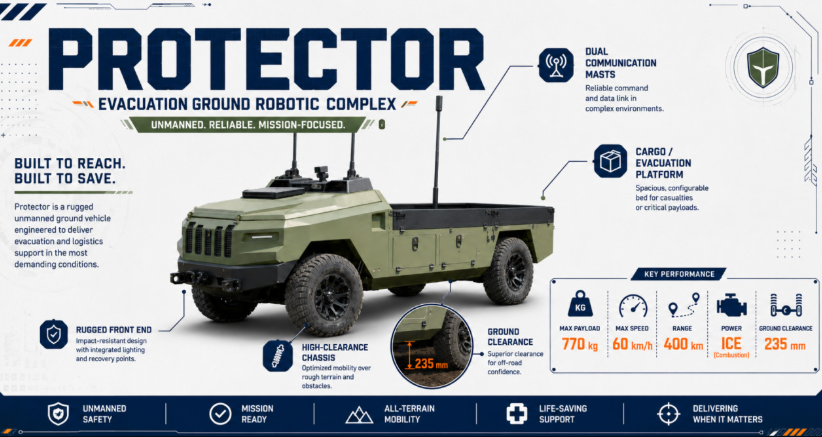
Protector represents a category of its own.
Unlike other platforms, it uses an internal combustion engine instead of battery power.
Specifications
- Payload: 770 kg
- Speed: 60 km/h
- Range: 400 km
- Power: Internal Combustion Engine (ICE)
- Ground Clearance: 235 mm
With the highest payload, longest range, and fastest speed among documented Ukrainian UGVs, Protector is designed for deep logistics and long-distance resupply missions.
Visluk 2.0
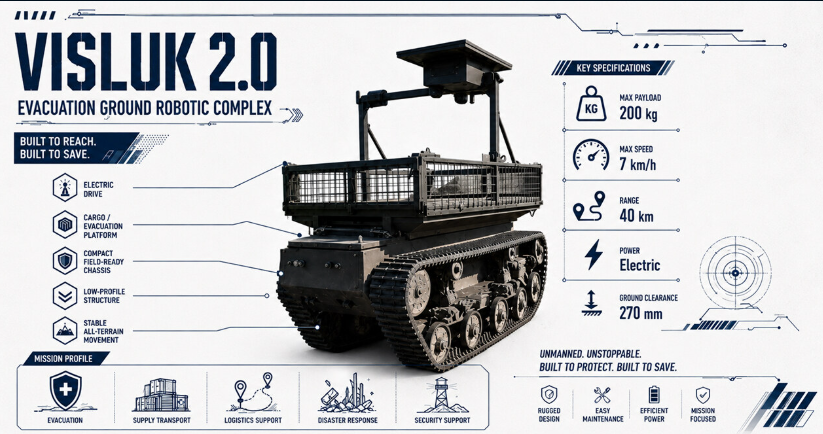
Visluk 2.0 focuses on extreme terrain capability.
Specifications
- Payload: 200 kg
- Speed: 7 km/h
- Range: 40 km
- Power: Electric
- Ground Clearance: 270 mm
Its industry-leading ground clearance enables operation in heavily cratered terrain, rubble fields, and challenging battlefield conditions where other systems may struggle.
Beyond Technology: The Human Factor
Even the most advanced robot requires skilled operators.
This is where Ukraine's Victory Robots initiative plays a critical role.
Since 2025, the program has trained more than 2,023 operators, instructors, and specialists capable of deploying and managing ground robotic systems.
The initiative focuses on:
- Operator training
- Instructor development
- Technical support
- Robotics infrastructure
- Community building
- Integration into frontline operations
The result is not merely a fleet of machines, but a growing ecosystem capable of sustaining robotic warfare at scale.
A Global Benchmark for Future Warfare
Ukraine's UGV ecosystem extends far beyond the current conflict.
The country has become the world's most valuable testing ground for ground robotics under actual combat conditions. Every mission generates lessons about mobility, power management, terrain performance, operator training, reliability, and battlefield integration.
Military planners across NATO and allied countries are studying these developments closely.
Just as Ukraine transformed global understanding of drone warfare, its experience with ground robotics is reshaping thinking about autonomous logistics, casualty evacuation, and battlefield support.
The lessons learned in Ukraine are not theoretical.
They are being written in real time, under real fire, and often at great human cost.
The world is watching because Ukraine is not simply defending its territory.
It is demonstrating what the future of land warfare looks like.