The New Currency of War. Why Ukraine’s Drone Secrets May Be Worth More Than Fighter Jets

For generations, military power was measured in tanks, fighter aircraft, missile systems, and artillery. Nations exchanged weapons, purchased hardware, and calculated security through inventories of steel and firepower.
The war in Ukraine is changing that equation.
A recent dispute between Poland and Ukraine over a proposed "MiGs for drones" arrangement reveals an emerging reality in modern warfare: knowledge may now be more valuable than machinery. The episode was triggered when Polish Defence Minister Władysław Kosiniak-Kamysz stated that Warsaw would not transfer its remaining MiG-29 fighter aircraft to Ukraine for the time being because Kyiv had not delivered the expected drone-technology component of the arrangement.
On the surface, the disagreement appears transactional.
In reality, it highlights one of the most important strategic shifts of the twenty-first century.
For the first time in modern European warfare, battlefield innovation itself has become a currency.
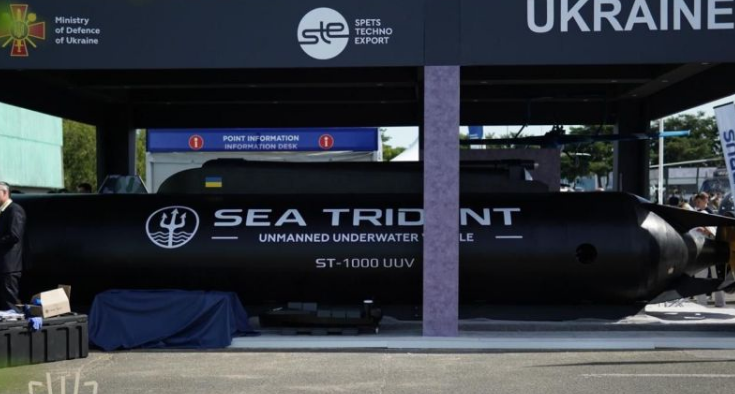
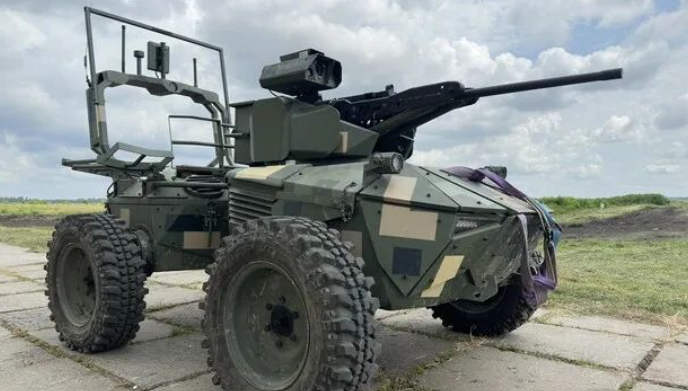
Ukraine is no longer simply consuming military technology supplied by allies. It is producing something increasingly rare and valuable: operational knowledge gained through the world's most intensive drone war.
That knowledge cannot be loaded onto a truck, counted in a warehouse, or photographed on an airfield.
Yet its value may exceed that of many traditional weapons systems.
The MiG-29 is a capable fighter aircraft. But it represents established technology from a previous era of warfare. The real revolution is taking place elsewhere—in workshops, software labs, testing grounds, frontline command posts, and drone production facilities spread across Ukraine.
There, engineers and operators are refining technologies at a pace that peacetime procurement systems struggle to match.
Every successful drone attack generates data.
Every failed mission creates lessons.
Every adaptation to Russian electronic warfare contributes to a growing body of knowledge that no simulation can replicate.
The result is an innovation ecosystem forged under the most demanding conditions imaginable.
It is therefore unsurprising that Poland wants access to it.
As one of NATO's most exposed frontline states, Poland faces many of the same security challenges that Ukraine confronts daily. Russian drone tactics, electronic warfare methods, reconnaissance techniques, and battlefield adaptation cycles are not theoretical concerns for Warsaw.
They are future planning assumptions.
From Poland's perspective, access to Ukrainian drone expertise offers a shortcut measured not in months but potentially years. The opportunity to learn directly from a military that has conducted sustained drone warfare on an unprecedented scale is strategically compelling.
Yet Ukraine's hesitation is equally understandable.
Drone technology is often discussed as hardware, but hardware is frequently the least important component.
The true value lies in software, production methods, supply-chain resilience, operator training, battlefield tactics, testing procedures, counter-drone techniques, and rapid innovation cycles. These elements together create capabilities that competitors cannot easily replicate.
And unlike military aid packages, they cannot be replaced once shared.
For Ukraine, drone expertise has become a form of strategic capital accumulated through sacrifice, experience, and necessity. Handing over that advantage without careful consideration would be comparable to surrendering one of its most important wartime assets.
This reveals a broader challenge for European defence cooperation.
Political leaders often speak about technology transfer as though it were merely a contractual process. The reality is considerably more complex. Wartime innovation sits at the intersection of national security, intellectual property, industrial advantage, operational secrecy, and long-term competitiveness.
The incentives are not always aligned.
Countries want access to cutting-edge capabilities, but they may be reluctant to provide equivalent value in return. Innovators want to protect what they have built while simultaneously attracting investment and partnerships.
The Polish-Ukrainian dispute exposes these tensions.
More importantly, it offers a lesson for Europe.
If European governments want access to Ukraine's drone ecosystem, one-off exchanges and politically driven barter arrangements are unlikely to be sufficient. Meaningful cooperation requires deeper structures: joint ventures, shared production facilities, coordinated research programs, protected intellectual-property frameworks, long-term procurement commitments, and collaborative testing environments.
Knowledge cannot simply be transferred.
It must be cultivated together.
That is why the debate surrounding fighter jets and drones is ultimately about much more than either platform.
The battlefield of the future will not belong solely to those who possess the most equipment. It will belong to those who learn the fastest, adapt the quickest, and transform experience into capability.
Ukraine has spent years building that capability under fire.
Today, that knowledge has become one of the country's most valuable strategic assets.
And in modern warfare, the ability to teach may prove even more powerful than the ability to give.