The €418 Billion Question. Is Europe Finally Rearming for the World It Faces?
War was something that happened elsewhere.
Defense budgets could be trimmed. Armed forces could be downsized. Procurement could move slowly. The peace dividend that followed the Cold War seemed permanent.
Today, that assumption lies in ruins.
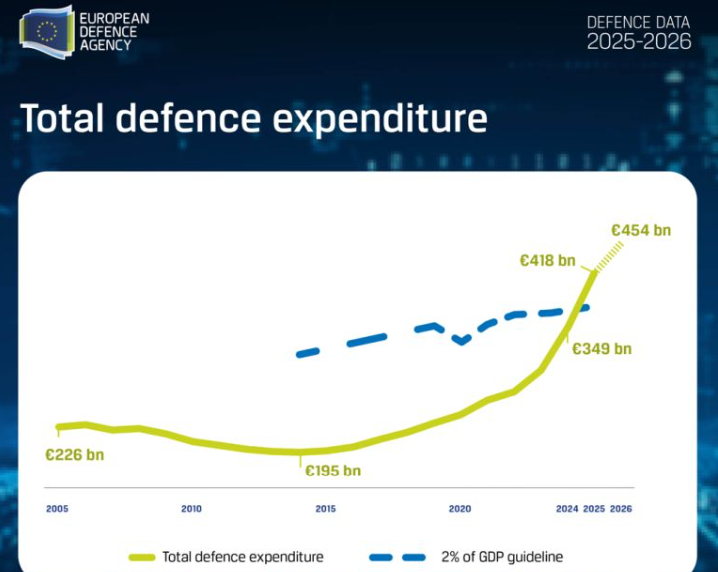
The latest figures from the European Defence Agency's Defence Data Portal reveal that EU member states collectively spent €418 billion on defense in 2025, with €134 billion dedicated to defense investments. Defence expenditure now stands at 2.4% of GDP, a level that would have seemed politically unimaginable just a few years ago.
Germany alone accounts for €106.9 billion in defense spending, including €31.6 billion in defense investment, also reaching 2.4% of GDP.
The numbers are massive.
But the numbers tell only part of the story.
The more important question is whether Europe is spending enough to confront the world that is emerging around it.
For years, defense expenditure was often viewed as a burden on public finances. Politicians preferred investments in healthcare, infrastructure, education, and social programs. Military spending rarely won elections.
Today, defense has returned to the center of political debate.
Russia's invasion of Ukraine shattered assumptions about security on the European continent. Military planners who once prepared mainly for peacekeeping missions are now discussing ammunition stockpiles, missile defense systems, drone warfare, cyber resilience, and industrial mobilization.
The conversation has fundamentally changed.
Defence is no longer a niche policy topic.
It has become an economic strategy, an industrial strategy, and a geopolitical strategy simultaneously.
Yet despite record spending, Europe faces a difficult reality.
A larger budget does not automatically translate into greater military power.
The continent still struggles with fragmentation.
Multiple countries operate different tank platforms, aircraft fleets, missile systems, communication networks, and procurement processes. This diversity creates inefficiencies that increase costs and complicate interoperability.
Europe spends hundreds of billions.
But it often spends them separately.
That distinction matters.
The challenge of modern defense is no longer merely financial. It is organizational.
Can Europe transform spending into capability?
Can investments produce meaningful operational readiness?
Can defense industries scale production fast enough to meet strategic requirements?
These questions are becoming more urgent every year.
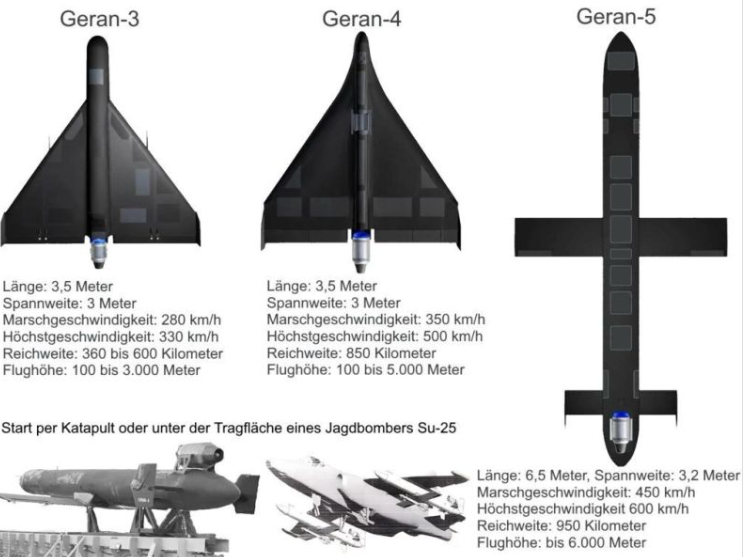
The emergence of drone warfare offers a perfect example.
A single inexpensive drone can threaten infrastructure worth millions. Missile interceptors often cost significantly more than the targets they destroy. Artificial intelligence is changing command structures. Autonomous systems are redefining battlefield operations.
Military innovation is moving faster than traditional procurement systems.
That creates a dangerous gap.
Nations can increase spending dramatically while still falling behind technologically.
This is why the EDA Defence Data Portal matters.
The portal does more than display statistics.
It provides transparency into two decades of European defense evolution. Policymakers can identify trends. Researchers can measure progress. Industry leaders can understand future demand. Citizens can finally see how their governments are responding to an increasingly unstable security environment.
Data creates accountability.
And accountability creates pressure.
Pressure to invest smarter.
Pressure to cooperate more deeply.
Pressure to move beyond declarations and deliver capabilities.
Germany illustrates this transformation perhaps better than any other country.
For years, Berlin faced criticism for underinvesting in defense relative to its economic size. The figures now tell a different story. With more than €106 billion in expenditure, Germany has become one of the central pillars of European defense modernization.
The shift would have been difficult to imagine a decade ago.
Today it seems inevitable.
The broader European challenge, however, remains unresolved.
The continent stands at a strategic crossroads. One path leads toward greater integration, industrial cooperation, and collective deterrence. The other risks duplication, inefficiency, and fragmented national priorities.
The difference between those futures will not be measured solely by budget figures.
It will be measured by outcomes.
The world is entering an era defined by geopolitical competition, technological disruption, and increasingly complex security threats.
In that environment, spending more is only the beginning.
Spending wisely will determine whether Europe merely increases defense budgets or genuinely strengthens its security.
The EDA's latest numbers reveal that Europe has already made its choice to invest.
The next decade will reveal whether those investments were enough.