European Defence Agency Trains for Drone Wars. TITAN SKY 2026 Signals a New Era of Military Coordination
The future of European defense is no longer built in isolation—it is rehearsed in shared skies.
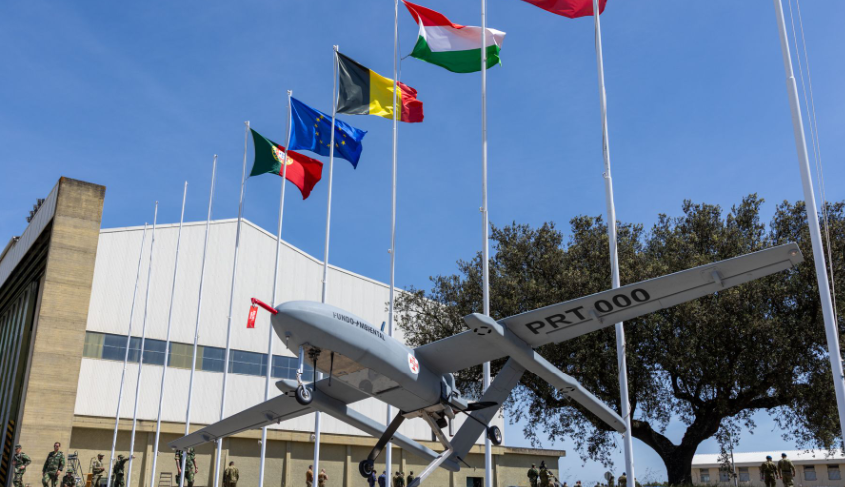
With TITAN SKY 2026, Europe has taken a decisive step toward a new model of military readiness: one defined not by national superiority, but by multinational synchronization. Hosted at Beja Air Base in Portugal and supported by the European Defence Agency (EDA), the exercise marks a milestone—the first drone-focused military drill executed under a coordinated European framework.
But beyond the official language of “cooperation” and “interoperability,” TITAN SKY reveals something more fundamental: Europe is preparing for a battlespace where drones dominate—and where fragmentation is no longer an option.
At its core, the exercise brings together forces from Belgium, Hungary, Portugal, and Spain, alongside observers from additional EU Member States and Ukraine. The inclusion of Ukraine is particularly telling. It reflects not just solidarity, but a recognition that the most advanced lessons in drone warfare today are being learned in real conflict. Europe is no longer watching from the sidelines—it is absorbing, adapting, and preparing.
And the battlefield it is preparing for is radically different from the past.
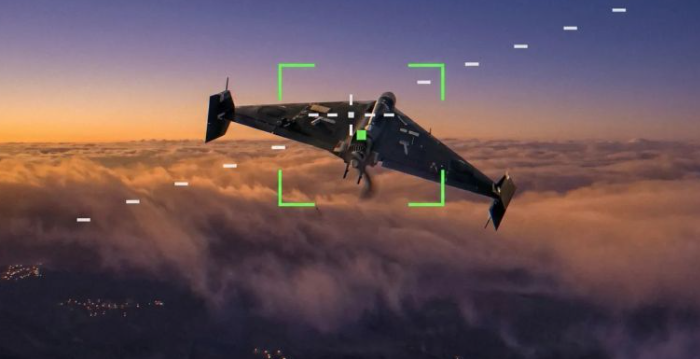
Unmanned aircraft systems (UAS) now range from small tactical drones—cheap, agile, and often expendable—to large, high-endurance platforms capable of extended surveillance across borders. TITAN SKY replicates exactly this diversity, operating across civilian and military airspace in southern Portugal and even executing cross-border drone flights into Spain.
This is not just training. It is stress-testing the future.
Because the real challenge is not flying drones—it is integrating them.
Europe’s airspace is among the most densely regulated in the world. Introducing military drones into this environment is not simply a matter of technology, but of policy, coordination, and trust. Every flight, especially across borders, forces alignment between nations with different doctrines, regulations, and operational cultures.
This makes TITAN SKY as much a political exercise as a military one.
The implicit question it asks is provocative: can Europe act as a single operational entity when it matters most?
Historically, defense in Europe has been fragmented, with each nation developing its own systems, standards, and doctrines. This fragmentation is increasingly untenable in an era where speed, data sharing, and real-time coordination define success. Drones, by their very nature, amplify this challenge. They are networked systems, dependent on communication, interoperability, and rapid decision-making across units and borders.
In that sense, TITAN SKY is less about drones—and more about Europe’s ability to function as a system.
And the stakes extend beyond the military domain.
As drones become more prevalent, the line between civilian and military airspace blurs. Exercises like TITAN SKY simulate precisely this “dual-use” environment, where unmanned systems must coexist with commercial aviation, emergency services, and civilian infrastructure. The ability to manage that coexistence safely is becoming a strategic requirement—not just a technical one.
This is where the European Defence Agency plays a crucial role. By supporting the exercise, the EDA positions itself as a central coordinator, not just of capabilities, but of standards. If Europe is to avoid the chaos of incompatible systems and conflicting procedures, it will need exactly this kind of institutional backbone.
Yet, the exercise also exposes underlying tensions.
Training together is one thing. Acting together in crisis is another. Questions remain about command structures, decision authority, and political will in high-pressure scenarios. TITAN SKY does not resolve these issues—but it brings them into the open. And that, in itself, is progress.
Perhaps the most important takeaway is this: Europe is finally treating drone warfare as a shared challenge rather than a collection of national experiments.
The skies above Portugal in May 2026 are not just filled with unmanned aircraft. They are filled with a vision—of a continent that understands that future conflicts will be fought not just with technology, but with coordination.
Because in the age of drones, sovereignty still matters—but isolation does not survive.