The Dutch Army’s New Wheels Signal a Bigger Shift. NATO Is Racing to Modernize for a New Era of Warfare
Military revolutions rarely arrive with dramatic fanfare.
Sometimes they roll in quietly on four wheels.
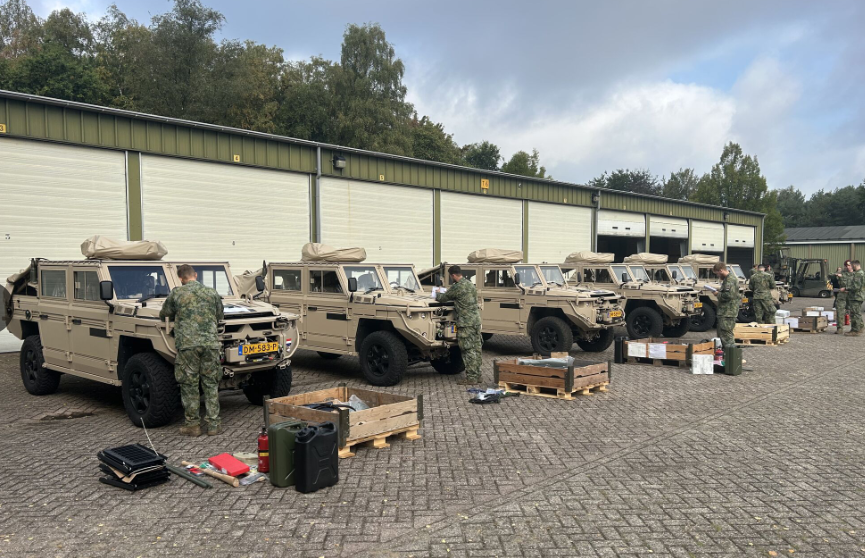
When the Royal Netherlands Army received the first six Vector-2 tactical vehicles for its Air Mobile Brigade on August 20, the event appeared routine. A long-awaited vehicle delivery. A procurement milestone. Another modernization project checked off a defense ministry spreadsheet.
But that interpretation misses the bigger story.
The arrival of the Vector-2 is not simply about replacing aging Mercedes-Benz Geländewagens that have served far beyond their intended lifespan. It is a visible sign of a much larger transformation taking place across NATO as European militaries adapt to a radically altered security landscape.
Across Europe, armies are learning that modernization can no longer be postponed.
The war in Ukraine has become the ultimate stress test for military equipment, doctrine, logistics, and readiness. Every lesson coming from the battlefield points to the same reality: forces must move faster, stay connected, survive longer, and adapt continuously.
Mobility has returned to the center of military thinking.
For years, many Western armies focused heavily on overseas counterinsurgency operations where mobility challenges differed significantly from those associated with high-intensity conflict. Vehicles were expected to patrol, transport personnel, and support stability missions.
Today's battlefield demands something else entirely.
Units must disperse rapidly to avoid drone detection. They must relocate constantly to escape precision strikes. They must operate across vast distances while maintaining communications and situational awareness.
In this environment, reliability becomes a weapon.
An army cannot conduct modern operations with equipment designed for a different century.
That is why replacing legacy fleets has become increasingly urgent across Europe.
The Netherlands understands this challenge.
As one of NATO's most capable medium-sized military powers, the country occupies a strategic role far beyond its geography. Dutch forces routinely contribute to alliance missions, multinational deployments, and rapid-response formations. Their Air Mobile Brigade represents one of the alliance's most deployable units, expected to move quickly and operate in demanding environments.
Deployable forces require deployable equipment.
The fact that the first six Vector-2 vehicles will immediately participate in exercises in Northern Europe illustrates the urgency behind this transition. Modern military systems are no longer judged solely by procurement specifications. They are judged by operational performance from the moment they enter service.
There is little time for lengthy adaptation cycles.
Readiness has become the ultimate currency.
Yet this modernization story is not unique to the Netherlands.
Across NATO, defense budgets are rising after decades of underinvestment. Governments are accelerating procurement programs, rebuilding ammunition stockpiles, investing in air defense, and expanding industrial production capacity.
The common objective is clear.
Prepare for a world that has become significantly more dangerous.
Russia's invasion of Ukraine permanently altered European security assumptions. Simultaneously, tensions across the Indo-Pacific, instability in the Middle East, cyber threats, and emerging technologies are creating a far more complex strategic environment.
Military planners now face a difficult balancing act.
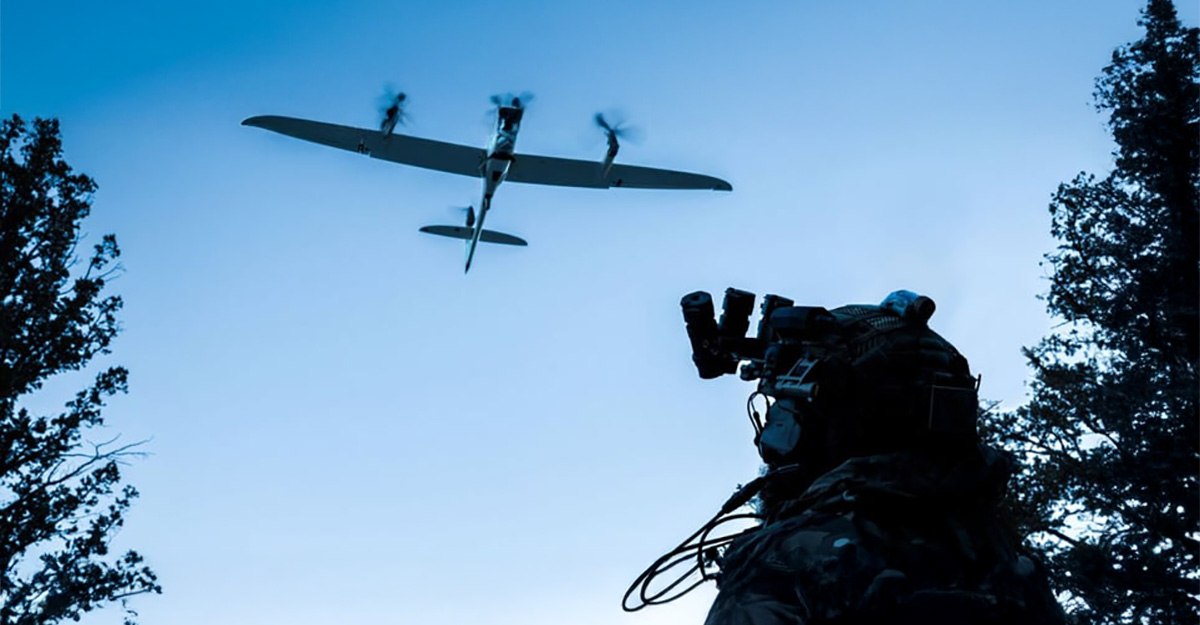
They must prepare for drone warfare, artificial intelligence, autonomous systems, cyber attacks, electronic warfare, and space-based threats while still maintaining the traditional capabilities that remain essential in combat.
The lesson from Ukraine is unmistakable.
New technology does not eliminate the need for proven military fundamentals.
Armored vehicles still matter.
Artillery still matters.
Mobility still matters.
What changes is how these capabilities are employed and protected.
The modern battlefield punishes static forces and rewards adaptable ones.
That places platforms like the Vector-2 within a broader context. It is not simply a replacement vehicle. It represents investment in flexibility, operational readiness, and expeditionary capability.
These qualities increasingly define military effectiveness.
Perhaps most importantly, the Dutch decision reflects a growing recognition throughout Europe that deterrence depends on visible capability. Potential adversaries pay attention not only to defense spending announcements but also to the speed at which armies modernize and field operational equipment.
A military fleet that exceeds its intended lifespan sends one signal.
New vehicles immediately entering exercises send another.
The message is unmistakable: Europe's armed forces are no longer preparing for yesterday's wars.
They are preparing for tomorrow's.
And sometimes that transformation begins with something as simple as handing over six new vehicles on a military base.