Destinus, Dutch Navy and Hornet B2. The Missile Is Too Expensive. The Drone Knows It.

For decades, naval air defense was built around a simple assumption:
The interceptor would always be more expensive than the target.
That wasn't a problem when the target was a fighter jet, a sophisticated cruise missile, or an advanced anti-ship weapon worth millions. Defenders accepted the cost because the threat justified the expenditure.
But drones have changed the equation.
A low-cost aerial threat can now force a navy to launch an interceptor costing hundreds of thousands, or even millions, of euros. Multiply that by dozens of incoming targets, and the economics begin to look unsustainable.
The danger is no longer simply being attacked.
The danger is being financially exhausted while defending yourself.
That is the challenge driving a new partnership between Destinus and the Netherlands Ministry of Defence.
Their goal is not to replace naval air defense.
Their goal is to make it affordable.
The Dutch Ministry of Defence's Materiel and IT Command (COMMIT) has launched a Concept Development & Evaluation (CD&E) program to integrate Hornet B2 with Royal Netherlands Navy warships and explore a path toward an initial operational capability by 2027.
At first glance, Hornet B2 looks like another interceptor.
It isn't.
Its design represents a different philosophy about how air defense should work in the age of mass-produced drones.
Traditional interceptor missiles are optimized for performance.
Hornet B2 is optimized for performance and economics.
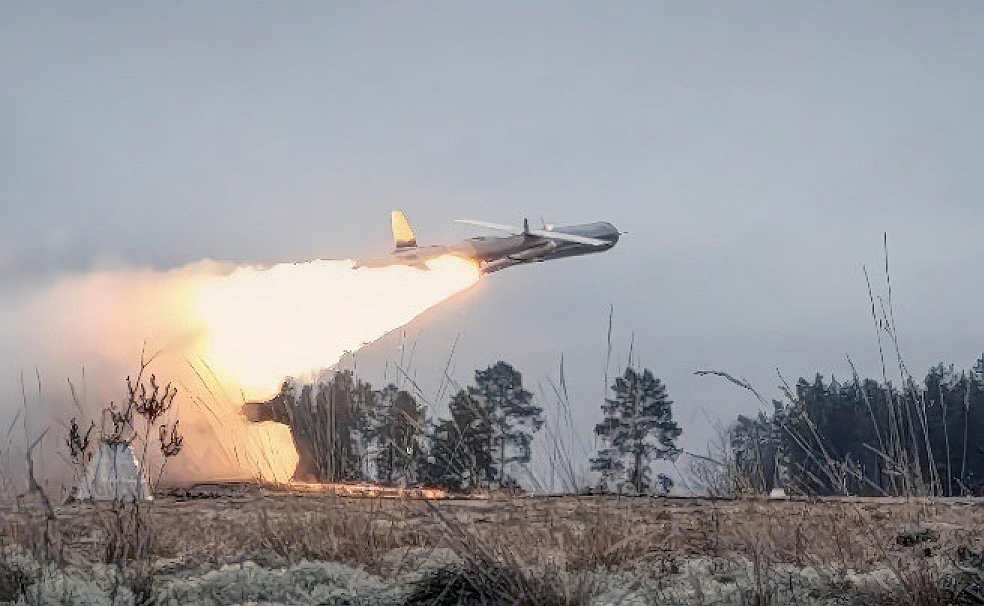
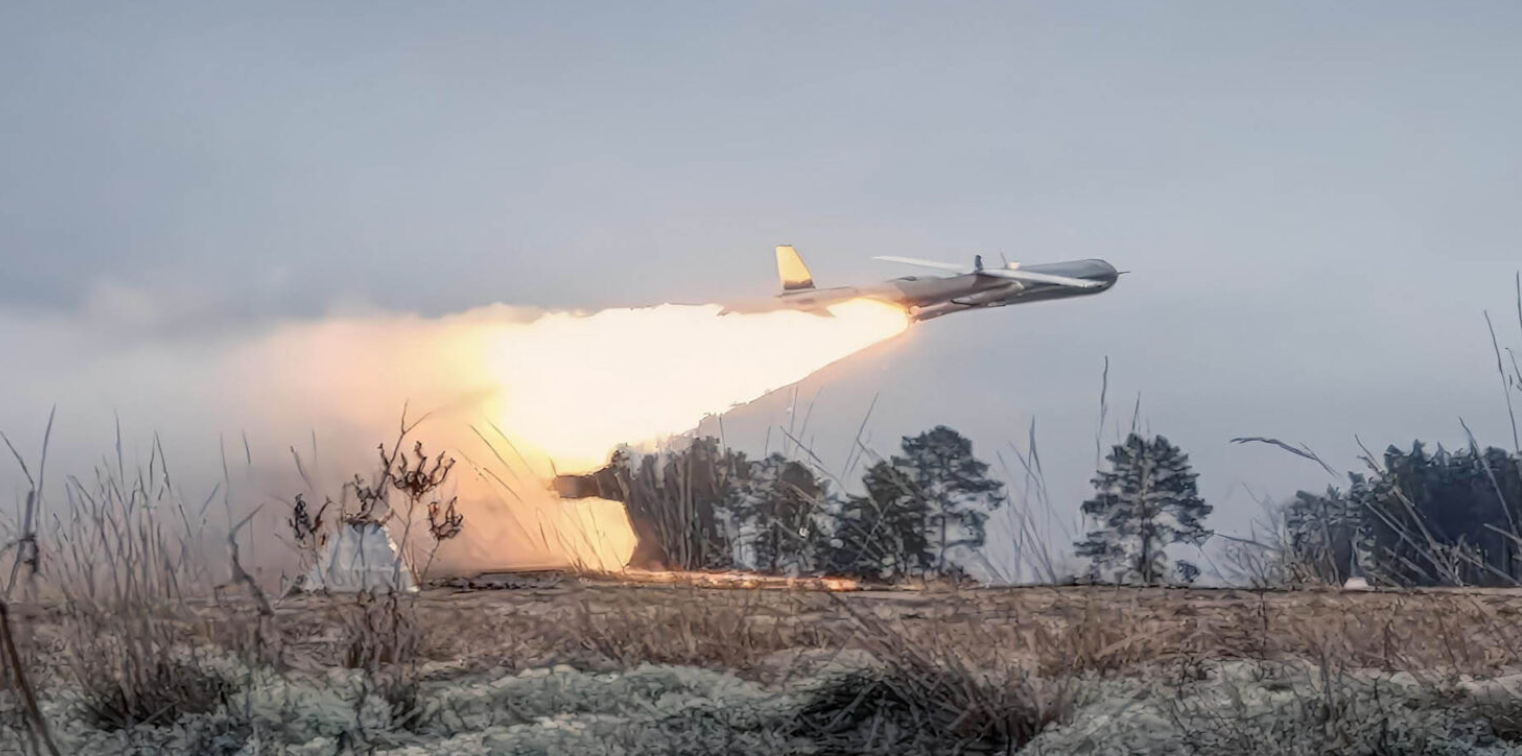
Stored inside a sealed canister, the system launches using a rocket booster. Folding wings deploy after launch, and the interceptor transitions into electric-powered cruise flight.
The result sits somewhere between a missile and an aircraft.
Missile-style readiness.
Aircraft-style endurance.
A dramatically different cost structure.
That hybrid approach may become increasingly important as navies confront a reality that military planners are discussing with growing urgency: drone warfare is scaling faster than interceptor production.
Attackers are benefiting from the economics of mass production.
Defenders often are not.
The strategic advantage increasingly belongs to whoever can generate greater volume at lower cost.
That is a dangerous trend for every military service, but especially for navies.
Warships operating far from shore cannot afford to run out of defensive options.
Nor can they afford to spend premium interceptors on every low-cost threat that appears on radar.
The future challenge is not merely stopping drones.
It is stopping enough drones at a sustainable cost.
Hornet B2 was conceived specifically for that gap.
Destinus describes the system as an additional interceptor layer designed for low-cost, high-volume aerial threats. Premium missile systems remain available for the most dangerous and complex targets. Hornet B2 is intended to handle a different class of problem.
In effect, it introduces a new economic tier into naval defense.
And that matters.
Military technology discussions often focus on speed, range, sensors, and lethality. Increasingly, however, the decisive metric may be cost per engagement.
Can a defender neutralize a threat without spending ten times, one hundred times, or one thousand times more than the attacker?
That question may define future conflicts.
What makes the Dutch program particularly interesting is that it places operators directly into the development process.
The Royal Netherlands Navy will not simply receive a finished product.
Its personnel will help shape requirements, operational procedures, logistics, integration concepts, and system specifications from the earliest stages.
That approach reflects a broader evolution in defense acquisition.
Historically, militaries often adapted their operations to fit completed systems.
Today, many successful programs are moving in the opposite direction, involving operators while designs are still being refined.
The result is usually faster deployment, smoother integration, and fewer surprises when systems reach operational service.
The Hornet B2 program therefore represents more than the testing of a new interceptor.
It is an experiment in how modern defense capabilities should be built.
Collaboratively.
Iteratively.
And with economics treated as a battlefield variable.
Because modern warfare is revealing an uncomfortable truth:
The challenge of defending against drones is not primarily technological.
It is financial.
The sensor can detect the threat.
The launcher can engage the threat.
The question is whether you can afford to repeat that process hundreds of times.
The nations that solve that equation first may gain one of the most important military advantages of the drone age.
And that is why this Dutch-Destinus partnership deserves attention.
It is not trying to build a better missile.
It is trying to build a better business model for survival.