The Alps Are Melting Faster Than Mountaineers Can Adapt
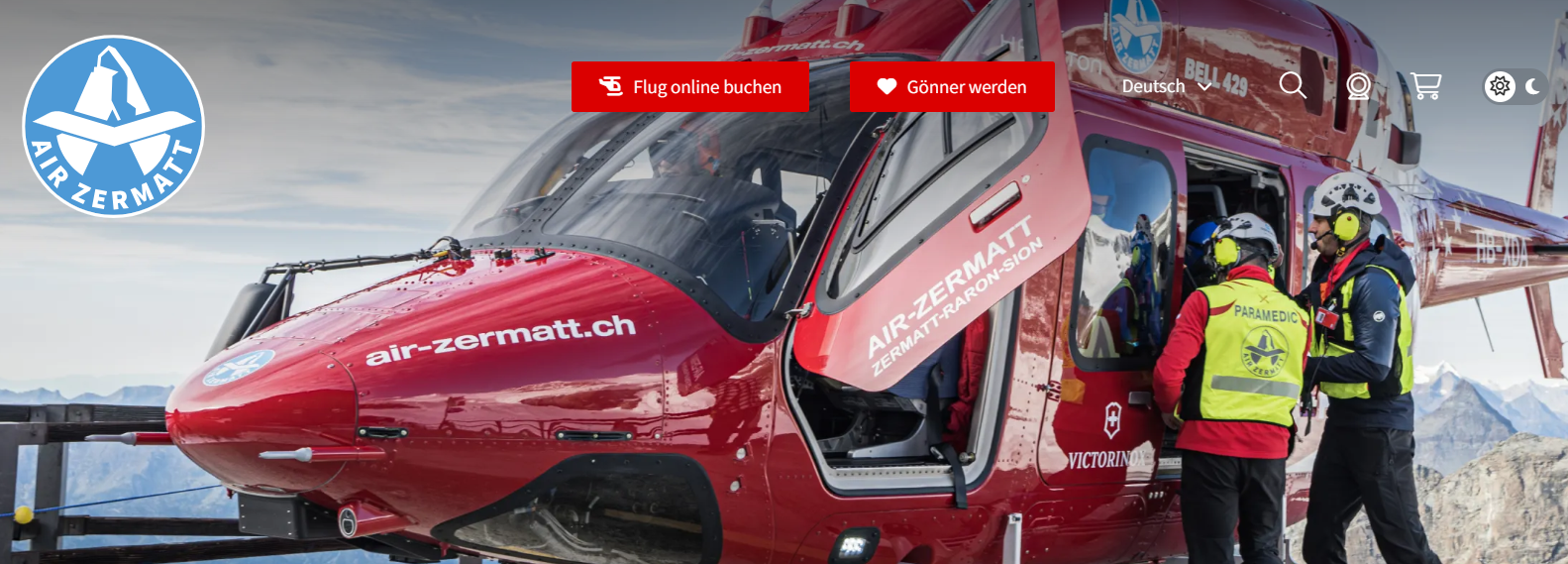
On what appeared to be another beautiful summer day in the Swiss Alps, rescue helicopters raced from one emergency to another.
Within just a few hours, Air Zermatt crews responded to multiple life-threatening incidents across some of Europe's most famous mountains. Climbers were trapped on steep faces. A glacier crossing became impassable. Ropes failed. Rescue specialists were deployed across hundreds of square kilometers of high alpine terrain.
And at the Matterhorn, two climbers never came home.
The dramatic series of incidents is more than a busy day for one of the world's most respected mountain rescue organizations.
It may be a warning about a new reality emerging in the Alps.
The mountains are changing faster than many climbers are prepared for.
A Day of Constant Emergencies
The first calls came from the Alphubel, where two climbers became stranded in exposed high-altitude terrain. Unable to continue upward and unable to descend safely, they required helicopter extraction.
Soon after, another emergency unfolded at Nordend in the Monte Rosa massif.
A glacier bridge had collapsed, cutting off five mountaineers and leaving them trapped without a safe route forward or backward. Air Zermatt evacuated them directly to the Monte Rosa Hut.
Then came the most tragic call of the day.
Near the Solvay Hut on the Matterhorn, two climbers fell hundreds of meters to their deaths. Rescue crews could only recover the bodies. Another climber who witnessed the accident was evacuated by long-line rescue and flown to Zermatt for care after suffering severe shock.
But the day was far from over.
As evening approached, another wave of distress calls arrived.
Two climbers became stranded above 4,100 meters on the Matterhorn with no drinking water and no ability to continue their ascent or descent.
Elsewhere, on the Klein Dirruhorn, a climbing rope snapped, leaving a rope team unable to secure itself.
At the same time, a four-person group became lost and stranded in difficult terrain within the Monte Rosa region.
All were successfully rescued.
Not everyone was as fortunate.
The Hidden Impact of Extreme Heat
Rescue professionals point to a factor that is increasingly reshaping mountain safety:
Heat.
The Alps are experiencing temperatures that were once considered unusual even at extreme altitudes. Positive temperatures are now occurring at elevations approaching 4,500 meters above sea level.
That matters more than many people realize.
The high mountains are not static landscapes.
They are living environments shaped by ice, snow, rock and temperature.
When temperatures rise, everything changes.
Glacier bridges weaken.
Permafrost melts.
Rockfall increases.
Snowfields disappear.
Routes that guidebooks describe as straightforward can become dangerous within days or even hours.
The mountain climber arriving today may face completely different conditions than someone who climbed the same route a week earlier.
The Matterhorn's New Reality
The Matterhorn remains one of the world's most iconic peaks.
It is also becoming increasingly unpredictable.
Historically, climbers feared storms, avalanches and altitude.
Today, warming conditions are introducing additional risks.
Melting ice destabilizes rock faces that remained frozen for centuries. Sections of terrain once cemented together by permafrost become loose and fragile.
With more climbers attempting alpine objectives during increasingly warm summers, exposure to these evolving hazards continues to grow.
The challenge is that many dangers remain invisible until they suddenly become deadly.
The Heroes Above the Clouds
Behind every successful rescue stands an extraordinary logistical effort.
On this single day, Air Zermatt deployed three helicopters and multiple mountain rescue specialists under highly demanding conditions.
Long-line evacuations near vertical terrain.
Search operations in remote mountain regions.
Precision extractions above 4,000 meters.
These missions require exceptional skill, coordination and courage.
In many cases, rescue crews are operating at the limits of what is technically possible.
They represent the final safety net when mountaineering plans go wrong.
The Future of Alpine Safety
The Alps remain one of the most spectacular mountain environments on Earth.
But the rules are changing.
Climate-driven instability is turning familiar routes into dynamic environments where conditions can shift rapidly and unexpectedly.
The mountains themselves are becoming less predictable.
The lesson from this extraordinary day in Switzerland is not that climbing has become impossible.
It is that yesterday's assumptions about mountain safety may no longer apply.
The Alps are entering a new era.
And anyone who ventures into them must adapt just as quickly as the mountains themselves.