Saving the Past from the Sky. EagleNXT eBeeX Drones with CyArk Are Rebuilding History Pixel by Pixel
What if history could be preserved not in books, museums, or archives—but in data?
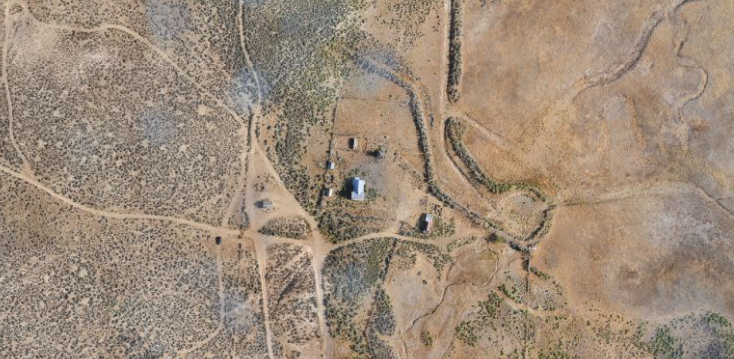
In a remote corner of Oregon, far from the noise of modern technology hubs, a quiet revolution in cultural preservation has taken place. At the historic Shirk Ranch in Adel, the non-profit organization CyArk has done something that would have seemed unimaginable just a decade ago: it has captured an entire historical landscape—structures, terrain, and context—and transformed it into a precise, navigable 3D digital twin.
The tools of this revolution are not archaeologists’ brushes or surveyor’s notebooks. They are drones.
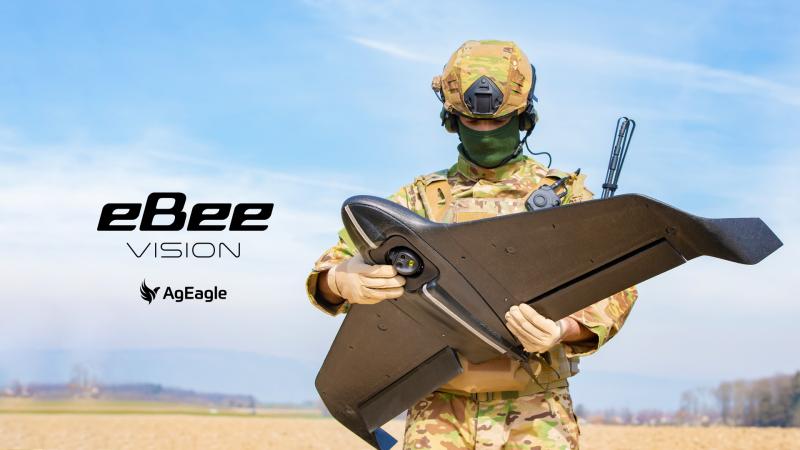
Using an eBee X fixed-wing drone, paired with a S.O.D.A. 3D camera, CyArk combined aerial photogrammetry with lidar data to reconstruct the ranch in astonishing detail. Over a single week, the team captured 917 high-resolution images across an area of more than 1.1 square kilometers, achieving an accuracy of 1.8 centimeters ground sampling distance (GSD).
Numbers like these might sound technical—but their implications are profound.
This is not just mapping. This is digitization of reality.
The resulting model is more than a visual representation. It is a data-driven reconstruction of a historical environment—one that can be measured, analyzed, simulated, and revisited indefinitely. The Shirk Ranch, described as a time capsule of life in the late 19th and early 20th centuries, is no longer just a physical location vulnerable to decay, weather, and time. It now exists in a parallel digital world, immune to erosion.
And that changes everything.
Traditionally, preserving cultural heritage has been reactive: restore what is damaged, protect what remains, document what is at risk. But digital twin technology flips that logic. It allows organizations to capture the full state of a site before damage occurs, creating a permanent reference point against which future changes can be measured or reversed.
In essence, drones are not just documenting history—they are future-proofing it.
The Shirk Ranch project is a strong example of how this approach scales. Covering more than 112 hectares, the area would have taken weeks or months to survey manually. Instead, the drone’s long endurance and autonomous flight planning software, eMotion, enabled efficient coverage of the entire site. The data was then processed using Epic Games’ RealityCapture, transforming raw imagery into a detailed orthomosaic and digital terrain model.
This combination of hardware, software, and methodology reveals something critical: heritage preservation is becoming a high-tech discipline.
And with that comes a shift in storytelling.
CyArk’s mission is not only to archive but also to share. The same dataset used for preservation forms the foundation of a public virtual tour, allowing anyone—anywhere—to explore the ranch digitally. This creates a new kind of accessibility. History is no longer bound by geography. It becomes interactive, immersive, and globally available.
But there is also a deeper, more provocative layer to this development.
If landscapes, monuments, and entire historical sites can be digitized with such precision, what happens next? Will digital twins become the primary reference for restoration? Will physical conservation one day rely on virtual baselines as its source of truth? And ultimately—will some heritage survive only in digital form?
These are no longer theoretical questions.
Because the reality is clear: many historical sites around the world are under threat—from climate change, urbanization, conflict, or simple neglect. The race is not just to preserve them—it is to capture them before they disappear.
In that context, projects like Shirk Ranch are not niche experiments. They are early indicators of a much broader transformation.
Drones, combined with advanced imaging and processing technologies, are turning preservation into something proactive, scalable, and data-driven. They are redefining what it means to “protect” history—not just by maintaining it, but by making it reproducible.
This is where the real shift lies.
For centuries, history has been something we inherit, fragile and often incomplete. Now, for the first time, we have the tools to systematically record it in full fidelity—down to the centimeter.
And once history becomes data, it stops being temporary.
It becomes permanent.