𝗣𝗮𝗹𝗮𝗻𝘁𝗶𝗿 𝗜𝘀 𝗕𝗲𝗰𝗼𝗺𝗶𝗻𝗴 𝗨𝗸𝗿𝗮𝗶𝗻𝗲’𝘀 𝗪𝗮𝗿𝘁𝗶𝗺𝗲 𝗢𝗽𝗲𝗿𝗮𝘁𝗶𝗻𝗴 𝗦𝘆𝘀𝘁𝗲𝗺
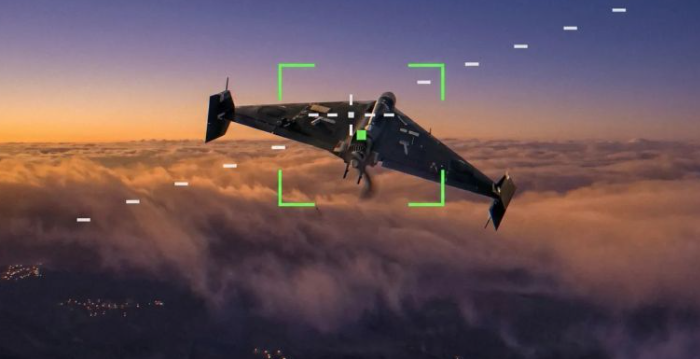
The drone is the part you see.
Everything else—the decisive part—you don’t.
Behind every Ukrainian strike lies a growing digital architecture: satellite feeds, drone footage, radar signals, intelligence reports, and streams of battlefield data fused into operational decisions. Increasingly, this invisible layer is where the war is being fought—and where it may be decided.
When President Volodymyr Zelenskiy met Palantir CEO Alex Karp in Kyiv in May 2026, the message was clear: Ukraine is doubling down not just on weapons, but on algorithms.
The partnership between Ukraine and the U.S. data firm is centered on a project known as Brave1 Dataroom, a secure environment designed to train artificial intelligence models using real combat data collected since Russia’s full-scale invasion in 2022.
This is not theoretical innovation. It is war turned into a feedback system.
More than 100 companies are reportedly training over 80 AI models on this data—primarily to detect and intercept aerial threats. Each missile intercepted, each drone downed, each failed strike becomes input for the next iteration. The battlefield is no longer just a place of destruction. It is a continuous loop of learning.
That shift matters more than any single weapon system.
For decades, military advantage was measured in mass—more troops, more ammunition, more hardware. But Ukraine, facing a larger adversary, is pursuing a different metric: speed of understanding.
Modern warfare is increasingly about compressing time. The faster an army can take fragmented data—images, signals, movements—and turn it into actionable insight, the fewer opportunities the enemy has to adapt. Palantir’s technology is designed precisely for that: integrating multiple sources into a coherent picture that commanders can act on quickly.
In earlier phases of the war, platforms like Palantir’s software fused drone feeds, satellite imagery, and intelligence reports into real-time operational maps, helping identify patterns and prioritize targets. Today, that capability is evolving into something more autonomous and more continuous—a system that doesn’t just inform decisions but improves itself with every mission.
The implications are profound.
Ukraine’s data ecosystem includes vast datasets: annotated images and video from tens of thousands of combat flights, constantly updated and used to train neural networks that detect ground and aerial targets automatically. The result is a battlefield increasingly shaped by machine learning cycles rather than static planning.
And that is precisely what alarms its adversaries.
Russian commentators and analysts have pointed to this growing integration of AI and battlefield data as a structural threat. The logic is simple: individual assets—drones, missile systems, launch sites—can be destroyed. But a system that links sensors, software, and operators across the entire force becomes far harder to degrade.
It is not just resilient. It improves under pressure.
Ukraine’s approach is turning war into something closer to a software problem: iterate, deploy, measure, refine. In this model, failure is not purely loss—it is data. Every interception that fails teaches the system how to succeed next time.
Even the role of industry is changing. Defense is no longer confined to traditional contractors. Technology firms, startups, and engineers are directly embedded in the innovation loop, training models and deploying solutions in near real time.
The battlefield has become a development environment.
This convergence of software and war raises uncomfortable questions—about accountability, governance, and the ethics of machine-assisted decision-making. Yet the trajectory appears clear. The countries that learn fastest will hold the advantage.
Ukraine is betting that it can win not by matching Russia weapon for weapon, but by outpacing it in adaptation.
Because in a war driven by data, the decisive factor is no longer who fires first.
It is who learns faster.