Built to Fly When the Spectrum Is on Fire - Ukraine’s Buntar‑3 and the New Rules of Drone Warfare

The most important battles in Ukraine are no longer fought only with artillery or armor. Increasingly, they are fought in the electromagnetic spectrum.
And in that environment, drones that cannot survive jamming do not survive at all.
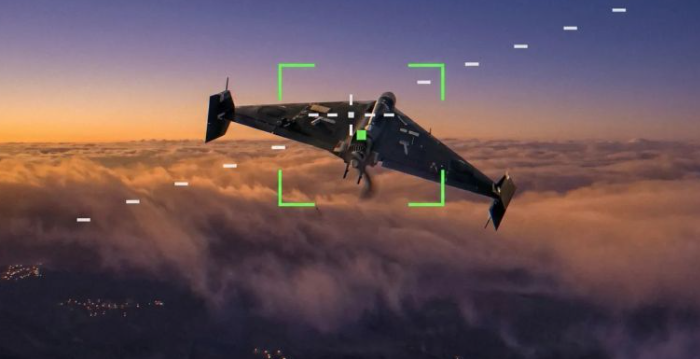
Enter the Buntar‑3—a Ukrainian reconnaissance unmanned aerial system designed explicitly for life inside heavy electronic warfare. Developed by Buntar Aerospace and unveiled publicly in 2025, the system represents a shift in how battlefield intelligence, surveillance, and reconnaissance (ISR) is being engineered under real combat pressure.
Buntar‑3 is not a conceptual prototype or a lab experiment. It has been tested, codified by Ukraine’s Ministry of Defence, and deployed operationally, according to the manufacturer and defense reporting.
Its design choices reflect lessons paid for in losses.
The drone uses an electric vertical take‑off and landing (VTOL) configuration, allowing it to operate without runways and to launch from constrained positions near the front. It offers up to 3.5 hours of endurance, a tactical operating radius of roughly 80 kilometers, and optical target detection at distances of up to 15 kilometers, keeping the platform outside immediate engagement zones.
But the most consequential feature is what it does without.
The Buntar‑3 is designed to operate without GPS, relying instead on alternative navigation methods that allow it to function in environments where satellite signals are denied or deliberately disrupted. This capability is paired with high resistance to electronic warfare, an explicit design priority cited repeatedly by its developers.
That matters because Ukraine’s battlefield is saturated with jammers.
In many sectors, GPS interference is persistent rather than episodic. Drones that depend on satellite navigation or fragile datalinks are often lost within minutes. In this context, endurance or sensor quality becomes irrelevant if the aircraft cannot stay connected or oriented long enough to complete a mission.
Buntar‑3 is built around the opposite assumption: that electronic warfare is constant, not exceptional.
The system integrates tightly with Buntar Copilot, a custom software suite that assists with mission planning, execution, and operator workload reduction. According to the company, the goal is not autonomy for its own sake, but reducing human error—one of the leading causes of UAV losses in combat.
That software‑first philosophy extends into operations.
On 7 March, Ukrainian forces used Buntar‑3 to support the targeting and fire correction of a strike against a Russian base at Donetsk Airport reportedly used for the storage and launch of Shahed‑type attack drones. The strike involved Ukraine’s Missile Forces and Artillery in coordination with the Air Force, using SCALP cruise missiles and ATACMS ballistic missiles, with reconnaissance provided by operators from the 414th Separate Marine Unmanned Strike Aircraft Regiment (“Madyar’s Birds”).
According to reporting, Ukrainian intelligence had identified preparations at the site as early as August 2025, and the location had been struck previously. The significance here is not the novelty of the target—but the ability to continue ISR and fire correction under contested conditions.
That points to the deeper lesson.
The future of battlefield ISR is no longer about flying higher, farther, or with better cameras. It is about remaining functional when the spectrum turns hostile. Drones are now evaluated less by brochure specifications than by their ability to operate when every signal is being attacked.
Ukraine’s drone ecosystem is evolving accordingly. Innovation is not measured in added features, but in survivability under pressure.
Buntar‑3 is not revolutionary because it flies. It is notable because it keeps flying when others cannot.
And that may be the most important capability of all.

.png)