Build with Ukraine - How Europe Is Re‑Learning Wartime Industrialisation in 6 Drone Agreements

The six new German‑Ukrainian agreements signed under the “Build with Ukraine” initiative signal an abrupt break with that past.
At the core of these deals is a simple idea: the most valuable defence technology in Europe today is being written on the Ukrainian battlefield—and it should be scaled, not studied to death.
The agreements, announced in April 2026, focus overwhelmingly on counter‑UAV and air‑defence capabilities, the defining military challenge of the current phase of the war. Ukrainian manufacturer TAF Industries and Germany’s THYRA agreed to establish a joint venture for the series production of interceptor drones, explicitly aiming to mass‑produce systems already used against live threats.
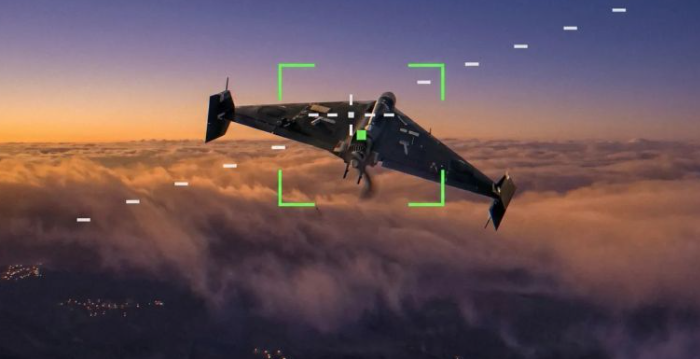
An even more industrialised step comes from WIY Drones and Quantum Systems, whose memorandum creates Quantum WIY Industries. The joint venture will scale production of the WIY STRILA anti‑Shahed interceptor, a system designed specifically to counter Iranian‑designed loitering munitions that have become a staple of Russia’s air campaign.
Crucially, these are not speculative startups hunting for proof of concept. Reporting confirms that Ukrainian forces have tasked partners with large‑scale deliveries, turning joint ventures into production engines rather than technology showcases.
The cooperation matrix extends well beyond drones. Ukraviasystem and PoinToX will work together on missile and aviation systems, filling gaps in Europe’s mid‑range and tactical strike capabilities. Meanwhile, Helsing, Germany’s high‑profile defence AI company, entered a joint production agreement with a Ukrainian partner—bringing together AI‑centric targeting and Ukrainian operational feedback in one production pipeline.
Two additional agreements between Diehl Defence and FirePoint underline the strategic depth of the initiative. Diehl, best known for the IRIS‑T system, is expanding technology cooperation rather than purely transactional procurement—suggesting long‑term integration of Ukrainian design input into European weapons development.
This model is fundamentally different from traditional military aid. Instead of donating equipment, Germany is co‑producing capability. Ukraine contributes designs hardened by real combat, rapid iteration cycles, and engineers who know exactly why systems fail. Germany contributes industrial throughput, financing, certification, and access to NATO‑standard supply chains.
The implications go far beyond Ukraine.
“Build with Ukraine” effectively revives a form of wartime industrialisation—without state‑run factories, but with public‑private ecosystems built around urgency and feedback. For European defence firms, it offers immediate relevance. For governments, it provides faster capability growth than any procurement reform ever delivered.
The subtext is unmistakable: the future of European defence technology may no longer be designed first in Brussels or Munich—but tested, at scale, in Ukraine.
.png)