Russian Sanctions Without Strategy. How the West Turned Economic Warfare Into Political Theater
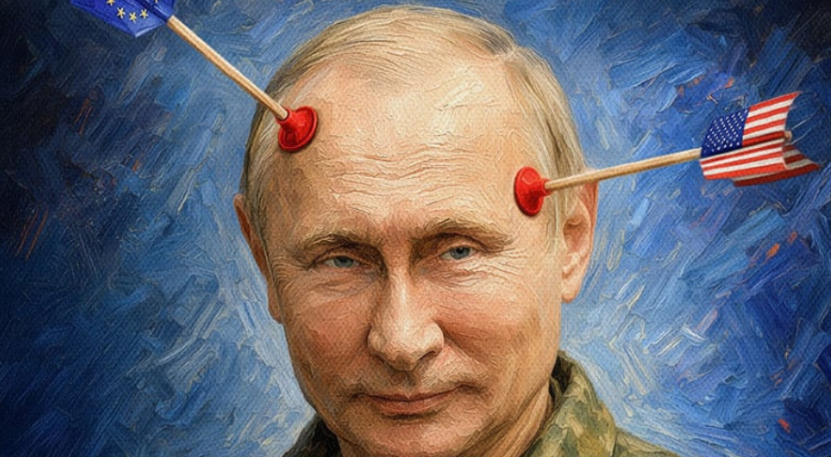
When a Berlin pharmaceutical lobbyist once explained his profession to me, he did so with disarming honesty: “We keep hitting the same spot. Eventually, there will be a dent.” It is a strategy based on persistence rather than imagination, repetition rather than reinvention.
Today, that same logic appears to define the West's approach toward Russia.
Since Vladimir Putin launched his full-scale invasion of Ukraine, the European Union has approved 21 sanctions packages. Now, as European foreign ministers gather once again to review their strategy, a difficult question hovers over the proceedings: what exactly has been achieved?
If sanctions were intended to force a strategic reversal in Moscow, the evidence is sobering.
Putin remains firmly in power. Russia continues to finance and wage war. Ukrainian cities are still under attack. The conflict has entered its fifth year with increasing intensity rather than exhaustion. Tens of thousands of civilians have paid the price, vast areas of infrastructure have been destroyed, and significant parts of Ukrainian territory remain under Russian control.
Yet Brussels is preparing package number 22.
At what point does determination turn into ritual?
For years, Western policymakers have presented sanctions as a powerful alternative to direct military confrontation. The theory sounds compelling: isolate an aggressor economically, restrict access to capital and technology, weaken its industrial base, and eventually force political concessions.
Reality has proven more complicated.
Russia has not emerged unscathed. Western sanctions have undoubtedly imposed costs. Access to advanced technologies became more difficult. Certain industries face bottlenecks. Living standards have suffered. But sanctions did not produce the political outcome that many Western leaders promised. They did not stop the war. They did not trigger elite rebellion. They did not force a change of course in the Kremlin.
Instead, Russia adapted.
Trade routes shifted eastward. New financial channels emerged. Alternative suppliers stepped into markets abandoned by Western companies. Countries unwilling to join the sanctions regime became economic lifelines. What began as isolation gradually evolved into reorganization.
This is the uncomfortable reality many policymakers prefer to avoid discussing.
Economic pressure works best when it is unexpected, overwhelming, and difficult to circumvent. Yet the modern global economy is increasingly multipolar. The assumption that the United States and Europe can economically isolate a major power as effectively as they once could is no longer self-evident.
In her book Backfire: How Sanctions Reshape the World Against U.S. Interests, economist Agathe Demarais argues that sanctions often reshape global systems in unintended ways. Rather than compelling compliance, they can accelerate the creation of alternative networks, institutions, and alliances outside Western influence.
In other words, sanctions may be succeeding at reshaping the world without succeeding at stopping the war.
This is where the debate becomes politically uncomfortable. Western leaders find themselves trapped between two unattractive choices.
Admitting that sanctions have failed to achieve their strategic objective would be politically costly. But continuing to expand them without measurable results risks turning policy into symbolism.
And symbolism has consequences.
Every new sanctions package allows governments to signal action. It creates headlines, demonstrates resolve, and reassures domestic audiences that something is being done. Yet signaling is not the same as strategy. Repetition is not the same as effectiveness.
The danger is not that sanctions exist. The danger is that they become a substitute for deeper thinking.
How does the war end? What combination of economic, military, diplomatic, and political tools can realistically influence Moscow's calculations? What metrics define success? And what happens if the current approach reaches its limits?
These questions deserve honest answers.
Because after 21 sanctions packages, the central fact remains stubbornly unchanged: the war continues.
The West may still believe that one more strike on the same spot will finally create a dent.
But strategy requires more than persistence.
It requires evidence that the hammer is hitting the right target.